Key Takeaways
- Subcutaneous fat sits under the skin and can store extra fuel safely.
- Lower body fat often looks safer than deep belly fat around organs.
- Belly fat under the skin can still signal risk when waist size rises.
- Visceral fat, liver fat and high blood sugar usually deserve closer concern.
- Real meals, muscle work, sleep and low sugar intake support safer fat storage.
Fat Location
Under Skin Fat
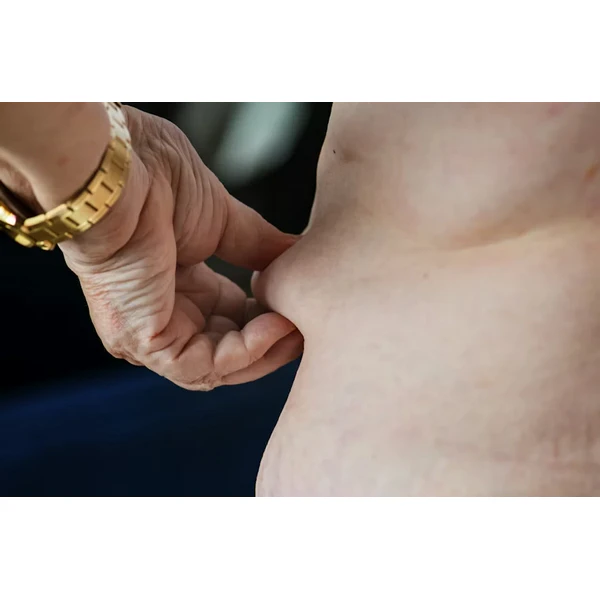
Subcutaneous fat means fat under the skin. You can often pinch it on the belly, hips, thighs, arms or back.
It stores extra fuel and releases fuel when the body needs it. Human studies show that fat location often tells more about health risk than body weight alone (1).
Under skin fat can act like a safer storage place when the body has more fuel than it needs at once.
A healthy fat cell can hold stored energy and keep it away from the liver, pancreas, heart and muscle.
Trouble grows when storage space becomes strained. Fat can then spill into places where it causes more damage.
Deep Belly Fat
Visceral fat sits deeper inside the belly around organs. It is harder to pinch because it is inside the abdominal wall.
Research often links visceral fat more strongly with insulin resistance, fatty liver, high triglycerides and heart risk than under skin fat (2). A hard, round belly can point toward more deep belly fat.
Deep belly fat releases more inflammatory signals and drains straight toward the liver through the portal vein. That makes it more likely to affect liver sugar output, blood fats and insulin response.
Waist size, fasting glucose, triglycerides and liver markers can give useful clues. A scan gives a clearer picture, though most people start with simpler checks.
Healthy Storage
Lower Body Fat
Fat on the hips, butt and thighs often looks less harmful than belly fat. Reviews describe lower body fat as a storage area that can trap fatty acids for longer and may reduce fat spillover into organs (3).
This does not make excess fat a goal. It means location changes the risk story.
Lower body fat is also linked with different hormone and inflammation signals. People with more hip and thigh fat can sometimes have better blood sugar markers than people with the same weight and more belly fat.
The body seems to handle stored fuel better when fat stays away from organs. Waist to hip shape can therefore matter more than scale weight.
Belly Storage
Belly fat under the skin is mixed. Some studies suggest it can be safer than visceral fat and may protect against fat spillover when it expands well (4).
Other studies show that upper body under skin fat can still link with blood sugar and blood pressure problems when it grows too large (5).
The difference may come from how the fat tissue is working. Small, flexible fat cells can store fuel with less stress.
Large, swollen fat cells can become inflamed and leak more fatty acids into the blood. Fat quality can therefore change risk even when the fat sits in the same broad area.
Belly size also tends to rise along with deep belly fat. Many people cannot tell by sight how much fat sits under the skin and how much sits around organs.
Waist size gives a rough clue because a larger waist often means more internal fat. Blood tests can add more useful detail.
Fat Spillover
Fat storage becomes risky when the body cannot store extra fuel safely. Excess fuel can move into the liver, muscle and pancreas.
Fat in those places is often called ectopic fat, which means fat stored in the wrong tissue. Research links this kind of fat storage with insulin resistance and fatty liver (6).
High sugar intake makes this problem worse because sugar keeps sending quick fuel into the blood. Fructose can place extra load on the liver because the liver handles much of it first.
Starch also becomes glucose after digestion. A body that keeps getting sugar and starch all day has less reason to release stored fuel.
Risk Signals
Waist Size
A growing waist is one of the easiest warning signs. Waist size cannot show every detail, but it can show when fat is moving toward the middle.
A larger waist often tracks with more visceral fat, higher insulin demand and worse blood sugar control. Normal weight with a large waist can still carry risk.
The ratio of visceral fat to under skin fat has been linked with cardiometabolic risk in human studies (7).
A person with less total fat but more deep belly fat can be at higher risk than a heavier person with more lower body storage.
Scale weight alone is too crude. Shape, waist and blood markers give a better read.
Blood markers can show whether fat storage is becoming unhealthy. Fasting glucose, fasting insulin, triglycerides, liver enzymes and blood pressure all help.
High triglycerides with a growing waist is a common warning sign. Fatty liver also deserves attention because liver fat can rise before obvious symptoms appear.
Daily Choices
Food Signals
Food tells the body whether to store fuel or release fuel. Sugar and starch raise blood glucose, then insulin rises to move that glucose out of the blood.
Frequent bread, cereal, pasta, rice, juice, desserts and snacks keep that storage signal coming. A low fat diet often makes this worse because it removes the longer fuel that should replace sugar.
Real meals should give enough protein and animal fat to last for hours. Beef, lamb, eggs, sardines, shellfish, butter, ghee, tallow and small amounts of liver give dense nutrition without forcing a large glucose load.
These foods also bring nutrients that support muscle, liver function and mineral balance. Grains, fortified foods, seed oils and sweet snacks make fat storage harder to control.
Meal spacing helps the body draw from stored fuel. Eating all day keeps new fuel entering before stored fuel gets used.
One to three real meals can let insulin rise after food and fall between meals. Lower insulin between meals gives fat cells a clearer signal to release stored fuel.
Muscle Work
Muscle gives fuel a place to go. Walking, lifting, carrying, climbing and sprinting all help muscle use energy.
Muscle stores some sugar for its own work and burns fat during easier effort. More active muscle can reduce the pressure to store extra fuel in the belly.
Exercise studies show that movement can reduce visceral fat even when weight loss is modest (8). That means the scale can miss useful change.
A smaller waist, better glucose readings, stronger muscles and better stamina can show that fuel storage is improving. Muscle work should be part of any fat loss plan because it changes where fuel goes.
Sleep also affects fat storage. Poor sleep can raise hunger, stress hormones and blood sugar strain.
Late nights and late sugar heavy meals can make the next day harder. Morning light, daily movement and a dark night help the body keep better fuel timing.
Body Fat Context
Safe Range
Some under skin fat is normal and useful. It cushions the body, stores energy and helps with hormone signals.
Very low body fat can cause problems, especially in women. The goal is healthy fuel handling, strong muscle, steady blood sugar and less fat stored around organs.
Risk rises when fat storage comes with a growing waist, high blood sugar, high triglycerides, fatty liver, high blood pressure or poor stamina.
Those signs mean fat tissue is no longer just quiet storage. The body is showing stress in fuel control. Under skin fat can still be part of that problem when storage capacity is strained.
Stronger Markers
BMI alone gives a weak picture because it cannot show where fat is stored. Two people can have the same BMI and very different risk.
One may store more fat around hips and thighs. Another may store more fat in the belly and liver.
Better markers include waist size, waist to height ratio, fasting glucose, fasting insulin, triglycerides, liver enzymes and blood pressure. Imaging can show visceral fat and liver fat more directly.
A person does not need to chase a low scale number while ignoring blood sugar and waist size. Safer fat storage shows up through better function, not just lower weight.
Under skin fat can be healthy storage when it stays mostly away from the belly and the rest of the body is working well. It becomes more concerning when it grows with a larger waist, high glucose, fatty liver or poor insulin response. The best daily plan lowers sugar load, avoids fortified grains and seed oils, uses real animal based meals and keeps muscle active.
For any health concerns or questions about a medical condition, get guidance from a physician or another appropriately trained clinician. Before changing your diet, supplements or health routine, talk with a licensed healthcare professional.
Suggested Posts

Research
Emamat, H. et al. 2024. The association between the visceral to subcutaneous adipose tissue ratio and cardiometabolic risk factors. Scientific Reports. Available at: https://pmc.ncbi.nlm.nih.gov/articles/PMC11232263/
Preis, S.R. et al. 2010. Abdominal subcutaneous and visceral adipose tissue and insulin resistance in the Framingham Heart Study. Obesity, 18(11), pp. 2191 to 2198. Available at: https://pmc.ncbi.nlm.nih.gov/articles/PMC3033570/
Manolopoulos, K.N., Karpe, F. and Frayn, K.N. 2010. Gluteofemoral body fat as a determinant of metabolic health. International Journal of Obesity, 34(6), pp. 949 to 959. Available at: https://pubmed.ncbi.nlm.nih.gov/20065965/
Porter, S.A. et al. 2009. Abdominal subcutaneous adipose tissue. A protective fat depot. Diabetes Care, 32(6), pp. 1068 to 1075. Available at: https://pmc.ncbi.nlm.nih.gov/articles/PMC2681034/
Lee, J.J. et al. 2017. Upper body subcutaneous fat is associated with cardiometabolic risk factors. Obesity, 25(8), pp. 1408 to 1415. Available at: https://pmc.ncbi.nlm.nih.gov/articles/PMC5522762/
Booth, A.D. et al. 2018. Subcutaneous adipose tissue accumulation protects systemic glucose homeostasis. Diabetes. Available at: https://pmc.ncbi.nlm.nih.gov/articles/PMC6768251/
Kaess, B.M. et al. 2012. The ratio of visceral to subcutaneous fat. A metric of body fat distribution and cardiometabolic risk. Diabetologia, 55(10), pp. 2622 to 2630. Available at: https://pmc.ncbi.nlm.nih.gov/articles/PMC3636065/
Ismail, I. et al. 2012. A systematic review and meta analysis of the effect of aerobic versus resistance exercise training on visceral fat. Obesity Reviews, 13(1), pp. 68 to 91. Available at: https://pubmed.ncbi.nlm.nih.gov/21951360/
Rosenquist, K.J. et al. 2013. Visceral and subcutaneous fat quality is associated with cardiometabolic risk factors. Obesity, 21(7), pp. E150 to E157. Available at: https://pmc.ncbi.nlm.nih.gov/articles/PMC3745280/
Gradidge, P.J.L. et al. 2022. The negative association of lower body fat mass with cardiometabolic risk. Scientific Reports, 12, 17732. Available at: https://pmc.ncbi.nlm.nih.gov/articles/PMC9641776/
Elffers, T.W. et al. 2017. Body fat distribution, in particular visceral fat, is associated with cardiometabolic risk factors. Obesity, 25(2), pp. 489 to 497. Available at: https://pmc.ncbi.nlm.nih.gov/articles/PMC5619737/
Shah, R.V. et al. 2014. Visceral adiposity and the risk of metabolic syndrome across body mass index. JACC Cardiovascular Imaging, 7(12), pp. 1221 to 1235. Available at: https://escholarship.org/content/qt1s7653hw/qt1s7653hw.pdf
Chen, P. et al. 2018. Abdominal subcutaneous adipose tissue. A favorable adipose depot for diabetes. Cardiovascular Diabetology, 17, 93. Available at: https://link.springer.com/article/10.1186/s12933-018-0734-8
Paiman, E.H.M. et al. 2020. The role of insulin resistance in the relation of visceral adipose tissue and abdominal subcutaneous adipose tissue with metabolic syndrome. Nutrition, Metabolism and Cardiovascular Diseases. Available at: https://www.sciencedirect.com/science/article/pii/S0939475320302866
de Mutsert, R. et al. 2018. Associations of abdominal subcutaneous and visceral fat with insulin resistance and insulin secretion. Metabolic Syndrome and Related Disorders. Available at: https://journals.sagepub.com/doi/10.1089/met.2017.0128