
Key Takeaways
- Birth preparation works best when you train your body, mind and support team.
- A calm birth setting can help labor hormones work with less stress.
- Continuous labor support can raise the chance of a vaginal birth.
- Upright movement, warm water and steady breathing can help many women cope.
- Food, rest, strength and birth planning all shape the final weeks.
Build Your Birth Base
Body Strength
Childbirth preparation starts weeks before labor. Your body needs strength, stamina, blood sugar control, steady minerals, good sleep and enough fuel. Birth is physical work.
The uterus is muscle tissue, the pelvis needs room to move and the nervous system works better when you are not running on fear and exhaustion.
A strong pregnancy food base should center on eggs, ruminant meat, seafood, full fat dairy if tolerated and careful organ meats if personally suitable.
These foods give protein, choline, B12, retinol, iodine, selenium, zinc, copper and fat.
Pregnancy and birth both demand real tissue building nutrients, so fortified snacks, sweet drinks and low fat processed foods are a weak base.
Daily movement helps you learn your body before labor starts.
Walking, squats to a comfortable depth, hip circles, gentle lunges, pelvic tilts and relaxed breathing can help many women feel more at home in their pelvis.
Do these movements within your normal ability and stop any movement that causes pain, bleeding, dizziness or strong pressure.
Pelvic Room
The pelvis is not a fixed pipe. It moves through the sacrum, tailbone, hips and soft tissue.
Labor positions can change pelvic space and help the baby rotate. Many women feel better when they can change position instead of lying still for long periods.
ACOG states that frequent position change during labor may improve maternal comfort and support good fetal position when no medical reason limits movement (1).
Upright positions, side lying, hands and knees, kneeling and supported leaning can all be useful at different times.
Practice these positions before labor so they feel normal. Use a chair, bed, birth ball, wall or partner for support.
The goal is easy movement, not a perfect pose. Labor can change quickly, so your body needs options.
Plan Your Support
Birth Team
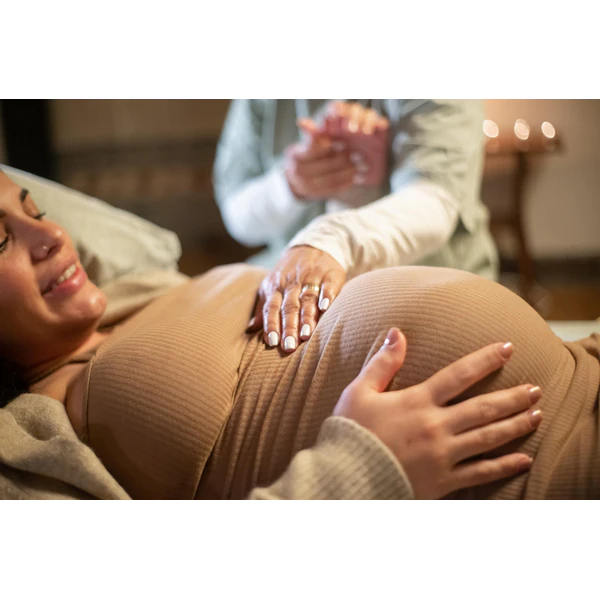
Continuous support during labor has some of the strongest evidence in birth preparation.
A Cochrane review found that women with continuous support were more likely to have spontaneous vaginal birth, less likely to have cesarean birth and more likely to report a better birth experience (2).
Support worked best when the support person was there only for the mother and had some labor support training.
A good support person protects the room. They help you drink, move, breathe, change position, ask questions and stay grounded.
They can remind staff of your preferences without fighting the room. A partner, doula, midwife, nurse or trusted family member can help, but the person needs to stay calm under pressure.
Choose your birth team with care. A person who panics, talks too much or needs comfort from you can make labor harder.
A useful support person knows when to speak, when to stay quiet and when to help you change the plan.
Birth Preferences
A birth plan should be short, direct and easy to read. Use one page if possible.
Name the support people, the kind of room you want, movement preferences, pain coping choices, newborn care preferences and the situations where you want clear consent before action.
The WHO recommends respectful maternity care, clear communication, companionship during labor and care that protects the woman’s dignity and choices (3).
Your plan should also include flexible points. Birth can move in a direction nobody planned. Clear preferences help the team know what you value when choices appear quickly.
Flexibility means you stay involved instead of handing over your body to routine procedures.
Pregnancy Labs Need Context
Blood volume changes during pregnancy can change lab markers without the same meaning as before pregnancy.
Prepare For Labor
Early Labor
Early labor is often long and uneven. Contractions may come and go. Many women get excited too early, stop eating, stop resting and burn energy before active labor begins.
Better preparation means you treat early labor as a slow start unless your clinician has told you otherwise.
Stay home as directed by your birth team when labor is mild and you have no warning signs.
Eat small real food if you can, sip mineral rich fluids, rest between waves, use a warm shower and keep the lights low.
Call your clinician or birth place for bleeding, fever, severe pain between contractions, reduced baby movement, waters breaking with concern or any instruction already given to you.
ACOG notes that women admitted in early labor may have higher intervention rates, while support and comfort measures during early labor can help when mother and baby are well (1).
Early labor needs patience. Your body often does better when the room stays quiet and the clock does not become the main focus.
Active Labor
Active labor asks for less talking and more rhythm. Your support person should help you keep a steady breath, relaxed jaw, loose shoulders and heavy hips.
Tension in the face and throat often travels through the body, so soft breathing can help you stop fighting each wave.
Water can be useful for comfort. A warm shower on the back, warm bath when allowed or warm cloth on the belly can lower stress for some women.
The WHO guideline includes pain relief options that respect the woman’s choice, including non drug methods such as relaxation and manual techniques (4).
Keep changing position when your body asks. Lean forward during waves, rest on your side between waves, kneel, stand, sway or use hands and knees.
Movement gives the baby more chances to rotate. Stillness can be useful for rest, but forced stillness can make labor feel harder.
Pushing Time
Pushing often works best when the body leads. Some women feel a clear urge to bear down. Others need more time for the baby to descend.
ACOG states that women without epidural anesthesia may be encouraged to use their own preferred pushing method, and open glottis breathing may be used instead of forced breath holding (1).
Warm compresses on the perineum during the second stage have evidence for reducing severe perineal tears.
A Cochrane review found that warm compresses reduced third degree and fourth degree tears, while the evidence for some other tear outcomes was weaker (5).
A later review also found that warm perineal compresses lowered severe perineal trauma and postpartum pain (6).
Ask ahead of time whether your birth team uses warm compresses, slow crowning support and calm coaching.
Fast forced pushing can overwhelm tissue in some births. A slower final stretch may give the perineum more time, though every birth is different.
Check vs Skip
| Check | Skip |
|---|---|
| Full iron panel | Iron supplements |
| B12 | Seed Oils |
| Copper markers | Low Fat |
| Symptoms | High Carb |
Lower Stress Signals
Hormone Support
Labor depends on hormones, nerves and muscle. Oxytocin helps the uterus contract. Adrenaline can rise when the room feels unsafe, bright, loud or rushed.
A tense room can make labor feel harder because your body may act as if danger is near.
Create a birth space that protects calm. Dim lights when possible, lower noise, reduce extra visitors and keep voices quiet.
Bring familiar items if allowed, such as a robe, soft music or a simple scent you already tolerate. Avoid strong fragrance because nausea and sensitivity can rise during labor.
Your support person should watch the room. Too many questions during contractions can pull you out of rhythm.
Long explanations belong between waves when possible. Labor needs simple words, steady hands and quiet confidence.
Pain Skills
Pain skills should be practiced before labor. You cannot learn your full coping plan during strong contractions.
Practice slow breathing, low sounds, loose jaw, shoulder release, hip squeeze, counter pressure, warm water and position change.
Pain in labor often comes in waves with breaks between them. The break is valuable.
Use it to drop your shoulders, unclench your hands, drink and rest your face. Your support person can remind you with the same short phrase each time.
Good coping does not mean silent birth. Some women roar, moan, pray, breathe or cry.
The real skill is working with the wave instead of tensing against it for hours. Your body needs oxygen, rhythm and support.
Pregnancy Nutrient Check
Final Weeks
Food & Fluids
The final weeks should protect your energy. Eat dense meals with enough protein and animal fat.
Eggs, beef, lamb, sardines, salmon, oysters, full fat dairy if tolerated and broth based meals are useful.
Stay away from seed oils, fortified grain products, candy drinks and processed snacks.
Mineral balance can affect how you feel near birth. Salted broth, meat, eggs and seafood can support fluid balance better than sweet drinks and low nutrient snacks.
Some women feel best with smaller meals near the end because the stomach has less room.
Prepare freezer meals before labor if possible. Cooked meat, stews, burger patties, broth, egg bakes and simple dairy options can make the first days easier.
Birth recovery is not the time to rely on takeout, cereal or snack bars.
Recovery Setup
A smooth delivery also needs a recovery plan. Set up pads, clean towels, easy food, water, baby supplies, phone chargers, dim lights and a place to rest.
Decide who handles meals, dishes, laundry, visitors and older children.
Protect the first days after birth. The mother needs warmth, food, sleep, help and privacy. Visitors should bring food or help, not expect hosting.
Recovery is easier when the house already knows the plan.
Newborn feeding can be intense at first. Prepare support before birth if you plan to breastfeed. Find a skilled lactation helper, learn normal feeding signs and keep simple food near your bed. A fed mother can handle early feeding demands better than a depleted mother.
For any health concerns or questions about a medical condition, get guidance from a physician or another appropriately trained clinician. Before changing your diet, supplements or health routine, talk with a licensed healthcare professional.
Suggested Posts

Evidence Limits
Research
American College of Obstetricians and Gynecologists. 2019. ACOG Committee Opinion No. 766, approaches to limit intervention during labor and birth. Obstetrics and Gynecology. DOI 10.1097/AOG.0000000000003074. PMID 30575638.
Bohren, M.A. et al. 2017. Continuous support for women during childbirth. Cochrane Database of Systematic Reviews. DOI 10.1002/14651858.CD003766.pub6. PMID 28681500.
World Health Organization. 2018. WHO recommendations, intrapartum care for a positive childbirth experience. World Health Organization.
World Health Organization. 2018. WHO recommendations, intrapartum care for a positive childbirth experience, executive summary. World Health Organization.
Aasheim, V. et al. 2017. Perineal techniques during the second stage of labour for reducing perineal trauma. Cochrane Database of Systematic Reviews. DOI 10.1002/14651858.CD006672.pub3. PMID 28608597.
Maghalian, M. et al. 2024. The effects of warm perineal compress on perineal trauma and postpartum pain during childbirth, a systematic review and meta analysis. Journal of Midwifery and Reproductive Health. PMID 37632600.
Bohren, M.A. et al. 2019. Continuous support for women during childbirth. Nursing for Women’s Health. DOI 10.1016/j.nwh.2019.01.007. PMID 31073265.
Jayasundara, D. et al. 2024. Impact of continuous labor companion, who is the best, a systematic review and meta analysis. PLOS ONE. DOI 10.1371/journal.pone.0298852.
Dwan, K. et al. 2024. Perineal techniques during the second stage of labour for reducing perineal trauma. Cochrane Database of Systematic Reviews. PMID 39465967.
Sun, R. et al. 2024. Effects of perineal warm compresses during the second stage of labor on reducing perineal injury and postpartum perineal pain relief, a systematic review and meta analysis. BMC Pregnancy and Childbirth. DOI 10.1186/s12884-024-06481-8.
Modoor, S. et al. 2021. The effect of warm compresses on perineal tear and pain intensity during the second stage of labor, a randomized controlled trial. Belitung Nursing Journal. DOI 10.33546/bnj.1493. PMID 37469554.
Dahlen, H.G. et al. 2007. Perineal outcomes and maternal comfort related to the application of perineal warm packs in the second stage of labor, a randomized controlled trial. Birth. DOI 10.1111/j.1523-536X.2007.00186.x. PMID 18021145.
Albers, L.L. et al. 2005. Midwifery care measures in the second stage of labor and reduction of genital tract trauma at birth, a randomized trial. Journal of Midwifery & Women’s Health. DOI 10.1016/j.jmwh.2005.05.012. PMID 16154062.
Lunda, P. et al. 2018. Women’s experiences of continuous support during childbirth, a meta synthesis. BMC Pregnancy and Childbirth. DOI 10.1186/s12884-018-1755-8. PMID 29793442.
Hodnett, E.D. et al. 2012. Continuous support for women during childbirth. Cochrane Database of Systematic Reviews. DOI 10.1002/14651858.CD003766.pub4. PMID 23076901.