Key Takeaways
- Gardening trains strength, balance and grip through normal work with soil and tools.
- Digging, lifting and carrying can build useful strength for daily movement.
- Kneeling, reaching and standing help hips, ankles and back stay mobile.
- Regular garden work can support heart health, blood sugar and blood pressure.
- Outdoor garden time gives movement, light and steadier body rhythm together.
Garden Work Builds Strength
Useful Muscle Work
Gardening makes your body work in ways that match normal life. You squat to reach soil, carry buckets across the yard and pull weeds with your hands.
These jobs train your body to move weight, hold positions and repeat steady effort. Many people think of exercise as gym time only. Garden work gives a different kind of training.
The load changes through the day because soil, tools and plants all demand small changes in force. That keeps the hands, legs and trunk involved.
Physical activity supports strength, balance, movement and daily function as people age (1).
Gardening can supply some of that work because it makes your body bend, lift and reach during a real task.
Grip & Hands
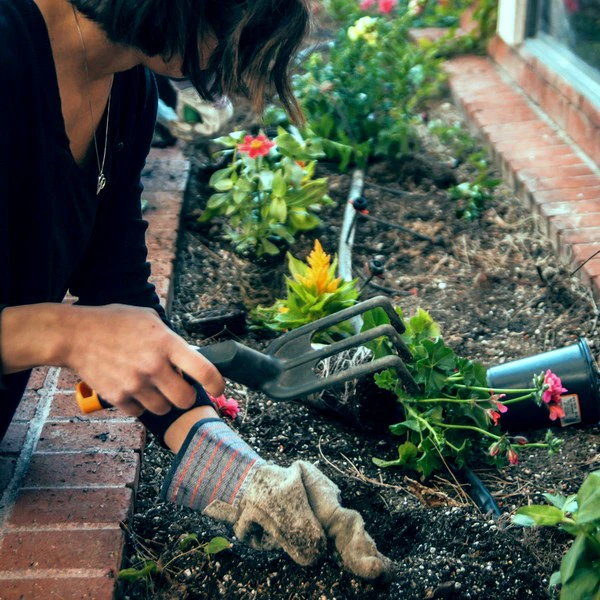
Hands work hard in a garden. Pulling weeds, turning soil and using hand tools train grip without special equipment. Your fingers hold, twist and squeeze while the wrists keep changing angle.
Grip strength is more than hand strength. It reflects how well the arms, shoulders and nervous system work together.
Garden tasks train that connection because the hand has to adjust to roots, stems and soil.
Tool choice changes the load. A hand fork trains the wrist more than a long handled fork. Pruners train squeeze strength more than a rake. Thick handles can make tools easier to hold for stiff hands.
Legs & Back
Gardening trains the legs when you squat, step, carry and stand from the ground.
The hips and thighs work when you lift a pot or rise from kneeling. The calves and ankles work when the ground is uneven.
The back also gets trained when garden work is paced well. Raking, digging and lifting use the trunk because the body has to brace and move at the same time.
These movements can build useful strength when the load stays controlled.
Poor form can strain the back. Keep loads close to the body. Use the legs when lifting. Change sides during raking or digging so one side does not take all the work.
Mobility From Real Tasks
Hips & Ankles
Garden work takes the joints through more positions than sitting or walking on flat ground. Kneeling opens the hips.
Squatting uses the knees and ankles. Reaching across a bed moves the shoulders and spine.
Daily life often gets narrow when people sit too much. The garden asks for more range. Small changes in height, surface and direction keep the body from using the same path all day.
Mobility improves when joints move often and safely. Gardening offers short repeats of bending, reaching and standing. That kind of regular use helps joints stay comfortable during normal tasks.
Balance
Garden ground is rarely flat. Grass, mulch, stones and soil make the feet adjust. Stepping over a hose or around a bed trains balance in a quiet way.
Balance is tied to strength and reaction time. The body has to sense the ground and respond quickly. Garden work gives small balance challenges without needing a formal workout.
Falls become more likely when strength and balance decline with age. Reviews of physical activity in older adults show that movement helps preserve function and reduce fall risk (1).
Garden work can support these same skills when the space is safe and the pace is controlled.
Less Stiffness
A body that changes position often tends to feel less stiff than a body that stays in one chair.
Gardening breaks up long sitting. It moves the knees, hips, shoulders and hands through many small jobs.
Short sessions work well. Ten minutes of watering, pruning or light weeding can loosen the body without causing fatigue. Longer jobs can be split across the day.
Pain is a signal to adjust the work. Use knee pads, raised beds or long handled tools when the ground is hard on the body. The goal is steady movement that can be repeated.
Soil Quality Changes The Result
Plant health depends on soil, water, sunlight, pests and mineral balance.
Heart & Blood Sugar
Steady Effort
Gardening can raise heart rate without feeling like formal exercise. Digging, carrying and pushing a wheelbarrow all demand steady work.
Lighter jobs such as watering and pruning still keep the body moving.
CDC guidance says regular physical activity supports heart health, brain health, sleep and blood sugar control (2).
Gardening can help people meet activity needs because it gives a reason to move often.
The best part is consistency. A garden gives repeat tasks every week. Plants need water, beds need clearing and soil needs care. The work keeps calling the body back outside.
Blood Sugar
Muscles use glucose when they work. Garden work can help move glucose out of the blood and into active muscle. This is useful after meals and during long periods of sitting.
Harder jobs can create a stronger effect. Carrying compost, turning soil or digging a bed uses more muscle than light watering. Even light garden work can help when it replaces sitting.
Movement after meals often improves glucose handling. A garden gives an easy reason to stand up after eating.
Watering plants, checking beds or picking herbs can turn idle time into useful movement.
Blood Pressure
Blood pressure often responds well to regular movement. Garden work can support circulation because it uses the legs, arms and trunk together.
Outdoor work may also help stress levels because nature exposure can calm the nervous system.
A gardening intervention in older women improved physical and psychological measures after repeated sessions (3).
The study used planned gardening work, which shows how garden tasks can become steady health support.
Heavy heat changes the risk. Work earlier in the day when the sun is strong. Drink enough water. Stop when dizziness, chest pressure or unusual shortness of breath appears.
Use vs Avoid
| Use | Avoid |
|---|---|
| Compost | Overwatering |
| Clean water | Poor drainage |
| Healthy soil | Unknown sprays |
| Pest inspection | Ignoring soil problems |
Bones, Sun & Recovery
Bone Loading
Bones respond to load. Carrying a watering can, moving soil and lifting pots add small loading signals. These signals differ from walking because the body handles weight in the hands and arms.
Gardening also involves rising from the ground and stepping over uneven surfaces. These movements train legs and hips.
Strength and balance activity can support bones and reduce fall risk in older adults (4).
Use loads that fit the body. A half full bucket is better than one heavy bucket that strains the back. More trips with lighter loads can still train the body well.
Sunlight
Outdoor gardening brings light exposure. Morning light helps set the body clock. A steady body clock supports sleep timing and daily energy rhythm.
Sun exposure also connects the body to the day. Many people spend most hours indoors under artificial light.
Garden work moves the body outside where the eyes and skin receive stronger natural signals.
Avoid burning. Work in the morning or later afternoon when the sun is easier to handle. Use shade during harsh heat.
Sleep Pressure
Physical work can improve sleep pressure by using energy through the day. Garden work also lowers late day sitting when it becomes a normal routine.
The body often sleeps better after useful outdoor effort.
A review on gardening and health reported positive effects across well being, mental health and health status, although studies varied in design and quality (5).
The sleep effect may come from movement, outdoor light and stress relief working together.
Evening gardening should stay light when sleep is the goal. Heavy work late at night can raise alertness.
Gentle watering or harvesting can give calm movement without turning the evening into a hard session.
Garden Check
Safer Garden Movement
Better Pacing
Garden injuries often come from doing too much in one session. Spring cleanup can tempt people to lift, dig and bend for hours after months of lower activity.
The body handles work better when the load builds over time.
Start with shorter sessions. Rotate jobs every fifteen to twenty minutes. Move from weeding to watering, then from pruning to carrying.
Different tasks spread the work across more joints and muscles.
Warm up with easy jobs first. Walk the garden. Water plants. Pull a few small weeds. Save heavier lifting until the body feels ready.
Simple Form
Lift close to the body. Keep feet planted before pulling. Turn the whole body instead of twisting hard through the back.
Use tools that match the job. Long handles reduce deep bending. Kneeling pads protect the knees. Raised beds reduce the need to work near the ground.
Stop before the body is exhausted. Tired muscles lose control. Good garden work should leave the body used, not wrecked.
Stronger Routine
Short daily work often beats one long weekend push. The body gets more steady movement and the garden stays easier to manage.
Use the garden as normal body maintenance. Carry small loads. Squat when it feels safe. Walk the yard and check plants. These small actions build useful strength over months.
The physical value goes beyond calorie burn. Gardening trains hands, legs, joints, balance, heart and daily rhythm. It gives the body a reason to move with purpose.
Suggested Posts

Evidence Limits
Research
Langhammer, B., Bergland, A. and Rydwik, E., 2018. The importance of physical activity exercise among older people. BioMed Research International, 2018, 7856823. DOI 10.1155/2018/7856823. PMID 30627571.
Centers for Disease Control and Prevention, 2025. Benefits of Physical Activity. CDC.
Park, S.A., Lee, A.Y., Park, H.G. and Lee, K.S., 2016. Gardening intervention for physical and psychological health benefits in elderly women. HortTechnology, 26, 474 to 483. DOI 10.21273/HORTTECH.26.4.474.
Public Health England, 2018. Major health benefits from strengthening and balance activity. GOV.UK.
Panțiru, I., Ronaldson, A., Sima, N., Dregan, A. and Sima, R., 2024. The impact of gardening on well being, mental health and quality of life. A systematic review and meta analysis. Systematic Reviews, 13, 45. DOI 10.1186/s13643 024 02457 9. PMID 38383235.
Wang, F. and Boros, S., 2025. Effect of gardening activities on domains of health. A systematic review and meta analysis. BMC Public Health, 25, 849. DOI 10.1186/s12889 025 22263 9.
Adams, M.A., Todd, C., Angulo Barroso, R., Rimmer, J.H. and Bauman, A.E., 2023. Effects of physical activity interventions on strength, balance and falls in middle aged adults. Sports Medicine Open, 9, 71. DOI 10.1186/s40798 023 00606 3. PMID 37615764.
Weng, W.H., Hsiao, C.H., Chiu, H.L., Tsai, Y.F. and Wang, J.J., 2022. Effects of strength exercises combined with other training on physical performance in frail older adults. Archives of Gerontology and Geriatrics, 103, 104788. DOI 10.1016/j.archger.2022.104788. PMID 35724665.
Wickramarachchi, B., Kinsman, L., Gearon, E. and Pattuwage, L., 2023. Effects of physical activity on physical fitness and functional ability in older adults. Healthcare, 11, 1046. DOI 10.3390/healthcare11071046. PMID 37046964.
Twohig Bennett, C. and Jones, A., 2018. The health benefits of the great outdoors. A systematic review and meta analysis of greenspace exposure and health outcomes. Environmental Research, 166, 628 to 637. DOI 10.1016/j.envres.2018.06.030. PMID 29982151.
Berman, M.G., Jonides, J. and Kaplan, S., 2008. The cognitive benefits of interacting with nature. Psychological Science, 19, 1207 to 1212. DOI 10.1111/j.1467 9280.2008.02225.x. PMID 19121124.
Hartig, T., Mitchell, R., de Vries, S. and Frumkin, H., 2014. Nature and health. Annual Review of Public Health, 35, 207 to 228. DOI 10.1146/annurev publhealth 032013 182443. PMID 24387090.
Kelley, K., Snell, R. and Backs, R., 2021. Gardening activities and physical health outcomes in older adults. Activities, Adaptation and Aging, 45, 275 to 293. DOI 10.1080/01924788.2020.1847155.
Scott, T.L., Masser, B.M. and Pachana, N.A., 2020. Exploring the health and wellbeing benefits of gardening for older adults. Ageing and Society, 40, 1 to 23. DOI 10.1017/S0144686X18000865.
Soga, M., Gaston, K.J. and Yamaura, Y., 2017. Gardening is beneficial for health. A meta analysis. Preventive Medicine Reports, 5, 92 to 99. DOI 10.1016/j.pmedr.2016.11.007. PMID 27981022.