Key Takeaways
- Mitophagy clears damaged mitochondria before they create more stress inside your cells.
- Poor mitophagy can leave weak mitochondria behind and lower steady energy output.
- Aging muscle often struggles when damaged mitochondria build up over time.
- Exercise, sleep, protein and mineral balance help the body keep cleaner cells.
- Urolithin A has human evidence for mitophagy support and better muscle endurance.
Mitophagy Basics
Cell Cleanup
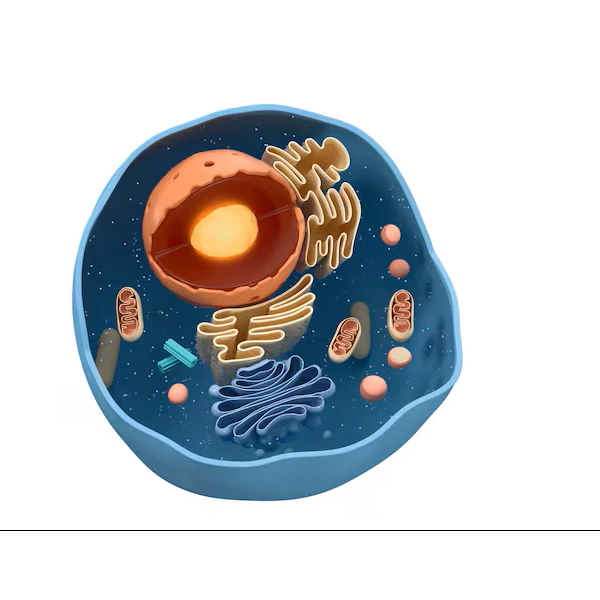
Mitophagy is the cleanup system your cells use to remove damaged mitochondria. Mitochondria help turn food into usable energy.
They also help control stress signals inside the cell. When old mitochondria stop working well, the cell tags them for removal and sends them to the recycling system (1).
Damaged Mitochondria
Damaged mitochondria can leak more reactive oxygen species. These are unstable molecules that can damage fats, proteins and DNA when they rise too far.
A healthy cell does not leave weak mitochondria sitting around forever. It breaks them down and reuses the parts.
A cell with poor mitophagy can become messy inside. Weak mitochondria can pile up and make energy production less steady.
The cell then has to handle more stress while getting less useful energy. Over time, that can show up as fatigue, poor recovery and weaker tissue function.
Mitophagy also helps keep the mitochondria pool fresh. The cell removes the damaged parts and supports newer mitochondria that work better.
This balance helps the cell make energy with less waste. Reviews link this process with aging, muscle health and brain health (2).
Removal Routes
One known route uses PINK1 and Parkin. When a mitochondrion loses normal function, PINK1 builds up on its surface.
Parkin then helps mark the damaged mitochondrion for removal. This pathway is often studied because it shows how cells can detect and clear faulty mitochondria (3).
Cells also use receptor based routes. These routes can help remove mitochondria during low oxygen, fasting states or tissue stress.
The body has more than one way to do the job because mitochondria are too important to leave unmanaged. Strong cell cleanup needs flexible routes, not one single switch.
Aging & Energy
Muscle Fatigue
Older muscle often tires faster because the cell cleanup system becomes less efficient. Damaged mitochondria can build up inside muscle fibers and make repeated work harder.
Mitophagy helps remove that worn machinery. Better cleanup can help muscle keep working longer before fatigue takes over (4).
Brain & Nerves
Brain cells use a large amount of energy. They depend on steady mitochondrial function because they do not handle energy failure well.
Poor mitophagy has been linked with several brain aging problems in research.
The strongest mechanistic work sits around Parkinson related pathways, where PINK1 and Parkin have been studied for years (5).
Nerve cells are long lived. They need to keep their internal parts clean for decades. Damaged mitochondria inside nerve cells can increase stress and weaken normal signaling.
Mitophagy helps protect these cells by clearing faulty mitochondria before they cause more trouble.
Brain research does not mean a supplement can fix every brain problem. Human proof is still much thinner than the cell and animal work.
The clean statement is direct. Brain cells need mitochondrial cleanup, and poor cleanup is tied to aging and nerve damage research.
Oxidative Stress
Weak mitochondria can create more oxidative stress. The cell then has to spend more energy controlling damage instead of doing normal work.
Mitophagy reduces this burden by removing the worst mitochondria from the cell. Less damaged machinery usually means less waste from energy production.
Oxidative stress should not be treated as a random problem. It often points back to poor energy handling, weak antioxidant systems and damaged cell parts.
Mitochondria sit near the center of that process. Cleaner mitochondria can lower the stress load inside the cell.
ATP Depends On Minerals
ATP production needs minerals, oxygen handling, fuel and working mitochondria.
Support For Mitophagy
Strength & Movement
Hard muscle work tells the body which tissue needs upkeep. Strength training, loaded carries and sprint work can raise demand on muscle cells.
That demand tells muscle to repair, rebuild and keep better mitochondria. A person who never challenges muscle gives the body a weak signal for maintenance.
Movement also helps energy flow through the whole system. Muscles pull glucose and fats into use.
They also create signals that affect inflammation and repair. Regular work gives the body a reason to remove weak cell parts and keep stronger tissue ready for use.
Overtraining can push the other way. Too much training with poor sleep can leave the body under repaired.
Mitophagy needs recovery time because cleanup is only one part of repair. Muscle also needs protein, minerals and enough rest to rebuild after the cleanup.
A steady routine works better than punishment. Two or three hard strength sessions each week can give a clear signal without constant exhaustion.
Daily walking can add blood flow and low stress movement. The best routine gives the cell a reason to adapt and enough time to recover.
Food & Repair
Mitophagy removes damaged parts, but the body still needs material to rebuild. Prioritize grass fed ruminant meat, organs and pasture raised eggs.
Add wild seafood if tolerated. These foods provide complete protein, minerals and fat soluble nutrients in forms the body can use.
Stable animal fats also help energy feel steadier. Butter, ghee and tallow are better choices than seed oils.
Low fat eating can leave people underfed and weaker over time. Carbohydrates should stay low enough to avoid swings in hunger, mood and energy.
Urolithin A
Urolithin A is one of the better studied compounds for mitophagy support in humans. It is made by some gut bacteria after a person eats certain plant compounds.
Many people make little or none. Direct urolithin A gives the finished compound without relying on gut conversion first.
A trial in older adults used 1000 milligrams daily for four months. People taking urolithin A improved endurance in hand and leg muscle tests.
Blood markers also moved in a direction linked with mitochondrial health. The same study did not show a clear gain in six minute walk distance (4).
A trial in middle aged adults found better strength, better exercise results and improved mitochondrial markers after daily urolithin A.
These results do not prove broad anti aging effects. They do support a focused claim. Urolithin A may help muscle handle repeated work by supporting mitochondrial cleanup (6).
Better vs Worse
| Better | Worse |
|---|---|
| Magnesium | Poor sleep |
| Copper status | Sugar |
| Protein intake | Iron overload |
| Strength work | No movement |
Risks & Limits
Too Much Stress
Mitophagy is a repair process, but the body still needs enough food and rest. Fasting, hard training and low calorie eating can all raise cleanup signals.
Adding several supplements on top can push a tired person further into stress. Fatigue, poor sleep and cold hands can mean the base is too weak.
A person should not chase mitophagy every day with aggressive fasting and heavy supplement stacks. The body needs cleanup and rebuilding.
Cleanup without rebuilding can leave someone feeling worse. Strong repair needs protein, minerals, stable food intake and sleep that actually restores the body.
Supplement Claims
Many supplements are sold as autophagy or mitophagy boosters. Some have lab support, but human outcomes are often limited.
Urolithin A has stronger human muscle data than many popular options. Resveratrol, curcumin, spermidine and berberine touch related pathways, but they also carry more interaction questions.
Better Tracking
Track real muscle output before judging a mitophagy plan. Grip time, walking distance, stair repeats and lifting volume give cleaner feedback than mood alone.
Energy can change for many reasons. A repeatable test helps show whether the body handles work better over time.
Sleep should be tracked too. Poor sleep can bury any small gain from a supplement or training change.
A person with broken sleep may need more food, sunlight and better rhythm before chasing cell cleanup. Repair is much harder when sleep stays poor.
Digestion also gives useful feedback. Bloating, loose stool or nausea after a supplement means the body is not handling it well. A reaction does not prove the compound is bad for everyone. It means the dose, timing or product may be wrong for that person.
For any health concerns or questions about a medical condition, get guidance from a physician or another appropriately trained clinician. Before changing your diet, supplements or health routine, talk with a licensed healthcare professional.
Suggested Posts

Evidence Limits
Research
Picca, A. et al. 2023. Mitophagy in human health, ageing and disease. Nature Metabolism. DOI: 10.1038/s42255-023-00930-8. PMID: 38036770.
D’Arcy, M.S. 2024. Mitophagy in health and disease. Molecular mechanisms, regulatory pathways, and therapeutic implications. Journal of Cellular Physiology. PMID: 38758472.
Lazarou, M. et al. 2015. The ubiquitin kinase PINK1 recruits autophagy receptors to induce mitophagy. Nature. DOI: 10.1038/nature14893. PMID: 26266977.
Liu, S. et al. 2022. Effect of Urolithin A Supplementation on Muscle Endurance and Mitochondrial Health in Older Adults: A Randomized Clinical Trial. JAMA Network Open. DOI: 10.1001/jamanetworkopen.2021.44279. PMID: 35050355.
Li, J. et al. 2023. PINK1/Parkin mediated mitophagy in neurodegenerative diseases. Ageing Research Reviews. DOI: 10.1016/j.arr.2022.101795. PMID: 36503124.
Singh, A. et al. 2022. Urolithin A improves muscle strength, exercise performance, and biomarkers of mitochondrial health in a randomized trial in middle aged adults. Cell Reports Medicine. DOI: 10.1016/j.xcrm.2022.100633. PMID: 35584623.
Wang, S. et al. 2023. The mitophagy pathway and its implications in human diseases. Signal Transduction and Targeted Therapy. DOI: 10.1038/s41392-023-01503-7.
Denk, D. et al. 2025. Effect of the mitophagy inducer urolithin A on age related immune remodeling in humans. Nature Aging. DOI: 10.1038/s43587-025-00996-x.
Narendra, D. et al. 2008. Parkin is recruited selectively to impaired mitochondria and promotes their autophagy. Journal of Cell Biology. DOI: 10.1083/jcb.200809125. PMID: 19029340.
Matsuda, N. et al. 2010. PINK1 stabilized by mitochondrial depolarization recruits Parkin to damaged mitochondria and activates latent Parkin for mitophagy. Journal of Cell Biology. DOI: 10.1083/jcb.200910140. PMID: 20404107.
Fivenson, E.M. et al. 2017. Mitophagy in neurodegeneration and aging. Neurochemistry International. DOI: 10.1016/j.neuint.2017.02.007. PMID: 28216184.
Palikaras, K. et al. 2018. Mechanisms of mitophagy in cellular homeostasis, physiology and pathology. Nature Cell Biology. DOI: 10.1038/s41556-018-0176-2. PMID: 30224723.
Pickles, S. et al. 2018. Mitophagy and quality control mechanisms in mitochondrial maintenance. Current Biology. DOI: 10.1016/j.cub.2018.05.004. PMID: 30154436.
Faitg, J. et al. 2023. Mitophagy Activation by Urolithin A to Target Muscle Aging. International Journal of Molecular Sciences. DOI: 10.3390/ijms25010001.
Andreux, P.A. et al. 2019. The mitophagy activator urolithin A is safe and induces a molecular signature of improved mitochondrial and cellular health in humans. Nature Metabolism. DOI: 10.1038/s42255-019-0073-4. PMID: 32694802.