Key Takeaways
- Lemon balm may help some people sleep better, especially when stress or worry keeps them awake.
- One small study found more deep sleep, but the researchers measured it with a wristwatch.
- Other studies found better sleep after lemon balm, although some tested it alongside other herbs.
- Lemon balm contains plant compounds that may affect GABA, a chemical that helps calm nerve activity.
- Tea and capsules are different preparations, and most sleep trials tested extracts rather than ordinary tea.
Lemon Balm & Sleep
The Plant
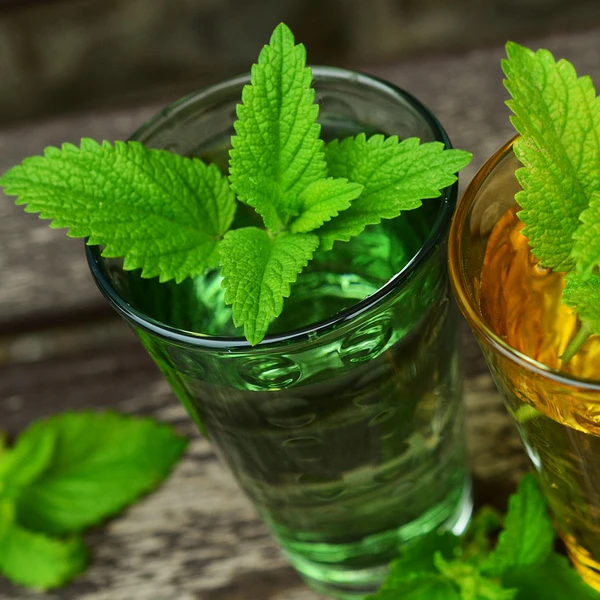
Lemon balm, also called Melissa officinalis, is a herb from the mint family. Its leaves have a mild lemon smell and have been used for centuries to make calming teas.
The leaves contain rosmarinic acid and other natural compounds that may affect the nervous system. Researchers have tested lemon balm for anxiety, stress and poor sleep.
Deep Sleep Study
A study published in December 2024 tested lemon balm in 30 adults who regularly woke up feeling tired.
The researchers wanted to see whether lemon balm could improve sleep and increase the time spent in deeper stages of sleep.
Everyone took both lemon balm and a placebo at different times during the study. The lemon balm contained a concentrated extract prepared to help the body absorb its active compounds.
After taking lemon balm, 87% of participants reported better sleep. Only 30% reported improvement while taking the placebo.
The researchers also recorded an average increase of 15% in deep sleep. Participants reported fewer problems with insomnia, although the study found no significant improvement in anxiety.
The researchers used Garmin wristwatches to estimate how much time participants spent in different sleep stages.
These devices measure movement and changes in heart rate. They cannot measure brain waves directly, so the reported increase in deep sleep needs confirmation using a laboratory sleep test. (1)
Other Sleep Trials
In 2023, researchers tested lemon balm extract in 100 adults who had problems with stress, anxiety or sleep.
Half received 400 mg of a specially prepared lemon balm extract each day for three weeks, while the others received a placebo.
The people taking lemon balm reported better sleep and less stress than those taking the placebo. They also reported improvements in anxiety and mood.
The researchers used questionnaires to measure these changes. They did not record brain activity during sleep, so the study cannot tell us whether the participants spent more time in deep sleep. (2)
Another study tested lemon balm in 80 people with heart disease. The participants took either 3 grams of lemon balm or a placebo each day for eight weeks.
Those taking lemon balm reported less anxiety and better sleep. Their sleep questionnaires showed fewer problems with falling asleep and staying asleep. (3)
Stress & Sleep
Feeling Calmer
Stress can make sleep difficult even when someone feels physically tired. Worries may keep returning when the lights go out, making it harder to relax and fall asleep.
Lemon balm has been tested for its calming effects during stressful situations.
In one study, researchers gave healthy adults different amounts of lemon balm before asking them to complete demanding mental tasks.
People who received 600 mg reported feeling calmer than those who received a placebo. The researchers also found differences in how the participants responded to the stressful tasks.
The study examined short term stress rather than sleep, but its findings help explain why lemon balm may be useful when someone struggles to relax at bedtime. (4)
A 2021 review examined human trials involving lemon balm for anxiety and depression. The researchers found improvements in both conditions compared with placebo.
However, the trials differed in the preparations used and how long treatment lasted. The review provides evidence for a calming effect, although it cannot establish which dose works best for everyone. (5)
GABA & Relaxation
GABA is a chemical made by the brain that helps reduce nerve activity. It helps prevent nerve cells from becoming too active and contributes to relaxation.
Lemon balm contains rosmarinic acid, which researchers have studied for its possible effects on GABA.
Laboratory experiments found that compounds in lemon balm can interfere with an enzyme called GABA transaminase. This enzyme helps break down GABA.
Slowing that process could allow GABA to remain active for longer. However, laboratory experiments cannot tell us how much GABA changes in the human brain after someone drinks lemon balm tea or takes an extract.
Researchers have also examined whether lemon balm affects other chemicals involved in mood and alertness. These possible effects may help explain why some people report feeling calmer after taking it.
A human study that directly measured changes in brain GABA after ordinary lemon balm use would help answer this more clearly.
Keep Your Wake Up Time The Same
Waking up the same time everyday even weekends might be more important than bedtime.
Lemon Balm With Other Herbs
Combined Preparations
Several sleep studies used lemon balm together with another herb. Some found better sleep, although the researchers could not determine how much of the improvement came from lemon balm itself.
A 2013 trial involved 100 women aged 50 to 60 who were having sleep problems during menopause.
Half received a combination of valerian and lemon balm, while the others received a placebo.
The women taking the herbal combination reported fewer sleep problems after treatment. The researchers used sleep questionnaires rather than laboratory measurements. (6)
Another trial tested lemon balm together with a herb called Nepeta menthoides in adults with insomnia.
Participants took the herbal preparation or a placebo each night for four weeks. Those taking the herbs reported less severe insomnia and better sleep.
Their sleep diaries also showed an increase in the amount of time they spent asleep. The researchers used 1,000 mg of lemon balm alongside 400 mg of the other herb. (7)
These studies show that some preparations containing lemon balm have helped people sleep. They do not establish whether the same results would occur with lemon balm taken alone.
A Trial With No Benefit
A 2024 trial produced different results. Researchers tested a supplement containing lemon balm, valerian, saffron and L theanine in adults who had poor sleep.
The study included 64 people, who took either the herbal combination or a placebo for six weeks.
Both groups reported better sleep by the end of the study, but the supplement group did not improve more than the placebo group.
Wristwatch measurements also found no clear benefit in the amount of time participants spent asleep or how often they woke during the night.
The trial shows that adding several herbs to a supplement does not guarantee better sleep. It also cannot tell us whether lemon balm alone would have produced different results. (8)
Better vs Worse
| Better | Worse |
|---|---|
| Morning light | Late caffeine |
| Dark evening | Bright screens at night |
| Cool room | Hot room |
| Same Waking time | Late stress |
Using Lemon Balm
Tea & Extracts
Lemon balm can be prepared as tea using fresh or dried leaves. The leaves are soaked in hot water, allowing some of their natural compounds to enter the drink.
Tea usually contains a smaller and less predictable amount of active compounds than a concentrated extract.
Extracts are available as capsules, tablets and liquid preparations. The amount of rosmarinic acid can differ considerably between products, even when the labels show similar amounts of lemon balm.
The studies also used different preparations. Some tested dried leaf powder, while others used extracts prepared to improve absorption.
In a 2011 study, twenty adults with anxiety and sleep difficulties took 600 mg of a standardised lemon balm extract daily for fifteen days.
Participants reported a 42% reduction in insomnia symptoms. However, everyone received the extract and there was no placebo group, so the study could not show how much improvement came directly from lemon balm. (9)
Timing & Sleep Problems
Lemon balm tea can be taken in the evening as part of a regular bedtime routine. A warm drink may also help someone settle down before going to bed.
The clinical trials did not all use lemon balm at bedtime. Some divided the daily amount into morning and evening doses, while others used a single daily dose.
The research has not established one best time for taking lemon balm. It has also not established whether drinking tea produces the same effects as the extracts used in clinical trials.
Someone who falls asleep easily but wakes repeatedly during the night may respond differently from someone who struggles to fall asleep in the first place.
If stress is keeping someone awake, lemon balm may help by making it easier to relax. Frequent waking can also have other causes, including sleep apnoea, pain and changes in sleep timing.
Lemon balm will not correct those problems simply by making someone feel calmer.
Safety & Longer Use
Most human studies reported few side effects from lemon balm. Some participants experienced mild digestive complaints or headaches, although these problems were not common.
Lemon balm may increase drowsiness when combined with medicines or other herbs that cause sleepiness. There is also limited research on its use during pregnancy and breastfeeding.
Most controlled sleep studies lasted only a few weeks, leaving less information about regular use over many months.
In a 2026 study, 32 adults with poor sleep or emotional stress took either 200 mg or 400 mg of a lemon balm preparation each day for three weeks.
Both groups reported better sleep, with greater improvements among people taking 400 mg. However, the study had no placebo group, making it difficult to separate the effects of lemon balm from other changes during the three weeks. (10)
Lemon balm may help some people fall asleep more comfortably and wake feeling better rested. The strongest direct evidence comes from small studies using concentrated extracts.
One trial also found more deep sleep, although the researchers relied on wristwatch measurements. Larger studies using proper sleep recordings are needed to determine whether lemon balm consistently increases deep sleep.
For any health concerns or questions about a medical condition, get guidance from a physician or another appropriately trained clinician. Before changing your diet, supplements, or health routine, talk with a licensed healthcare professional.
Suggested Posts
Evidence Limits
Research
Di Pierro, F. et al. (2024) ‘Effects of Melissa officinalis Phytosome on Sleep Quality: Results of a Prospective, Double-Blind, Placebo-Controlled, and Cross-Over Study’, Nutrients, 16(23), 4199.
Bano, A. et al. (2023) ‘The possible “calming effect” of subchronic supplementation of a standardised phospholipid carrier-based Melissa officinalis L. extract in healthy adults with emotional distress and poor sleep conditions: results from a prospective, randomised, double-blinded, placebo-controlled clinical trial’, Frontiers in Pharmacology, 14, 1250560.
Haybar, H. et al. (2018) ‘The effects of Melissa officinalis supplementation on depression, anxiety, stress, and sleep disorder in patients with chronic stable angina’, Clinical Nutrition ESPEN, 26, pp. 47–52.
Kennedy, D.O., Little, W. and Scholey, A.B. (2004) ‘Attenuation of laboratory-induced stress in humans after acute administration of Melissa officinalis (Lemon Balm)’, Psychosomatic Medicine, 66(4), pp. 607–613.
Ghazizadeh, J. et al. (2021) ‘The effects of lemon balm (Melissa officinalis L.) on depression and anxiety in clinical trials: A systematic review and meta-analysis’, Phytotherapy Research, 35(12), pp. 6690–6705.
Taavoni, S., Nazem Ekbatani, N. and Haghani, H. (2013) ‘Valerian/lemon balm use for sleep disorders during menopause’, Complementary Therapies in Clinical Practice, 19(4), pp. 193–196.
Ranjbar, M. et al. (2018) ‘Efficacy of a Combination of Melissa officinalis L. and Nepeta Menthoides Boiss. & Buhse on Insomnia: A Triple-Blind, Randomized Placebo-Controlled Clinical Trial’, Journal of Alternative and Complementary Medicine, 24.
Gutiérrez-Romero, S.A. et al. (2024) ‘Effect of a nutraceutical combination on sleep quality among people with impaired sleep: a randomised, placebo-controlled trial’, Scientific Reports, 14, 8062.
Cases, J., Ibarra, A., Feuillère, N., Roller, M. and Sukkar, S.G. (2011) ‘Pilot trial of Melissa officinalis L. leaf extract in the treatment of volunteers suffering from mild-to-moderate anxiety disorders and sleep disturbances’, Mediterranean Journal of Nutrition and Metabolism, 4(3), pp. 211–218.
Rondanelli, M. et al. (2026) ‘Melissa phospholipids improves sleep quality and mental well-being: concluding results from clinical study in adults with emotional distress’, Food & Nutrition Research, 70.
Oliveira, M.V.B. et al. (2025) ‘Unraveling the Effects of Melissa officinalis L. on Cognition and Sleep Quality: A Narrative Review’, International Journal of Molecular Sciences, 26(21), 10566.
Mathews, I.M. et al. (2024) ‘Clinical Efficacy and Tolerability of Lemon Balm (Melissa officinalis L.) in Psychological Well-Being: A Review’, Nutrients, 16(20), 3545.
Soltanpour, A. et al. (2019) ‘Effects of Melissa officinalis on anxiety and sleep quality in patients undergoing coronary artery bypass surgery: A double-blind randomized placebo controlled trial’, European Journal of Integrative Medicine, 28, pp. 27–32.
Ranjbar, M. et al. (2018) ‘Effects of Herbal combination (Melissa officinalis L. and Nepeta menthoides Boiss. & Buhse) on insomnia severity, anxiety and depression in insomniacs: Randomized placebo controlled trial’, Integrative Medicine Research, 7(4), pp. 328–332.
Shirazi, M., Jalalian, M.N., Abed, M. and Ghaemi, M. (2021) ‘The Effectiveness of Melissa Officinalis L. versus Citalopram on Quality of Life of Menopausal Women with Sleep Disorder: A Randomized Double-Blind Clinical Trial’, Revista Brasileira de Ginecologia e Obstetrícia, 43(2), pp. 126–130.
Müller, S.F. and Klement, S. (2006) ‘A combination of valerian and lemon balm is effective in the treatment of restlessness and dyssomnia in children’, Phytomedicine, 13(6), pp. 383–387.
Kennedy, D.O. et al. (2003) ‘Modulation of Mood and Cognitive Performance Following Acute Administration of Single Doses of Melissa Officinalis (Lemon Balm) with Human CNS Nicotinic and Muscarinic Receptor-Binding Properties’, Neuropsychopharmacology, 28, pp. 1871–1881.
Shakeri, A., Sahebkar, A. and Javadi, B. (2016) ‘Melissa officinalis L. – A review of its traditional uses, phytochemistry and pharmacology’, Journal of Ethnopharmacology, 188, pp. 204–228.