Key Takeaways
- Homocysteine is made in the body during normal protein use.
- High homocysteine is linked with more heart and stroke risk.
- Folate, vitamin B12, and vitamin B6 help keep levels in range.
- Some gene changes, such as MTHFR, can raise homocysteine levels.
- Lowering homocysteine does not always lower disease events in trials.
Homocysteine is a natural amino acid byproduct made in the body. It forms when methionine, an amino acid from food, is used for daily cell work. The body usually recycles homocysteine or breaks it down with help from key nutrients.
When that process slows down, blood homocysteine can rise. Research has linked high levels with heart disease, stroke, and blood vessel damage, though the full story is more complex than one blood test alone (Homocysteine Studies Collaboration, 2002).
What Is Homocysteine
How The Body Makes It
Homocysteine is made inside the body during the use of methionine. This is part of normal metabolism, which means the chemical steps that turn food into energy and body parts.
The body has two main ways to handle homocysteine. One route turns it back into methionine. The other route changes it into cysteine, which is used for other cell jobs. These steps need enough folate, vitamin B12, and vitamin B6 to run well.
Why Levels Can Rise
High blood levels can happen for a few reasons. Low folate or low vitamin B12 can slow the recycling step. Some people also carry MTHFR gene changes that affect folate use and can raise homocysteine, especially when folate status is poor (Crider et al., 2011). Kidney disease, older age, smoking, high alcohol use, and some drugs can also raise levels. A blood test can show the result, but it does not explain the cause by itself.
Homocysteine & Human Health
Heart & Blood Vessel Risk
A large body of research has found that higher homocysteine is linked with more risk of ischemic heart disease and stroke. A major pooled analysis reported that even moderate rises in homocysteine were tied to higher vascular risk (Homocysteine Studies Collaboration, 2002).
Another meta-analysis found that the total evidence was in line with a possible causal role, though not all experts agreed on how strong that role was (Wald, Law, & Morris, 2002). A later review also found that higher homocysteine was linked with more coronary heart disease events (Humphrey et al., 2008). Blood vessels need a smooth inner lining to stay healthy. That lining is called the endothelium. High homocysteine may stress that lining, increase oxidation, and affect clotting. These changes could help explain why high levels track with vascular disease.
Stroke & Artery Disease
Research has also tied high homocysteine to stroke risk and artery disease outside the heart. One review found a clear link with peripheral arterial disease, a condition in which blood flow to the legs is reduced (Khandanpour et al., 2009).
Older clinical work also found that higher homocysteine was linked with carotid artery narrowing, which can raise stroke risk (Selhub et al., 1995). Another study found that total plasma homocysteine matched an adverse heart risk profile in adults with coronary disease (Nygård et al., 1997).
These studies do not prove that homocysteine alone causes disease. They do show that it is a useful risk marker and may be part of the disease process.
What Drives High Levels
Low Folate & B12 Status
Folate and vitamin B12 are the best known nutrition factors tied to homocysteine. When intake or body stores are low, homocysteine often rises. Trials that gave folic acid, with or without vitamin B12, usually lowered blood homocysteine well (Woodside et al., 1998; Venn et al., 2002).
A large trial in young Chinese women showed that folic acid dose changed folate status and homocysteine response in a clear way (Hao et al., 2008). This helps confirm that homocysteine is very sensitive to folate status.
Plant Based
Diet pattern can also affect homocysteine. Several studies found higher levels in some vegetarian and vegan groups, often along with lower vitamin B12 status (Majchrzak et al., 2006; Huang et al., 2003).
Similar concerns were seen in vegetarian children and in some adult plant-based groups from Europe and Latin America (Ambroszkiewicz et al., 2006; Gallego-Narbón et al., 2019).
That does not mean every plant-based eater will have high homocysteine. It does mean B12 status deserves close attention in groups that avoid animal foods.
Genes & Other Factors
MTHFR gene changes, mainly the 677C→T form, can raise homocysteine in some people. This effect is stronger when folate status is low (Crider et al., 2011). Age, kidney function, smoking, and illness can also affect blood levels. For that reason, homocysteine should be read in context. One lab result should sit beside diet history, B12 status, folate status, and kidney markers.
What Clinical Trials Show
Lowering The Number
Many trials show that folic acid and other B vitamins can lower homocysteine. That part is clear. In people with high levels, the drop can be strong and repeatable across studies (Woodside et al., 1998; Keser et al., 2013).
Some smaller trials also found changes in related markers. One study reported that lowering homocysteine changed some inflammatory markers, though this kind of result does not always predict better long-term outcomes (Durga et al., 2005).
Disease Events Are Less Clear
The harder question is whether lowering homocysteine lowers heart attacks, strokes, or death. Large trials in people with vascular disease often found that B-vitamin treatment lowered homocysteine but did not clearly cut major cardiovascular events overall (Lonn et al., 2006; Bønaa et al., 2006; Toole et al., 2004).
A Cochrane review reached a similar broad view. It found that homocysteine-lowering treatment did not show strong proof of preventing major cardiovascular events across all settings (Martí-Carvajal et al., 2017).
Still, not every result was negative. In a large Chinese trial, folic acid treatment in adults with hypertension lowered the risk of first stroke, especially in a setting without broad folic acid fortification (Huo et al., 2015). This suggests that baseline nutrient status, country, food supply, and risk profile may shape who benefits most.
How To Read The Research
Homocysteine is best viewed as one health signal, not the whole story. High levels may point to poor B-vitamin status, gene effects, kidney strain, or higher vascular risk. That makes the test useful, but it does not act like a stand alone diagnosis.
A marker can be linked with disease and still fail as a simple treatment target in every group. Observational studies show risk patterns, while trials test whether changing the marker changes real outcomes. Homocysteine has a meaningful link with human health, mainly in heart and blood vessel disease. It also reflects deeper issues in nutrient status and metabolism. Yet lowering the number alone does not always guarantee better clinical results.
Before changing your diet, supplements, or health routine, talk with a licensed healthcare professional. For any health concerns or questions about a medical condition, get guidance from a physician or another appropriately trained clinician.
FAQs
What is a normal homocysteine level?
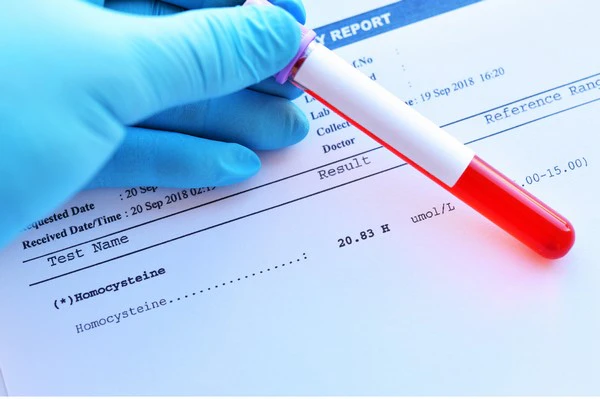
Labs may use slightly different ranges. Many labs place normal total homocysteine in the low to moderate single digits up to around 15 micromoles per liter. A clinician should read the result with other labs and health history.
Does high homocysteine always mean heart disease is present?
No. High homocysteine is a risk marker, not a diagnosis. It can rise from low B12, low folate, kidney problems, smoking, age, or gene changes.
Can diet affect homocysteine levels?
Yes. Diet can affect homocysteine through folate, vitamin B12, and vitamin B6 status. Very low intake or poor absorption of these nutrients can raise levels.
Does lowering homocysteine always reduce disease risk?
No. Many studies show that lowering homocysteine is possible, but large trials have not always shown clear drops in major cardiovascular events.
Should homocysteine be tested in routine care?
That depends on the person and the reason for testing. It may help in some cases, such as suspected B12 or folate issues, early vascular risk review, or an unclear nutrition picture.
Research
Homocysteine Studies Collaboration. (2002). Homocysteine and risk of ischemic heart disease and stroke: a meta-analysis. JAMA. Available at: https://doi.org/10.1001/jama.288.16.2015
Wald, D.S., Law, M. and Morris, J.K. (2002). Homocysteine and cardiovascular disease: evidence on causality from a meta-analysis. BMJ. Available at: https://doi.org/10.1136/bmj.325.7374.1202
Humphrey, L.L., Fu, R., Rogers, K., Freeman, M. and Helfand, M. (2008). Homocysteine level and coronary heart disease incidence: a systematic review and meta-analysis. Mayo Clinic Proceedings. Available at: https://doi.org/10.4065/83.11.1203
Martí-Carvajal, A.J., Solà, I., Lathyris, D. and Karakitsiou, D.E. (2017). Homocysteine-lowering interventions for preventing cardiovascular events. Cochrane Database of Systematic Reviews. Available at: https://doi.org/10.1002/14651858.CD006612.pub4
Khandanpour, N., Loke, Y., Meyer, F., Jennings, B. and Armon, M. (2009). Homocysteine and peripheral arterial disease: systematic review and meta-analysis. European Journal of Vascular and Endovascular Surgery. Available at: https://doi.org/10.1016/j.ejvs.2009.05.007
Lonn, E., Yusuf, S., Arnold, M.J., Sheridan, P., Pogue, J., Micks, M., McQueen, M.J., Probstfield, J., Fodor, G. and Held, C. (2006). Homocysteine lowering with folic acid and B vitamins in vascular disease. New England Journal of Medicine. Available at: https://doi.org/10.1056/NEJMoa060900
Bønaa, K.H., Njølstad, I., Ueland, P.M., Schirmer, H., Tverdal, A., Steigen, T., Wang, H., Nordrehaug, J.E., Arnesen, E. and Rasmussen, K. (2006). Homocysteine lowering and cardiovascular events after acute myocardial infarction. New England Journal of Medicine. Available at: https://doi.org/10.1056/NEJMoa055227
Toole, J.F., Malinow, M.R., Chambless, L.E., Spence, J.D., Pettigrew, L.C., Howard, V.J., Sides, E.G., Wang, C.-H. and Stampfer, M. (2004). Lowering homocysteine in patients with ischemic stroke to prevent recurrent stroke. New England Journal of Medicine. Available at: https://doi.org/10.1056/NEJMoa032501
Huo, Y., Li, J., Qin, X., Huang, Y., Wang, X., Gottesman, R.F., Tang, G., Wang, B., Chen, D., He, M., Fu, J., Cai, Y., Shi, X., Zhang, Y., Cui, Y., Sun, N., Li, X., Cheng, X., Liu, J. and Hou, F.F. (2015). Efficacy of folic acid therapy in primary prevention of stroke among adults with hypertension in China. JAMA. Available at: https://doi.org/10.1001/jama.2015.2274
den Heijer, M., Willems, H.P.J., Blom, H.J., Gerrits, W.B.J., Cattaneo, M., Eichinger, S., Rosendaal, F.R. and Bos, G.M.J. (2006). Homocysteine lowering by B vitamins and the secondary prevention of deep vein thrombosis and pulmonary embolism: a randomized, placebo-controlled, double-blind trial. Blood, 109(1), pp.139–144. Available at: https://doi.org/10.1182/blood-2006-04-014654
Durga, J., van Tits, L.J.H., Schouten, E.G., Kok, F.J. and Verhoef, P. (2005). Effect of lowering of homocysteine levels on inflammatory markers. Archives of Internal Medicine, 165(12), p.1388. Available at: https://doi.org/10.1001/archinte.165.12.1388
Hao, L., Yang, Q., Li, Z., Bailey, L.B., Zhu, J., Hu, D.J., Zhang, B., Erickson, J.D., Zhang, L., Gindler, J., Li, S. and Berry, R.J. (2008). Folate status and homocysteine response to folic acid doses and withdrawal among young Chinese women in a large-scale randomized double-blind trial. The American Journal of Clinical Nutrition, 88(2), pp.448–457. Available at: https://doi.org/10.1093/ajcn/88.2.448
Venn, B., Mann, J., Williams, S., Riddell, L., Chisholm, A., Harper, M., Aitken, W. and Rossaak, J. (2002). Assessment of three levels of folic acid on serum folate and plasma homocysteine: a randomized placebo-controlled double-blind dietary intervention trial. European Journal of Clinical Nutrition, 56(8), pp.748–754. Available at: https://doi.org/10.1038/sj.ejcn.1601388
Woodside, J., Yarnell, J., McMaster, D., Young, I., Harmon, D., McCrum, E., Patterson, C., Gey, K., Whitehead, A. and Evans, A. (1998). Effect of B-group vitamins and antioxidant vitamins on hyperhomocysteinemia: a double-blind, randomized, factorial-design, controlled trial. The American Journal of Clinical Nutrition, 67(5), pp.858–866. Available at: https://doi.org/10.1093/ajcn/67.5.858
Keser, I., Ilich, J.Z., Vrkić, N., Giljević, Z. and Colić Barić, I. (2013). Folic acid and vitamin B12 supplementation lowers plasma homocysteine but has no effect on serum bone turnover markers in elderly women: a randomized, double-blind, placebo-controlled trial. Nutrition Research, 33(3), pp.211–219. Available at: https://doi.org/10.1016/j.nutres.2013.01.002
Crider, K.S., Zhu, J., Hao, L., Yang, Q., Yang, T.P., Gindler, J., Maneval, D.R., Quinlivan, E.P., Li, Z., Bailey, L.B. and Berry, R.J. (2011). MTHFR 677C→T genotype is associated with folate and homocysteine concentrations in a large, population-based, double-blind trial of folic acid supplementation. The American Journal of Clinical Nutrition, 93(6), pp.1365–1372. Available at: https://doi.org/10.3945/ajcn.110.004671
Nygård, O., Vollset, S.E., Refsum, H., Stensvold, I., Tverdal, A., Nordrehaug, J.E., Ueland, P.M. and Kvåle, G. (1997). Total plasma homocysteine and cardiovascular risk profile. New England Journal of Medicine. Available at: https://doi.org/10.1056/NEJM199707243370401
Selhub, J., Jacques, P.F., Bostom, A.G., D’Agostino, R.B., Wilson, P.W.F., Belanger, A.J., O’Leary, D.H., Wolf, P.A., Schaefer, E.J. and Rosenberg, I.H. (1995). Association between plasma homocysteine concentrations and extracranial carotid-artery stenosis. New England Journal of Medicine. Available at: https://doi.org/10.1056/NEJM199502023320502
Mann, N.J., Li, D., Sinclair, A.J., Dudman, N.P., Guo, X.W., Elsworth, G.R., Wilson, A.K. and Kelly, F.D. (1999). The effect of diet on plasma homocysteine concentrations in healthy male subjects. European Journal of Clinical Nutrition, 53(11), pp.895–899. Available at: https://doi.org/10.1038/sj.ejcn.1600874
Tovar, A.R., Torres, N., Barrales-Benitez, O., López, A.M., Diaz, M. and Rosado, J.L. (2003). Plasma total homocysteine in Mexican rural and urban women fed typical model diets. Nutrition, 19(10), pp.826–831. Available at: https://doi.org/10.1016/S0899-9007(03)00158-8
Majchrzak, D., Singer, I., Männer, M., Rust, P., Genser, D., Wagner, K.-H. and Elmadfa, I. (2006). B-vitamin status and concentrations of homocysteine in Austrian omnivores, vegetarians and vegans. Annals of Nutrition and Metabolism, 50(6), pp.485–491. Available at: https://doi.org/10.1159/000095828
Huang, Y.C., Chang, S.J., Chiu, Y.T., Chang, H.H. and Cheng, C.H. (2003). The status of plasma homocysteine and related B-vitamins in healthy young vegetarians and nonvegetarians. European Journal of Nutrition, 42(2), pp.84–90. Available at: https://doi.org/10.1007/s00394-003-0387-5
Krajcovicová-Kudlácková, M., Blazícek, P., Babinská, K., Kopcová, J., Klvanová, J., Béderová, A. and Magálová, T. (2000). Traditional and alternative nutrition: levels of homocysteine and lipid parameters in adults. Scandinavian Journal of Clinical and Laboratory Investigation, 60(8), pp.657–664. Available at: https://doi.org/10.1080/00365510050216385
Gallego-Narbón, A., Zapatera, B., Barrios, L. and Vaquero, M.P. (2019). Vitamin B12 and folate status in Spanish lacto-ovo vegetarians and vegans. Journal of Nutritional Science, 8, e7. Available at: https://doi.org/10.1017/jns.2019.2
Ambroszkiewicz, J., Klemarczyk, W., Chełchowska, M., Gajewska, J. and Laskowska-Klita, T. (2006). Serum homocysteine, folate, vitamin B12 and total antioxidant status in vegetarian children. Advances in Medical Sciences, 51, pp.265–268. Available at: https://doi.org/10.1016/S0899-9007(03)00158-8
Palchetti, C.Z., Paniz, C., Marchioni, D.M., Colli, C., Steluti, J., Pfeiffer, C.M., Fazili, Z. and Guerra-Shinohara, E.M. (2017). Association between serum unmetabolized folic acid concentrations and folic acid from fortified foods. Journal of the American College of Nutrition, 36(7), p.572. Available at: https://doi.org/10.1080/07315724.2017.1333929
Crider, K.S., Bailey, L.B. and Berry, R.J. (2011). Folic acid food fortification: its history, effect, concerns, and future directions. Nutrients, 3(3), pp.370–384. Available at: https://doi.org/10.3390/nu3030370
Klevay, L.M. (2004). Ischemic heart disease as deficiency disease. Cellular and Molecular Biology, 50(8), pp.877–884.
Food and Agriculture Organization of the United Nations and World Health Organization. (2004). Vitamin and mineral requirements in human nutrition. Geneva: FAO/WHO.