Key Takeaways
- Natural childbirth works better when you practice breathing before labor begins.
- Pain coping starts with calm support, movement, warmth and a safe room.
- Slow breathing helps your jaw, shoulders, belly and pelvic floor soften.
- Water, counter pressure and position change can reduce stress during labor.
- Birth pain comes in waves, so recovery between waves is important.
Pain Has A Rhythm
Labor Waves
Labor pain usually comes in waves. A contraction rises, peaks and fades. The break after each wave is part of the work because your body uses it to reset.
Your breathing, face, hands, shoulders and hips can either soften during that break or stay tight until the next wave begins.
Natural childbirth does not mean pretending pain feels small. It means learning how to meet pain without panic. Fear can tighten the body, raise stress and make every wave feel harder.
Calm support, clear breathing and steady movement help the nervous system read labor as hard work instead of danger.
Breathing gives you something steady to return to when labor gets intense. A long slow exhale can relax the jaw and throat.
The jaw and pelvic floor often tighten together, so a soft face can help the lower body let go. Practice before birth so the breath feels familiar when the body is under pressure.
Calm Room
The birth room changes pain. Bright lights, loud voices, repeated questions and too many people can make labor feel more stressful.
A calm room supports oxytocin, the hormone that helps the uterus contract. Privacy, warmth, low light and quiet voices can help many women stay in rhythm.
ACOG states that low risk women in spontaneous labor can often use low intervention care, including support, oral fluids, comfort positions and movement when mother and baby are well (1).
Your support person should protect the room. They can dim lights, lower voices, reduce visitors and answer simple questions when you are in a wave.
They should also remind people to speak between contractions when possible. A woman in labor needs fewer demands, not more noise.
Breathing That Helps
Slow Exhale
Slow breathing is the base skill. Breathe in gently through your nose or mouth, then make the exhale longer than the inhale. The exhale should feel like a release, not a performance. You can breathe out with a low sound, loose lips or a soft sigh.
A Cochrane review on relaxation methods found that relaxation, yoga and music may help women cope with labor pain, though the evidence quality varied and results were not strong for every outcome (2).
Practice the slow exhale daily in late pregnancy. Use it when you get into bed, sit on the toilet or stand in a warm shower. The goal is to teach your body that a long exhale means soften.
Low Sound
Low sounds can help labor because they keep the throat open. High tight sounds often come with panic and raised shoulders.
Low moans, hums and deep vowel sounds can help the body stay heavy and grounded. Many women find that sound comes naturally when labor gets stronger.
Your partner can breathe or hum with you. They should stay quiet enough that you can hear your own body. A steady low sound can become a rhythm for each wave. If sound starts to turn into panic, your support person can bring you back with eye contact and a slow exhale.
Do not waste energy trying to look calm. Birth is intense. A strong low sound can be useful, direct and honest. The body often knows what it needs when the room gives it space.
Transition Breath
Transition is often the hardest part of labor. Contractions may feel close together, and many women feel shaky, hot, cold, sick or overwhelmed. Some women say they cannot do it. That can be a normal sign that birth is moving forward.
Use very simple breathing during this stage. Inhale gently, then blow the air out like you are cooling soup. Keep the mouth soft.
Let the shoulders drop every time the wave fades. Your support person should use short words only, such as breathe down, loose jaw or one wave.
Transition is not the time for lectures, long coaching or many choices. The brain is busy. Simple breath, firm support, cool cloths, water sips and position changes can carry you through the hardest waves.
Body Tools For Pain
Movement & Position
Movement helps many women because the pelvis can change shape. Standing, kneeling, leaning forward, side lying, hands and knees and supported squatting all give the baby different space.
ACOG supports frequent position change in labor when positions allow proper monitoring and no medical reason limits movement (1).
You should practice positions before labor. Try leaning over a counter, sitting backward on a chair, kneeling over pillows or resting on your side with a pillow between your knees. Practice helps the body trust these shapes when contractions get strong.
Stillness can also be useful when you need rest. Natural birth does not mean moving nonstop. It means you can change when your body asks. Labor often works better when the mother is free to follow comfort instead of staying locked in one position.
Water & Warmth
Warm water can lower tension and help pain feel more manageable. A shower can aim heat at the lower back, belly or shoulders. A bath or birth pool may help some women settle into labor, depending on birth setting and safety rules.
A Cochrane review found that water immersion during the first stage of labor may reduce epidural use, with no clear evidence of higher adverse outcomes for women or newborns in the included studies (3).
ACOG also states that immersion in water during the first stage may be linked with shorter labor and lower use of spinal or epidural pain relief in healthy women with uncomplicated pregnancies (4).
Warm compresses can also help during pushing. A Cochrane review found that warm compresses on the perineum during the second stage reduced severe tears, meaning third degree and fourth degree tears (5).
Ask your birth team before labor whether they use warm compresses and slow support during crowning.
Touch & Pressure
Touch can be calming or annoying during labor. Some women want steady hands on the hips, shoulders or lower back. Some do not want to be touched at all. Decide during pregnancy how to signal yes, no or move lower without needing full sentences.
Counter pressure can help back labor. A partner can press the heel of the hand into the sacrum during a wave. Hip squeeze can also help some women by giving deep pressure around the pelvis. Practice these before birth so your support person knows where to press and how hard.
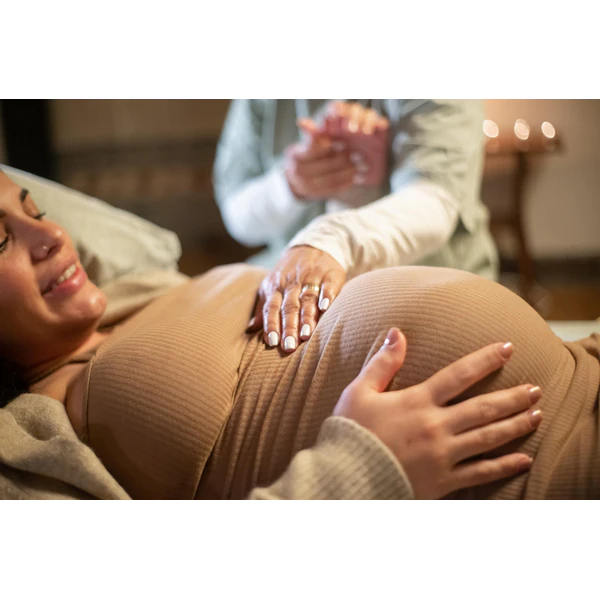
Massage should stay simple. Long soft strokes between waves can calm the body. Firm pressure during waves can give the brain a second signal to focus on. Stop any touch that makes you tense, angry or trapped.
Support Changes Birth
Continuous Support
Continuous support is one of the strongest tools for natural childbirth. A Cochrane review found that women with continuous support were more likely to have spontaneous vaginal birth, less likely to have cesarean birth and less likely to report a negative birth experience (6).
A good support person stays with you. They help you breathe, drink, move, rest, ask questions and protect quiet. They do not make labor about their own fear. They do not argue unless safety or consent needs clear defense.
A doula can be useful because a doula is there for the mother, not the machines, charting or hospital routine. A steady partner can also do excellent support with preparation. The main point is simple. You should not have to labor alone if you want support.
Clear Words
Pain can make speech hard. Choose short phrases before labor. Your support person can say loose jaw, drop shoulders, breathe low, sip water or one wave. Repeated words work better than long speeches. You can also choose words for when you need help.
Say too much, pressure, bathroom, water or change. These simple words tell your team what to do without pulling you into a long conversation.
Your birth plan should include your pain coping choices. List movement, water, breathing, dim lights, low voices, warm compresses, counter pressure and support people. Keep it short so the team can actually read it.
Food & Energy
Before Labor
Natural childbirth uses a lot of energy. The last weeks should focus on nutrient dense food and rest. Eggs, beef, lamb, bison, sardines, salmon, oysters, broth and full fat dairy if tolerated give real building blocks for the mother and baby.
Animal fat is useful because labor and recovery need energy. Low fat eating can leave you hungry and weak. Butter, ghee and tallow are better choices than seed oils. Fortified cereal, sweet drinks, crackers and low nutrient snack foods are poor preparation for birth.
Batch cook simple meals before the due window. Meat patties, slow cooked beef, broth, egg bakes and cooked seafood meals can reduce stress later. The first days after birth need food that is ready fast.
During Early Labor
Early labor can last many hours. Eat real food while you can, unless your clinician has given a different plan. Small portions of eggs, meat, broth, yogurt or cheese may work better than a large meal. Sip water or salted broth when thirsty.
Avoid heavy sugar loads that spike and crash. Birth already asks enough from your body. Stable food and steady fluids are better than candy drinks and processed bars. Rest during early labor whenever possible. Lie down between waves, keep lights low and avoid calling everyone too soon. Energy saved early can help later when contractions demand more focus.
For any health concerns or questions about a medical condition, get guidance from a physician or another appropriately trained clinician. Before changing your diet, supplements or health routine, talk with a licensed healthcare professional.
Research
American College of Obstetricians and Gynecologists. 2019. ACOG Committee Opinion No. 766, approaches to limit intervention during labor and birth. Obstetrics and Gynecology. DOI 10.1097/AOG.0000000000003074. PMID 30575638.
Smith, C.A. et al. 2018. Relaxation techniques for pain management in labour. Cochrane Database of Systematic Reviews. DOI 10.1002/14651858.CD009514.pub2. PMID 29601628.
Cluett, E.R. et al. 2018. Immersion in water during labour and birth. Cochrane Database of Systematic Reviews. DOI 10.1002/14651858.CD000111.pub4. PMID 29768662.
American College of Obstetricians and Gynecologists. 2016. Committee Opinion No. 679, immersion in water during labor and delivery. Obstetrics and Gynecology. DOI 10.1097/AOG.0000000000001771. PMID 27776074.
Aasheim, V. et al. 2017. Perineal techniques during the second stage of labour for reducing perineal trauma. Cochrane Database of Systematic Reviews. DOI 10.1002/14651858.CD006672.pub3. PMID 28608597.
Bohren, M.A. et al. 2017. Continuous support for women during childbirth. Cochrane Database of Systematic Reviews. DOI 10.1002/14651858.CD003766.pub6. PMID 28681500.
Jones, L. et al. 2012. Pain management for women in labour, an overview of systematic reviews. Cochrane Database of Systematic Reviews. DOI 10.1002/14651858.CD009234.pub2. PMID 22592710.
Smith, C.A. et al. 2011. Relaxation techniques for pain management in labour. Cochrane Database of Systematic Reviews. DOI 10.1002/14651858.CD009514. PMID 22161453.
Lawrence, A. et al. 2013. Maternal positions and mobility during first stage labour. Cochrane Database of Systematic Reviews. DOI 10.1002/14651858.CD003934.pub4. PMID 24105444.
Gupta, J.K. et al. 2017. Position in the second stage of labour for women without epidural anaesthesia. Cochrane Database of Systematic Reviews. DOI 10.1002/14651858.CD002006.pub4. PMID 28688203.
Walker, K.F. et al. 2018. Maternal position in the second stage of labour for women with epidural anaesthesia. Cochrane Database of Systematic Reviews. DOI 10.1002/14651858.CD008070.pub4. PMID 30144228.
Dahlen, H.G. et al. 2007. Perineal outcomes and maternal comfort related to the application of perineal warm packs in the second stage of labor, a randomized controlled trial. Birth. DOI 10.1111/j.1523-536X.2007.00186.x. PMID 18021145.
Sun, R. et al. 2024. Effects of perineal warm compresses during the second stage of labor on reducing perineal injury and postpartum perineal pain relief, a systematic review and meta analysis. BMC Pregnancy and Childbirth. DOI 10.1186/s12884-024-06481-8.
Jayasundara, D. et al. 2024. Impact of continuous labor companion, who is the best, a systematic review and meta analysis. PLOS ONE. DOI 10.1371/journal.pone.0298852.
World Health Organization. 2018. WHO recommendations, intrapartum care for a positive childbirth experience. World Health Organization.
Lunda, P. et al. 2018. Women’s experiences of continuous support during childbirth, a meta synthesis. BMC Pregnancy and Childbirth. DOI 10.1186/s12884-018-1755-8. PMID 29793442.