Key Takeaways
- Glycine is a small amino acid used in many body tissues.
- Several human studies link bedtime glycine with better sleep.
- Glycine supports glutathione, a major antioxidant made inside cells.
- Early research links glycine status with insulin resistance markers.
- Most benefits depend on dose, timing, health status, and tolerance.
Glycine Basics
An Amino Acid
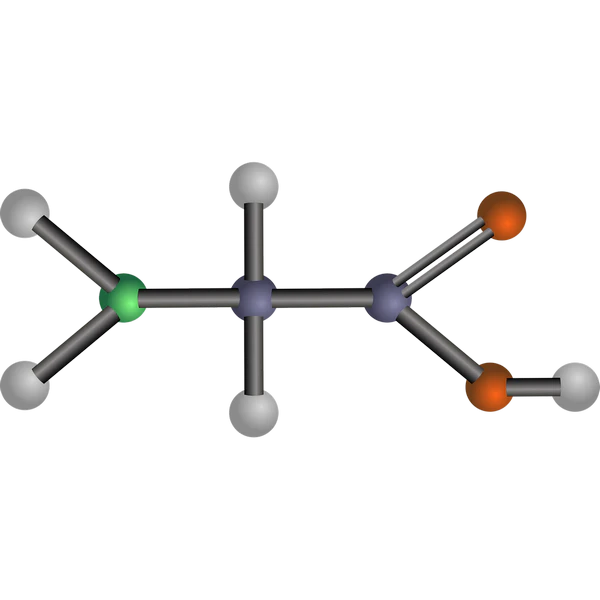
Glycine is an amino acid used to make proteins and other important compounds in the body. It is part of collagen, which is a major structural protein found in skin, tendons, cartilage, bone, and the lining of the gut. Glycine is also used to make creatine and glutathione, which connect it to energy and oxidative stress.
Human research on glycine supplementation is mixed, with the strongest work focusing on sleep and a smaller group of studies looking at metabolic markers. A systematic review of adult human studies described effects across several body systems, while also showing that study designs and outcomes vary a lot across trials. (1)
Food Sources
Many people get glycine from traditional foods that include skin, connective tissue, and slow cooked broths. Gelatin and collagen rich cuts tend to contain more glycine than lean muscle meat. People who mostly eat trimmed lean meats often get less glycine from food, although exact intake is hard to track in daily life.
Supplement glycine is usually sold as a powder or capsules. Powder makes it easier to reach gram sized doses used in sleep studies, while capsules can be convenient for travel. Labels often list glycine as an amino acid, yet product quality still depends on sourcing and testing.
Some people use collagen powders for similar reasons, since collagen contains glycine along with proline and hydroxyproline. Collagen products can raise glycine intake, but they also change protein balance in a different way than pure glycine does. People who react to one form sometimes tolerate the other, so personal response often guides the choice.
Sleep & Nervous System
Bedtime Glycine
Several small human studies have tested glycine taken before bed, often at a 3 gram dose. Participants reported better subjective sleep quality in trials that used questionnaires and sleep related ratings. One trial in Sleep and Biological Rhythms reported improved subjective sleep quality with glycine taken before bedtime. (2)
A separate study linked glycine ingestion with improved subjective sleep quality and changes seen on polysomnography, which is a formal sleep recording method. The research base is not large, yet the repeated use of a similar dose and timing makes the sleep topic easier to interpret than many other glycine claims. (3)
Next Day Feel
Sleep is only part of why people use bedtime glycine. Some studies also looked at the next day, since poor sleep often shows up as fatigue, slower thinking, and lower motivation. A study in healthy volunteers who had partial sleep restriction reported better subjective daytime performance after glycine. (4)
The same paper also reviews earlier sleep work and discusses possible explanations, including changes in body temperature regulation and sleep onset. Evidence for mechanisms in humans is still limited, so it helps to treat these as ideas rather than settled facts. People who try glycine often judge it by a simple outcome, which is whether they fall asleep easier and feel more steady the next morning. (4)
Metabolic & Cellular Support
Glutathione Pathway
Glutathione is a major antioxidant made inside cells, and it uses glycine as one of its building blocks. Some research groups study glycine along with N acetyl cysteine, since both are needed for glutathione production. This combined approach is often called GlyNAC in the research literature.
A randomized trial in older adults reported that GlyNAC supplementation improved glutathione deficiency and several measured markers linked with oxidative stress and mitochondrial function. The trial also reported improvements in physical function measures, with a study design that included a control group. (5)
A key limitation is that GlyNAC combines two nutrients, so the study cannot isolate what glycine alone did. Glycine still remains part of the biological story because it is required for glutathione synthesis, and some people likely do not have enough glycine available for that job. People often miss this point because glycine is labeled non essential, yet non essential does not mean always abundant.
Older adult studies are also not the same as studies in younger adults with different diets, activity levels, and stress loads. Even so, the work shows a plausible link between glycine availability and several measurable markers inside the body, rather than only self reported feelings. (5)
Blood Pressure & Insulin
Metabolic health research on glycine often starts with observation studies. One Nature Communications paper used genetic methods to test whether circulating glycine may have a causal association with cardio metabolic disease risk. The authors reported associations that connect glycine with insulin resistance related pathways, yet this type of work still does not replace controlled supplementation trials that track real outcomes. (6)
A small clinical study in people with metabolic syndrome reported that oral glycine supplementation reduced oxidative stress markers and improved systolic blood pressure. Evidence quality is limited by study size, yet it is one of the clearer human trials that ties glycine to a common metabolic marker many people care about. (3)
Liver Signals
Interest in glycine has grown because some people with obesity appear to have lower glycine status, and glycine is used in detox related conjugation pathways. A Scientific Reports study in people with severe obesity reported that dietary glycine supplementation increased plasma glycine and changed several urinary acylglycine measures after two weeks. The authors framed this as a shift in glycine dependent metabolic pathways. (7)
Two weeks is a short window, and the study was exploratory, so it should not be treated as proof of disease treatment. The study still gives a concrete example of how glycine can shift measured metabolites in humans within a short period, which is useful when separating marketing claims from measurable physiology. (7)
Dosing & Cautions
Typical Amounts
Most sleep studies used 3 grams taken shortly before bedtime. This dose is common in the published sleep trials, which makes it a reasonable starting point for understanding how research was done. People who try it often use powder because 3 grams can mean several capsules depending on capsule size. (4)
Other studies used different dosing strategies, including weight based dosing in the severe obesity trial. Comparing doses across studies can be tricky because outcomes differ, populations differ, and trial length differs. The safest way to read the research is to match the dose and timing to the outcome being studied, rather than mixing sleep dosing with metabolic dosing. (7)
People who already use collagen or gelatin may want to think in terms of total glycine coming from food plus supplements. Food intake varies widely, and labels rarely help you calculate actual glycine grams. A steadier approach is to keep the rest of the diet stable for a week or two and only change glycine, so changes in sleep or digestion are easier to notice.
Side Effects
Glycine is often described as well tolerated in studies, yet side effects can still happen. Some people report digestive upset, nausea, or loose stools, especially with larger doses taken all at once. Powder mixed in water can taste sweet, which some people dislike and others find easy to take.
People who have a medical condition, take prescription drugs, are pregnant, or are managing a complex health situation should treat supplement use as a clinical discussion rather than a self experiment. Research exists in specific groups, yet individual risks depend on personal context that studies cannot cover for every person. A clinician who knows your history can help you think through dose, timing, and interactions.
For any health concerns or questions about a medical condition, get guidance from a physician or another appropriately trained clinician. Before changing your diet, supplements or health routine, talk with a licensed healthcare professional.
FAQs
Does glycine help sleep?
Human studies suggest some people report better sleep quality after taking glycine before bed. Research is still limited, yet multiple trials used a similar bedtime dose and found subjective improvements.
How much glycine is used in sleep studies?
Many studies used 3 grams taken shortly before bedtime. Some studies used different doses for metabolic outcomes, so the amount depends on the goal.
Is glycine the same as collagen?
Glycine is one amino acid, while collagen is a protein that contains glycine plus other amino acids. Collagen can increase glycine intake, yet it is not identical to taking pure glycine.
Can glycine help metabolic health?
Some small trials and genetic studies link glycine with blood pressure, oxidative stress, and insulin resistance related markers. Longer trials that track outcomes people feel and measure are still limited.
Is glycine safe to take every day?
Many studies report good tolerance, but safety depends on dose, health status, and individual response. People with medical conditions or medications should check with a clinician first.
Research
Soh, J., Raventhiran, S., Lee, J.H., Lim, Z.X., Goh, J., Kennedy, B.K. and Maier, A.B. (2024) The effect of glycine administration on the characteristics of physiological systems in human adults: A systematic review. GeroScience. Available at: https://pmc.ncbi.nlm.nih.gov/articles/PMC10828290/ (Accessed: 23 April 2026).
Inagawa, K., Hiraoka, T., Kohda, T., Yamadera, W. and Takahashi, M. (2006) Subjective effects of glycine ingestion before bedtime on sleep quality. Sleep and Biological Rhythms, 4(1). Available at: https://onlinelibrary.wiley.com/doi/abs/10.1111/j.1479-8425.2006.00193.x (Accessed: 23 April 2026).
Díaz Flores, M., Cruz, M., Duran Reyes, G., Munguía Miranda, C., Loza Rodríguez, H. and Pulido Cejudo, A. (2013) Oral supplementation with glycine reduces oxidative stress in patients with metabolic syndrome, improving their systolic blood pressure. Canadian Journal of Physiology and Pharmacology, 91(10), pp. 855–860. Available at: https://pubmed.ncbi.nlm.nih.gov/24144057/ (Accessed: 23 April 2026).
Bannai, M., Kawai, N., Ono, K., Nakahara, K., Murakami, N., Takahashi, M. and Nishino, S. (2012) The effects of glycine on subjective daytime performance in partially sleep restricted healthy volunteers. Frontiers in Neurology, 3, 61. Available at: https://pmc.ncbi.nlm.nih.gov/articles/PMC3328957/ (Accessed: 23 April 2026).
Kumar, P., Liu, C., Suliburk, J., Hsu, J.W.C., Muthupillai, R., Jahoor, F., Minard, C.G., Taffet, G.E. and Sekhar, R.V. (2021) Glycine and N acetylcysteine supplementation in older adults improves glutathione deficiency, oxidative stress, mitochondrial dysfunction, inflammation, insulin resistance, endothelial dysfunction, genotoxicity, muscle strength, and cognition: Results of a pilot clinical trial. Clinical and Translational Medicine, 11(3), e372. Available at: https://pmc.ncbi.nlm.nih.gov/articles/PMC8002905/ (Accessed: 23 April 2026).
Wittemans, L.B.L., Lotta, L.A., Oliver Williams, C., Stewart, I.D., Surendran, P., Karthikeyan, S., Day, F.R., Koulman, A., Yaghootkar, H., Forouhi, N.G., Wareham, N.J., Langenberg, C., Butterworth, A.S. and Imamura, F. (2019) Assessing the causal association of glycine with risk of cardio metabolic diseases. Nature Communications, 10, 1060. Available at: https://pmc.ncbi.nlm.nih.gov/articles/PMC6400990/ (Accessed: 23 April 2026).
Tan, H.C., Hsu, J.W., Tai, E.S. and others (2025) Metabolic impact of dietary glycine supplementation in individuals with severe obesity. Scientific Reports. Available at: https://www.nature.com/articles/s41598-025-20511-x (Accessed: 23 April 2026).
Yamadera, W., Inagawa, K., Chiba, S., Bannai, M., Takahashi, M. and Nakayama, K. (2007) Glycine ingestion improves subjective sleep quality in human volunteers, correlating with polysomnographic changes. Sleep and Biological Rhythms, 5(2), pp. 126–131.
Javitt, D.C., Silipo, G., Cienfuegos, A. and Shelley, A.M. (2001) Adjunctive high dose glycine in the treatment of schizophrenia. The International Journal of Neuropsychopharmacology, 4(4), pp. 385–391.
Heresco Levy, U., Javitt, D.C., Ermilov, M., Mordel, C., Silipo, G. and Lichtenstein, M. (1996) Double blind, placebo controlled, crossover trial of glycine adjuvant therapy for treatment resistant schizophrenia. The British Journal of Psychiatry, 169(5), pp. 610–617.
Potkin, S.G., Jin, Y., Bunney, B.G., Costa, J. and Gulasekaram, B. (1999) Effect of clozapine and adjunctive high dose glycine in treatment resistant schizophrenia. The American Journal of Psychiatry, 156(1), pp. 145–147.
Singh, S.P. and Singh, V. (2011) Meta analysis of the efficacy of adjunctive NMDA receptor modulators in chronic schizophrenia. CNS Drugs.
Kuppili, P.P., Sinha, P., John, J., Desai, N.G. and Balhara, Y.P.S. (2021) Efficacy of adjunctive D cycloserine for the treatment of schizophrenia: a systematic review and meta analysis of randomized controlled trials. Journal of Neural Transmission.
Bloomer, R.J., Fisher Wellman, K.H., Tucker, P.S., Ziegler, E. and Schilling, B.K. (2007) Glycine propionyl L carnitine increases plasma nitrate nitrite in resistance trained men. Journal of the International Society of Sports Nutrition, 4, 22.
Bloomer, R.J., Smith, W.A., Fisher Wellman, K.H., Sherman, W.M. and Schilling, B.K. (2009) Glycine propionyl L carnitine modulates lipid peroxidation and nitric oxide in human subjects. International Journal for Vitamin and Nutrition Research, 79(3), pp. 131–141.
Oshima, S., Shiiya, T., Nakamura, S. and others (2019) Serum uric acid lowering effects of combined glycine and tryptophan treatments in subjects with mild hyperuricemia: a randomized, double blind, placebo controlled, crossover study. Clinical Rheumatology.
Oshima, S., Shiiya, T., Nakamura, S. and others (2019) Combined supplementation with glycine and tryptophan suppressed the elevation in serum uric acid levels caused by purine ingestion and accelerated urinary uric acid excretion: a randomized, single blind, placebo controlled, crossover study. Clinical Rheumatology.
Sekhar, R.V., Patel, S.G., Guthikonda, A.P., Reid, M., Balasubramanyam, A., Taffet, G.E., Jahoor, F. and Kumar, P. (2022) GlyNAC supplementation improves impaired mitochondrial fuel oxidation and lowers insulin resistance in patients with type 2 diabetes: results of a pilot study. Antioxidants, 11(1), 154.
Kumar, P., Liu, C., Suliburk, J., Hsu, J.W.C., Muthupillai, R., Jahoor, F., Minard, C.G., Taffet, G.E. and Sekhar, R.V. (2020) Supplementing glycine and N acetylcysteine in aging HIV patients improves oxidative stress, mitochondrial dysfunction, inflammation, endothelial dysfunction, insulin resistance, genotoxicity, strength, and cognition: results of an open label clinical trial. Biomedicines, 8(10), 390.
Ahola Olli, A.V., Mustelin, L., Kalimeri, M., Kettunen, J., Jokelainen, J., Auvinen, J., Puukka, K., Havulinna, A.S., Lehtimäki, T., Kähönen, M., Würtz, P., Mikkilä, V., Raitakari, O.T. and others (2019) Circulating metabolites and the risk of type 2 diabetes: a prospective study of 11,896 young adults from four Finnish cohorts. Diabetologia, 62, pp. 2298–2309.