
Key Takeaways
- Saffron has the clearest research support for mood and PMS relief.
- Early studies also suggest possible help with sleep and memory.
- Most studies used saffron extracts, not tiny amounts used in food.
- Short term use looks fairly safe, but side effects can still happen.
- Pregnancy, medicine use and product quality need extra care.
Saffron & The Body
Plant Compounds
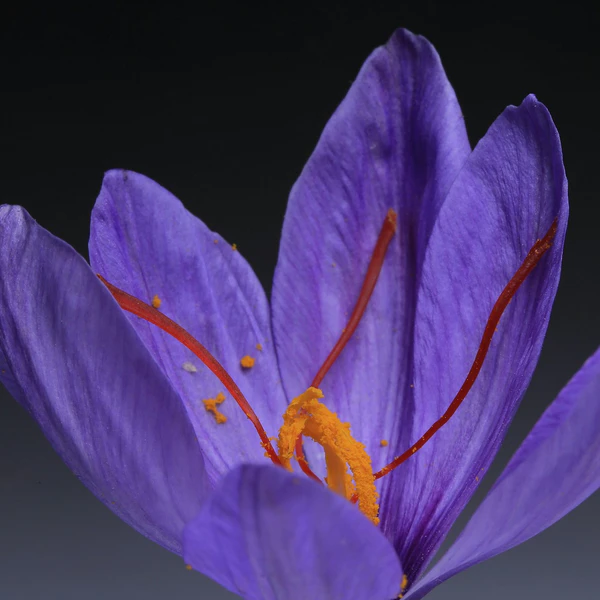
Saffron comes from the dried red stigma of Crocus sativus. It has been used for a long time in cooking and traditional healing. Modern research focuses on compounds such as crocin and safranal because they may affect the brain, the nervous system and oxidative stress. Most of the human research uses saffron extracts or measured supplement doses instead of the small amount people use in food (1, 2).
This difference is easy to miss. A pinch of saffron in rice or tea is not the same as taking a daily capsule in a clinical trial. Food use may still be useful and enjoyable, but study results should not be copied straight over to everyday cooking. Research on saffron is really research on specific doses used over a set period of time.
Mood Support
The strongest case for saffron is mood support. Several randomized trials found that saffron improved symptoms in adults with mild to moderate depression over short study periods. Some of those trials also found similar results to fluoxetine or imipramine, though the studies were small and often came from similar research settings. Reviews and meta analyses reached a similar broad view, with saffron doing better than placebo in several studies and showing enough consistency to deserve serious attention, even if the evidence is still limited by size and duration (3, 4, 5, 6, 7).
Daily Symptoms & Life Stages
Sleep Quality
Sleep is another area where saffron has shown promise. A review of insomnia studies found signs of benefit, especially for sleep quality. The sleep research is smaller than the mood research, so the claims need to stay modest. A good result in a short study does not answer every question about long term use or who is most likely to respond (8).
Sleep research is also messy by nature. People often sleep better when stress eases or mood improves, so it can be hard to tell whether saffron is helping sleep directly or helping the things that disturb sleep. Current evidence suggests a real possibility of benefit, but it is not as strong or as clear as the mood evidence.
Most people looking at saffron for sleep should see it as a maybe, not a sure thing. It has enough evidence to be interesting and not enough to justify big promises. A careful summary stays closer to the actual studies and avoids turning a small signal into a grand claim.
Premenstrual Symptoms
Premenstrual symptoms are one of the more useful saffron research areas outside depression. A randomized trial found that saffron improved symptoms of premenstrual syndrome compared with placebo. A later study also reported benefit in premenstrual dysphoric disorder. These studies were not large, but they fit with the wider mood research and suggest that saffron may help some women with emotional and physical symptoms before menstruation (9, 10).
Postpartum Care
One clinical trial also looked at saffron in mothers with mild to moderate postpartum depression and found benefit over placebo during a short study period. This is useful information, but postpartum mental health is not an area for casual self treatment. One positive trial is not enough to settle practice, especially in a period when sleep loss, hormonal change and the demands of infant care can all affect mental health at once (11).
Pregnancy and the postpartum period need more caution than the average supplement topic. A spice used in food is one thing and a concentrated supplement is another. Safety data for higher dose use are limited, so people should not assume that natural means risk free.
This is also a good example of why dosage matters so much. Culinary use is usually tiny, while study doses are much more concentrated and taken every day. Mixing those two ideas together leads to a lot of confusion.
Brain, Safety & Use
Brain Effects
Researchers have also studied saffron in mild cognitive impairment and Alzheimer disease. Reviews suggest possible benefit, and a few trials found outcomes similar to standard treatment over short periods. This is interesting research, but it is still early. Memory problems often change slowly, so short trials can only show a small part of the picture and cannot prove long term protection or prevention (12, 13, 14).
Side Effects
Short term saffron use looks fairly safe in many studies. Reported side effects include headache, dizziness, digestive upset and allergic reactions. This should not be surprising. Plant remedies can have real effects, and real effects can also bring unwanted effects. The fact that saffron is natural does not make it harmless.
Safety also depends on dose, product quality and personal context. A person using saffron in food is in a very different situation from someone taking a daily extract. Study doses were measured and watched over a limited time. Real life supplement use is often less controlled, which means more room for poor decisions and poor products.
Buying & Use
Product quality is a real issue with saffron because it is expensive and easy to fake or dilute. A study on saffron does not tell you much about a low quality product that contains very little real saffron. People who want to try it should pay attention to sourcing and avoid treating the cheapest option as equal to a tested product.
It also helps to keep expectations grounded. Saffron has some human evidence for mood and premenstrual symptoms, with early support for sleep and memory. It does not have strong proof for every health claim attached to it online. A clear view of the evidence is more useful than hype.
For any health concerns or questions about a medical condition, get guidance from a physician or another appropriately trained clinician. Before changing your diet, supplements or health routine, talk with a licensed healthcare professional.
FAQs
Is saffron good for your health?
Saffron has useful human evidence for low mood and premenstrual symptoms. Research on sleep and memory is promising, but it is less developed.
Can saffron help with anxiety?
Some studies suggest saffron may help anxiety related symptoms, especially when mood also improves. The mood evidence is stronger than the anxiety evidence.
Does saffron improve sleep?
Saffron may improve sleep quality in some people. Current research is encouraging, though the sleep evidence is still limited.
Is saffron safe every day?
Short term daily use in studies appears fairly well tolerated. Long term use, medicine interactions and supplement quality need more caution.
What side effects can saffron cause?
Possible side effects include headache, dizziness, stomach upset and allergic reactions. Higher dose supplement use needs more care than normal food use.
Research
Hausenblas, H.A. et al. (2015) A systematic review of randomized controlled trials examining the effectiveness of saffron on psychological and behavioral outcomes. Journal of Integrative Medicine, 13(4), pp. 231 to 240. Available at https://pubmed.ncbi.nlm.nih.gov/26165367/
Lopresti, A.L. and Drummond, P.D. (2014) Saffron for depression. Human Psychopharmacology, 29(6), pp. 517 to 527. Available at https://pubmed.ncbi.nlm.nih.gov/25384672/
Akhondzadeh, S. et al. (2005) Crocus sativus L. in the treatment of mild to moderate depression. Phytotherapy Research, 19(2), pp. 148 to 151. Available at https://pubmed.ncbi.nlm.nih.gov/15852492/
Noorbala, A.A. et al. (2005) Hydro alcoholic extract of Crocus sativus L. versus fluoxetine in the treatment of mild to moderate depression. Journal of Ethnopharmacology, 97(2), pp. 281 to 284. Available at https://pubmed.ncbi.nlm.nih.gov/15707766/
Akhondzadeh, S. et al. (2004) Comparison of Crocus sativus L. and imipramine in the treatment of mild to moderate depression. BMC Complementary and Alternative Medicine, 4, p. 12. Available at https://pubmed.ncbi.nlm.nih.gov/15341662/
Hausenblas, H.A. et al. (2013) Saffron and major depressive disorder. Journal of Integrative Medicine, 11(6), pp. 377 to 383. Available at https://pubmed.ncbi.nlm.nih.gov/24299602/
Yang, X. et al. (2018) Comparative efficacy and safety of Crocus sativus L. for treating mild to moderate major depressive disorder in adults. Neuropsychiatric Disease and Treatment, 14, pp. 1297 to 1305. Available at https://pubmed.ncbi.nlm.nih.gov/29849461/
Munirah, M.P., Norhayati, M.N. and Noraini, M. (2022) Crocus sativus for insomnia. International Journal of Environmental Research and Public Health, 19(18), p. 11658. Available at https://www.mdpi.com/1660-4601/19/18/11658
Agha Hosseini, M. et al. (2008) Crocus sativus L. in the treatment of premenstrual syndrome. BJOG, 115(4), pp. 515 to 519. Available at https://pubmed.ncbi.nlm.nih.gov/18271889/
Rajabi, F. et al. (2020) Saffron for the management of premenstrual dysphoric disorder. Advanced Biomedical Research, 9, p. 60. Available at https://pubmed.ncbi.nlm.nih.gov/33457343/
Tabeshpour, J. et al. (2017) A randomized placebo controlled trial of saffron stigma in mothers with mild to moderate postpartum depression. Phytomedicine, 36, pp. 145 to 152. Available at https://pubmed.ncbi.nlm.nih.gov/29157808/
Ayati, Z. et al. (2020) Saffron for mild cognitive impairment and dementia. BMC Complementary Medicine and Therapies, 20(1), p. 333. Available at https://pubmed.ncbi.nlm.nih.gov/33167948/
Akhondzadeh, S. et al. (2010) Saffron in the treatment of patients with mild to moderate Alzheimer disease. Journal of Clinical Pharmacy and Therapeutics, 35(5), pp. 581 to 588. Available at https://pubmed.ncbi.nlm.nih.gov/20831681/
Akhondzadeh, S. et al. (2010) A 22 week multicenter randomized double blind controlled trial of Crocus sativus in the treatment of mild to moderate Alzheimer disease. Psychopharmacology, 207(4), pp. 637 to 643. Available at https://pubmed.ncbi.nlm.nih.gov/19838862/
Tahmasbi, F. et al. (2022) Effects of saffron on anthropometric and cardiometabolic indices in overweight and obese patients. Phytotherapy Research, 36(9), pp. 3394 to 3414. Available at https://pubmed.ncbi.nlm.nih.gov/35866520/
Maleki Saghooni, N. et al. (2018) A systematic review and meta analysis of clinical trials on saffron effectiveness and safety on erectile dysfunction and semen parameters. Avicenna Journal of Phytomedicine, 8(3), pp. 198 to 209. Available at https://pubmed.ncbi.nlm.nih.gov/29881706/
Falsini, B. et al. (2010) Influence of saffron supplementation on retinal flicker sensitivity in early age related macular degeneration. Investigative Ophthalmology and Visual Science, 51(12), pp. 6118 to 6124. Available at https://pubmed.ncbi.nlm.nih.gov/20688744/
Mohammadzadeh Moghadam, H. et al. (2015) Effects of a topical saffron gel on erectile dysfunction in diabetics. Journal of Evidence Based Complementary and Alternative Medicine, 20(4), pp. 283 to 286. Available at https://pubmed.ncbi.nlm.nih.gov/25948674/
Moshiri, E. et al. (2006) Crocus sativus L. petal in the treatment of mild to moderate depression. Phytomedicine, 13(9 to 10), pp. 607 to 611. Available at https://pubmed.ncbi.nlm.nih.gov/16979327/
Basti, A.A. et al. (2007) Comparison of petal of Crocus sativus L. and fluoxetine in the treatment of depressed outpatients. Progress in Neuro Psychopharmacology and Biological Psychiatry, 31(2), pp. 439 to 442. Available at https://pubmed.ncbi.nlm.nih.gov/17174460/