
Key Takeaways
- Lower heat methods usually create fewer harmful heat byproducts.
- Deep frying ranks lowest because hot oil damages both fat and food.
- Charring and very dark browning raise exposure to meat mutagens.
- Steaming poaching and stewing usually give food the gentlest treatment.
- Stable fats and careful heat control can reduce cooking related stress.
Heat & Health
Low Heat Wins
Cooking changes food in useful ways. Heat can improve texture, kill many pathogens and make some foods easier to digest.
Trouble starts when temperature climbs high enough to drive heavy browning, scorching and repeated fat oxidation.
Research on advanced glycation end products shows that lower heat meals can reduce short term metabolic strain compared with higher heat meals in both healthy and metabolically unwell groups (1, 2).
Gentle methods usually sit at the top of the ranking because they limit these byproducts.
Water based cooking also keeps surface temperatures lower than dry heat methods, which reduces the chance of blackened crusts and smoke.
Foods cooked with moisture often stay easier on digestion as well, especially when the meal is based on whole traditional ingredients rather than packaged products cooked at extreme heat.
When Browning Rises
Browning is not always a problem. A light golden finish on a roast or pan sear is different from a dark crust, smoking pan or blackened grill mark.
Risk rises as heat rises, cooking time stretches and the surface gets darker.
Research on meat mutagens has linked higher intake of heterocyclic amines and related compounds with greater cancer risk in pooled observational data, though these studies cannot prove cause on their own (3).
Dry heat methods tend to create more of these compounds than moist methods.
Grilling, broiling and pan searing over strong heat can all do it, especially when meat juices drip, smoke returns to the food and the outside gets charred.
Very lean cuts can become harder to cook gently because they dry out fast and push people toward harsher heat.
A useful ranking is not about fear. It is about choosing the least damaging method that still gives good flavor and texture.
Lower and slower usually beats hotter and faster when the goal is fewer heat created compounds and steadier digestion.
Top Tier Methods
Steaming
Steaming and poaching belong near the top because they cook food with moisture and modest temperatures.
Fish, eggs, shellfish and some vegetables do very well here. Tender cuts of meat can also be poached or gently simmered in broth.
These methods create little charring, need little added fat and keep the surface from reaching the intense temperatures seen in a grill or deep fryer.
For people who want the gentlest approach, steaming and poaching are hard to beat.
Slow Cooking
Slow cooking and stewing also rank high when the pot stays below a hard boil. These methods work well with tougher cuts, collagen rich meats and broths.
Long cooking does reduce some heat sensitive nutrients, yet the moist environment limits the intense surface reactions seen with blackened roasting or frying.
A stew made from whole meat, broth and low toxin plant foods is usually a better choice than a heavily browned fast food meal cooked in industrial oils.
These methods also let cooks use stable traditional fats in modest amounts rather than relying on large volumes of hot oil.
Slow cooked meals tend to be filling and easier to portion into one to three solid meals during the day.
Seed Oils Hide In Common Foods
Seed oils hide in fried food, sauces and packaged snacks.
Middle Tier Methods
Baking
Baking and roasting sit in the middle because results depend on temperature, time and how dark the food gets.
A moderate oven can produce very good meals with limited damage, especially when the food is protected by a lid, parchment, broth or a layer of fat.
Trouble starts when roasting turns into prolonged drying, smoking and dark crust formation.
Roasting vegetables and animal foods at moderate heat can still fit a thoughtful diet. The main goal is to stop short of heavy browning. Pale golden is very different from deep brown or black.
Meat cooked just until done will usually expose you to less heat damage than meat pushed to a hard crust or char.
Research on cooking generated mutagens supports this general ranking even if exact personal risk varies with total diet and cooking habits (3).
Baking also gives room to control the fat source. A home cooked roast using butter, ghee or tallow is a different food from a packaged breaded item baked after industrial processing.
Searing
Air frying and pan searing belong around the middle to lower middle.
Air fryers often do better than deep fryers because they use far less oil, yet they still rely on dry moving heat that can darken surfaces fast.
A quick sear in a stable fat can work reasonably well when the pan is not smoking and the outside does not become charred.
Once the crust turns very dark, this category starts to drift downward toward the hotter methods.
Use vs Avoid
| Use | Avoid |
|---|---|
| Tallow | Restaurant fryers |
| Butter | Packaged snacks |
| Ghee | Seed oil sauces |
| Short ingredient lists | Long ingredient lists |
Lowest Tier Methods
Grilling
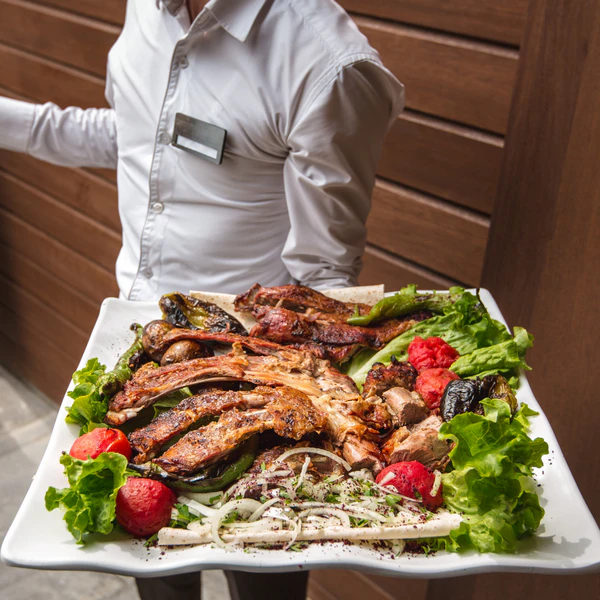
Grilling ranks low when flames, smoke and blackened edges enter the picture.
Meat cooked over open fire can develop heterocyclic amines and polycyclic aromatic hydrocarbons, especially when fat drips onto the heat source and smoke coats the food again.
Observational research on meat mutagens and cancer risk does not prove direct cause, but it gives enough reason to keep grilling lower on the list and to avoid heavy charring (3).
Grilling can be improved. Lower heat, more distance from the flame, shorter cooking time and turning food before it blackens all help.
Gentle finishing in the oven or a covered pan can also cut exposure. A lightly grilled piece of meat is not the same as a blackened one with burnt edges and dripping smoke.
Deep Frying
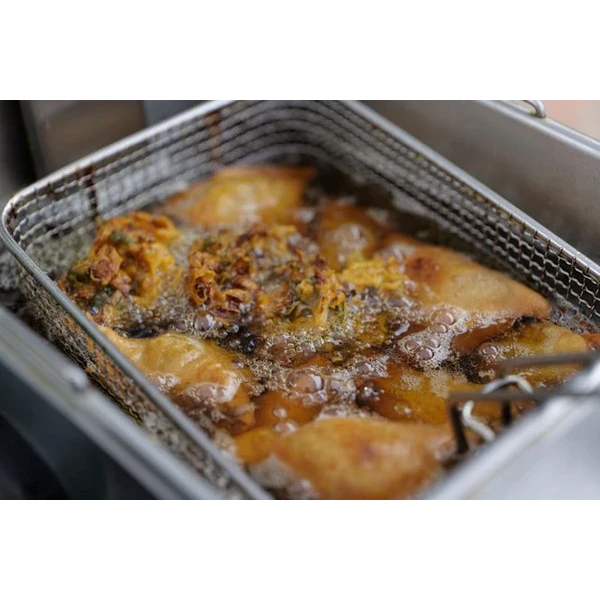
Deep frying ranks at the bottom for possible health effects. Very hot oil can damage fats, especially when the oil is rich in unstable polyunsaturated fat or used again and again.
Fried foods are also easy to overeat and common in ultra processed products sold outside the home.
Large reviews and prospective studies have linked higher fried food intake with greater risk of heart disease, type 2 diabetes, obesity, hypertension and higher overall mortality, though these findings come from observational research and include many lifestyle differences between groups (4, 5, 6).
Cancer research adds another reason for caution. A meta analysis of case control studies found an association between fried food intake and higher gastric cancer risk (7).
A study in Japanese workers also linked more frequent fried fish intake with impaired glucose metabolism compared with raw and stewed fish patterns, which fits the wider concern about harsh heat and repeated oil exposure (8).
Restaurant frying is often the weakest version of this method because oil may stay hot for long periods and be used for many batches. Home frying in a stable fat is still frying. It may be less bad than industrial fast food frying, yet it stays near the bottom because the method itself is harsh.
For any health concerns or questions about a medical condition, get guidance from a physician or another appropriately trained clinician. Before changing your diet, supplements or health routine, talk with a licensed healthcare professional.
Suggested Posts
Research
Mark, A.B., Poulsen, M.W., Andersen, S., Andersen, J.M., Bak, M.J., Ritz, C., Holst, J.J., Nielsen, J., de Courten, B., Dragsted, L.O. and Bügel, S.G. (2014) Consumption of a diet low in advanced glycation end products for 4 weeks improves insulin sensitivity in overweight women. Diabetes Care, 37(1), pp. 88 to 95. Available at https://doi.org/10.2337/dc13-0842
Negrean, M., Stirban, A., Stratmann, B., Gawlowski, T., Horstmann, T., Götting, C., Kleesiek, K., Mueller Roesel, M., Koschinsky, T., Uribarri, J., Vlassara, H. and Tschoepe, D. (2007) Effects of low and high advanced glycation endproduct meals on macro and microvascular endothelial function and oxidative stress in patients with type 2 diabetes mellitus. American Journal of Clinical Nutrition, 85(5), pp. 1236 to 1243. Available at https://pubmed.ncbi.nlm.nih.gov/17490958/
Reng, Q., Zhu, L.L., Feng, L., Li, Y.J., Zhu, Y.X., Wang, T.T. and Jiang, F. (2022) Dietary meat mutagens intake and cancer risk. Frontiers in Nutrition, 9, 962688. Available at https://doi.org/10.3389/fnut.2022.962688
Qin, P., Zhang, M., Han, M., Liu, D. and Hu, F. (2021) Fried food consumption and risk of cardiovascular disease and all cause mortality. Heart. Available at https://doi.org/10.1136/heartjnl-2020-317883
Qin, P., Liu, D., Wu, X. and Hu, F. (2021) Fried food consumption and risk of overweight obesity, type 2 diabetes mellitus, and hypertension in adults. Critical Reviews in Food Science and Nutrition. Available at https://doi.org/10.1080/10408398.2021.1906626
Cahill, L.E., Pan, A., Chiuve, S.E., Sun, Q., Willett, W.C., Hu, F.B. and Rimm, E.B. (2014) Fried food consumption and risk of type 2 diabetes and coronary artery disease. American Journal of Clinical Nutrition, 100(2), pp. 667 to 675. Available at https://pubmed.ncbi.nlm.nih.gov/24944061/
Zhang, T., Song, S.S., Liu, M. and Park, S. (2023) Association of fried food intake with gastric cancer risk. Nutrients, 15(13), 2982. Available at https://doi.org/10.3390/nu15132982
Nanri, A., Takazaki, A., Kochi, T., Eguchi, M., Kabe, I. and Mizoue, T. (2020) Fish cooking methods and impaired glucose metabolism among Japanese workers. Nutrients, 12(6), 1775. Available at https://doi.org/10.3390/nu12061775
Gadiraju, T.V., Patel, Y., Gaziano, J.M. and Djoussé, L. (2015) Fried food consumption and cardiovascular health. Nutrients, 7(10), pp. 8424 to 8430. Available at https://doi.org/10.3390/nu7105404
Stott Miller, M., Neuhouser, M.L. and Stanford, J.L. (2013) Consumption of deep fried foods and risk of prostate cancer. Prostate, 73(9), pp. 960 to 969. Available at https://doi.org/10.1002/pros.22643
Anderson, K.E., Mongin, S.J., Sinha, R., Stolzenberg Solomon, R., Gross, M.D., Ziegler, R.G., Mabie, J.E., Risch, A. and Church, T.R. (2012) Pancreatic cancer risk and meat derived carcinogen intake in the PLCO cohort. Molecular Carcinogenesis, 51(1), pp. 128 to 137. Available at https://doi.org/10.1002/mc.20794
Wu, K., Giovannucci, E., Byrne, C., Platz, E.A., Fuchs, C., Willett, W.C. and Sinha, R. (2006) Meat mutagens and risk of distal colon adenoma in a cohort of U.S. men. Cancer Epidemiology Biomarkers and Prevention, 15(6), pp. 1120 to 1125. Available at https://doi.org/10.1158/1055-9965.EPI-05-0782
Koutros, S., Cross, A.J., Sandler, D.P., Hoppin, J.A., Ma, X., Zheng, T., Alavanja, M.C. and Sinha, R. (2008) Meat and meat mutagens and risk of prostate cancer in the Agricultural Health Study. Cancer Epidemiology Biomarkers and Prevention, 17(1), pp. 80 to 87. Available at https://pubmed.ncbi.nlm.nih.gov/18199713/
Rohrmann, S., Nimptsch, K., Sinha, R., Willett, W.C., Giovannucci, E.L. and Platz, E.A. (2015) Intake of meat mutagens and risk of prostate cancer in a cohort of U.S. health professionals. Cancer Epidemiology Biomarkers and Prevention, 24(10), pp. 1557 to 1563. Available at https://doi.org/10.1158/1055-9965.EPI-15-0068-T
Van Hemelrijck, M., Rohrmann, S., Egevad, L., Manjer, J., van Guelpen, B., Lindkvist, B., Pischon, T., Jankovic, N., Ye, W., Tjønneland, A., Overvad, K., Boutron Ruault, M.C., Clavel Chapelon, F., Tumino, R., Palli, D., Vineis, P., Boeing, H., Linseisen, J., Trichopoulou, A., Lagiou, P., Trichopoulos, D., Bueno de Mesquita, H.B., Peeters, P.H., Weiderpass, E., Quirós, J.R., Agudo, A., Sánchez, M.J., Dorronsoro, M., Larrañaga, N., Key, T.J., Allen, N.E., Travis, R.C., Hallmans, G., Palmqvist, R., Khaw, K.T., Wareham, N., Romieu, I., Michaud, D.S., Norat, T., Riboli, E. and Harlid, S. (2012) Heterocyclic aromatic amine intake and prostate cancer risk. Nutrition and Cancer, 64(5), pp. 704 to 713. Available at https://pubmed.ncbi.nlm.nih.gov/22564066/