Key Takeaways
- CoQ10 helps cells make energy for the heart, brain and muscles.
- The body makes CoQ10, but levels can fall with age.
- It also helps protect cell fats from oxidative damage.
- Meat, fish and organ meats give small amounts of CoQ10.
- Some people ask about supplements when levels may be low.
What CoQ10 Is
A Natural Cell Compound
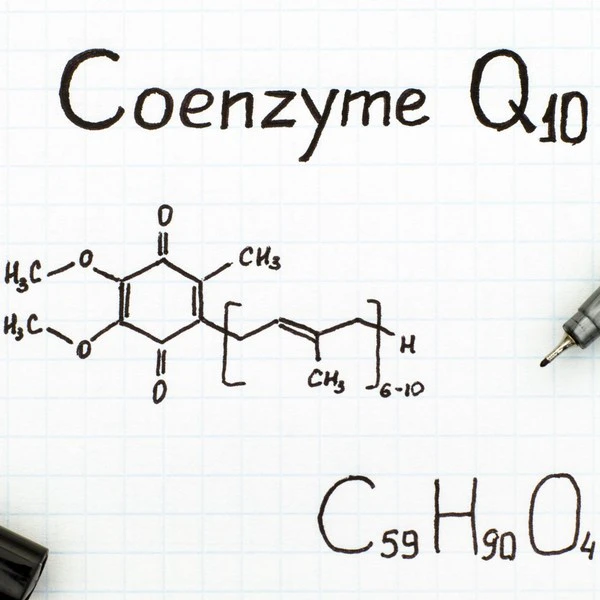
CoQ10 stands for coenzyme Q10, also called ubiquinone. The body makes it and it is found in cell membranes and inside mitochondria, which are the parts of the cell that make most of its usable energy (Crane, 2001).
CoQ10 is fat soluble. It mixes with fat, not water. It lives in cell membranes and having fats can help with absorption from food or supplements (Bhagavan and Chopra, 2006).
CoQ10 is present all through the body, but some organs have more of it than others. The highest levels are found in tissues with high energy needs, such as the heart, liver, kidneys and pancreas (NCCIH, 2025).
A tissue that works hard needs a steady flow of energy. The heart is a clear example because it contracts day and night.
Why The Body Needs It
Energy Making
CoQ10 helps move electrons inside the mitochondrial energy chain. In plain terms, it helps cells turn food into ATP, which is the main form of usable energy in the body (Bentinger et al., 2010; Crane, 2001).
When CoQ10 is present in the right place, that energy process works better. When supply is low, tissues with high demand may have a harder time meeting energy needs.
Fatigue has many causes. Still, the link between CoQ10 and cell energy is well established.
Cell Protection
CoQ10 also works as an antioxidant. An antioxidant helps limit damage from unstable molecules that can harm fats and other cell parts.
Cell membranes contain fats that need protection, and the energy process itself can create oxidative stress (Bentinger et al., 2010).
Crane described CoQ10 as both an energy helper and a membrane protector, which helps explain why interest in this compound extends beyond one organ or one symptom (Crane, 2001).
Heart Work
The heart has a high need for CoQ10 because heart muscle depends on a large, steady energy supply.
Reviews of clinical and basic science work have pointed to this close link for years (Littarru and Tiano, 2010). This nutrient like compound is central to how heart cells do their work.
CoQ10 Is Tied To Energy Demand
CoQ10 sits inside the energy system and is often used when energy demand is high.
When Levels May Fall
Aging & Health Status
The body can make CoQ10, but that does not mean levels stay the same for life. Levels may decline with age, and lower levels have also been reported in some disease states (NCCIH, 2025; Littarru and Tiano, 2010).
Statin Use
Statin drugs lower cholesterol by blocking a pathway in the body. Statin use has been linked with reduced CoQ10 levels (Deichmann et al., 2010).
Some people taking statins ask whether lower CoQ10 may be part of muscle symptoms. The evidence on symptom relief from supplements is mixed, but the link between the pathway and CoQ10 production is well known (Deichmann et al., 2010).
Use vs Skip
| Use | Skip |
|---|---|
| With fat containing meal | Empty stomach if nauseated |
| Ubiquinol | Random high dose |
| Track energy | Expecting instant energy |
| Track tolerance | Ignoring sleep |
Food Sources
Whole Foods
Food gives modest amounts of CoQ10. Richer sources include meat, fish and organ meats, with heart and liver often noted among the better animal sources.
Diet alone may not raise body levels by much in a short time (Linus Pauling Institute, n.d.; NCCIH, 2025).
Animal foods can make the most sense here. Examples include beef, sardines, mackerel, lamb and small portions of organ meats.
Fat & Absorption
Because CoQ10 is fat soluble, eating it with fat can help absorption. This applies to food and also helps explain why some supplement forms are made in oil based softgels (Bhagavan and Chopra, 2006).
An ideal meal plan could be one to three solid meals a day, each built around protein and natural fat.
Whole foods bring more than one compound at a time. Meat and organs give protein, iron, selenium, B vitamins, and fat along with CoQ10.
For plant based and vegans, this is one more reason getting CoQ10 from food may be lower.
Plant foods do contain some CoQ10, but the richer sources tend to be animal foods (Linus Pauling Institute, n.d.).
CoQ10 Use Check
When Supplements Come Up
People often look into CoQ10 supplements for heart concerns, statin use, aging, or low energy.
CoQ10 has known roles in energy making and antioxidant defense, and blood or tissue levels can be lower in some groups (NCCIH, 2025; Littarru and Tiano, 2010).
What Evidence Is Strongest
The best known clinical work is in heart failure, where CoQ10 has been studied as an add on therapy.
In the Q-SYMBIO trial, Mortensen and coauthors reported better outcomes in the treated group than in the placebo group over two years (Mortensen et al., 2014).
That does not mean every person with heart symptoms should take it. It does show why CoQ10 stays in the heart health discussion. For general wellness, the evidence is less clear.
Some people report benefit. Some do not. The answer can depend on the reason for use, health status, dose and the form used.
Absorption of CoQ10 is limited and different supplement forms may not act the same in the body (Bhagavan and Chopra, 2006).
A person thinking about CoQ10 may want to ask:
- Is there a clear reason to use it?
- Is food intake already strong?
- Is a medication or health issue linked with lower levels?
Those questions help keep the choice practical and grounded.
Before changing your diet, supplements, or health routine, talk with a licensed healthcare professional. For any health concerns or questions about a medical condition, get guidance from a physician or another appropriately trained clinician.
Suggested Posts

Evidence Limits
Research
Madmani, M.E. et al., 2014. Coenzyme Q10 for heart failure. Cochrane Database of Systematic Reviews. doi:10.1002/14651858.CD008684.pub2. PMID:25169484
Flowers, N. et al., 2014. Co-enzyme Q10 supplementation for the primary prevention of cardiovascular disease. Cochrane Database of Systematic Reviews. doi:10.1002/14651858.CD010405.pub2. PMID:25299827
Dludla, P.V. et al., 2020. The effect of coenzyme Q10 supplementation on metabolic profiles in adults: a systematic review and meta-analysis of randomized controlled trials. Endocrine, Metabolic & Immune Disorders Drug Targets, 20(5), pp.1–13. doi:10.2174/1871530320666200128144039
Sharifi, N. et al., 2017. Effect of coenzyme Q10 supplementation on lipid profiles: a systematic review and meta-analysis of randomized controlled trials. Lipids in Health and Disease, 16, 206. doi:10.1186/s12944-017-0588-3. PMID:29058553
Zhai, J. et al., 2017. Effects of coenzyme Q10 on markers of inflammation: a systematic review and meta-analysis. PLoS One, 12(1), e0170172. doi:10.1371/journal.pone.0170172. PMID:28068426
Fotino, A.D. et al., 2013. Effect of coenzyme Q10 supplementation on heart failure: a meta-analysis. American Journal of Clinical Nutrition, 97(2), pp.268–275. doi:10.3945/ajcn.112.040741. PMID:23235177
Rosenfeldt, F. et al., 2007. Coenzyme Q10 in the treatment of hypertension: a meta-analysis of the clinical trials. Journal of Human Hypertension, 21(4), pp.297–306. doi:10.1038/sj.jhh.1002138. PMID:17287847
Mortensen, S.A. et al., 2014. The effect of coenzyme Q10 on morbidity and mortality in chronic heart failure: results from Q-SYMBIO: a randomized double-blind trial. JACC: Heart Failure, 2(6), pp.641–649. doi:10.1016/j.jchf.2014.06.008. PMID:25282031
Young, J.M. et al., 2007. Effect of coenzyme Q10 supplementation on endothelial function in patients with type 2 diabetes mellitus: a randomized controlled trial. Diabetologia, 50(11), pp.2385–2392. doi:10.1007/s00125-007-0789-0. PMID:17768667
Hodgson, J.M. et al., 2002. Coenzyme Q10 improves blood pressure and glycaemic control: a controlled trial in subjects with type 2 diabetes. European Journal of Clinical Nutrition, 56(11), pp.1137–1142. doi:10.1038/sj.ejcn.1601450. PMID:12428176
Bookstaver, D.A. et al., 2012. Effects of coenzyme Q10 supplementation on statin-induced myopathies. American Journal of Cardiology, 110(4), pp.526–529. doi:10.1016/j.amjcard.2012.04.020. PMID:22537669
Bentinger, M., Tekle, M. and Dallner, G., 2010. Coenzyme Q—biosynthesis and functions. Biochemical and Biophysical Research Communications, 396(1), pp.74–79. doi:10.1016/j.bbrc.2010.02.147. PMID:20494109
Bhagavan, H.N. and Chopra, R.K., 2006. Coenzyme Q10: absorption, tissue uptake, metabolism and pharmacokinetics. Free Radical Research, 40(5), pp.445–453. doi:10.1080/10715760600617843. PMID:16753881
Crane, F.L., 2001. Biochemical functions of coenzyme Q10. Journal of the American College of Nutrition, 20(6), pp.591–598. doi:10.1080/07315724.2001.10719063. PMID:11771674
Littarru, G.P. and Tiano, L., 2007. Clinical aspects of coenzyme Q10: an update. Nutrition, 23(7–8), pp.565–571. doi:10.1016/j.nut.2007.05.008. PMID:17625934
Deichmann, R., Lavie, C. and Andrews, S., 2010. Coenzyme Q10 and statin-induced mitochondrial dysfunction. Ochsner Journal, 10(1), pp.16–21. PMID:21603313
Ernster, L. and Dallner, G., 1995. Biochemical, physiological and medical aspects of ubiquinone function. Biochimica et Biophysica Acta, 1271(1), pp.195–204. doi:10.1016/0925-4439(95)00028-3. PMID:7599208
National Center for Complementary and Integrative Health, 2025. Coenzyme Q10. Available at: https://www.nccih.nih.gov/health/coenzyme-q10
Oregon State University, Linus Pauling Institute, n.d. Coenzyme Q10. Available at: https://lpi.oregonstate.edu/mic/dietary-factors/coenzyme-Q10