Key Takeaways
- Plant sterols can lower LDL in short trials without proving better long term health outcomes.
- Some people absorb much more sterol than expected because transport genes differ between individuals.
- Sitosterolemia shows sterol overload can become harmful when the body cannot clear it well.
- Cell membrane research shows plant sterols are active compounds with real biological effects.
- Long term high dose use remains less settled than short tightly controlled trial use.
LDL Lowering Limits
Short Trial Effects
Plant sterols lower LDL in many short human trials by reducing part of cholesterol absorption in the gut. That finding is consistent across controlled studies and pooled reviews that used fortified foods or sterol enriched products (1, 2, 3).
The usual drop is modest and often lands in the range of five to fifteen percent. Trials often use around two grams per day which is far above what most people get from unfortified food. That effect can change a lab result. It does not prove lower death rates or fewer heart attacks over many years.
Outcome Data Gap
The main problem is simple. The evidence base is rich in surrogate markers and thin in hard outcome trials. Recent reviews still state that plant sterols lack randomized evidence for fewer heart attacks strokes or deaths. A lower LDL value may look helpful on paper yet that is still one marker and not a full health result (1, 4, 5).
That gap gets more important once LDL is framed as the whole target. A person can push LDL lower while keeping the same poor diet high insulin burden poor liver health weak thyroid function low activity and heavy processed food intake.
Several recent cohort studies also found that very low LDL was linked with higher all cause mortality in some groups especially older adults. Those papers do not prove higher LDL is always protective. They do show that lower LDL alone should never be treated as a clean stand in for better health (6, 7, 8).
Absorption Differences
Transport Genes
Plant sterol handling differs sharply between people because sterol transport is tightly regulated by the gut and liver. ABCG5 ABCG8 and NPC1L1 are among the key genes that shape absorption and excretion (9, 10, 11).
Those transport systems are one reason response varies so much across users. One person may see a modest LDL fall with little sterol rise while another may absorb and retain far more of the added sterol load. This is a major reason broad safety claims stay weak. The same dose does not behave the same way in every body.
High Absorbers
Controlled trials show that sterol supplementation often raises circulating sitosterol campesterol and related plant sterols even while LDL falls. That trade is built into the mechanism and should be stated plainly (2, 9, 12).
That means the intervention works partly by changing sterol traffic through the body. It does not repair the deeper reason someone developed a poor lipid profile.
For a person with strong sterol absorption or poor sterol clearance the extra load may deserve more caution than a short food industry trial suggests.
Known Harm Signal
Sitosterolemia
Sitosterolemia is the clearest proof that plant sterol overload can harm humans. This rare inherited disorder causes extreme retention of plant sterols because the body cannot move them out properly. Patients can develop tendon xanthomas, premature vascular disease, arthritis, hemolysis, large platelets and other problems tied to severe sterol accumulation (13, 14, 11). This condition is rare yet its meaning is clear. Plant sterols are not biologically inert compounds that the body can always ignore without consequence.
Clinical Caution
Most users of fortified foods will not reach the sterol levels seen in classic sitosterolemia. That does not erase the warning signal from the disease.
A genetic condition can reveal a real human vulnerability even when the full disease is uncommon. It shows that sterol overload is possible and that the body needs active transport systems to keep plant sterols under control.
That is enough reason to avoid casual long term high dose use especially in people with unusual xanthomas, unexplained family lipid disorders or poor responses to standard diet changes.
Membrane Effects
Cell Entry
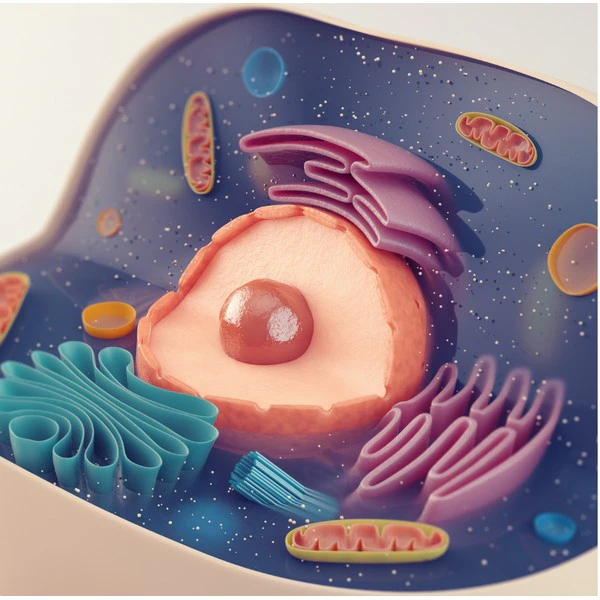
Mechanistic studies show that plant sterols can enter cell membranes and change membrane structure. Their shape is close enough to cholesterol that they can alter packing fluidity and local signaling behavior inside the membrane (15, 16). That does not prove routine clinical harm in every supplement user. It does show that plant sterols are active compounds with real physical effects on living tissue.
Long Term Uncertainty
Cell membranes regulate transport enzymes receptors and signaling. Any persistent shift in membrane sterol content deserves caution when long term outcome trials are still missing. Short studies often show LDL lowering and limited obvious harm. Long term hard outcome evidence is still missing and mechanistic work gives a real reason to stay careful (4, 15, 16).
For people trying to improve lipid markers the stronger move is usually upstream. Remove ultra processed food cut sugar and starch, avoid seed oils, improve sleep, improve light exposure, increase daily movement and center meals on nutrient dense animal foods. That works on the terrain that shapes the marker instead of forcing the marker while the terrain stays the same.
Before changing your diet, supplements, or health routine, talk with a licensed healthcare professional. For any health concerns or questions about a medical condition, get guidance from a physician or another appropriately trained clinician.
FAQs
Are plant sterols safe for everyone?
No. Short term use may look calm in many people yet universal safety is not proven.
Do plant sterols lower heart attack risk?
The evidence shows LDL lowering in short trials but not clear proof of fewer heart attacks.
Who should be most careful with plant sterols?
People with sitosterolemia unusual xanthomas or possible inherited sterol handling problems need extra caution.
Can plant sterols raise blood sterol levels?
Yes. Supplement use can raise circulating plant sterols even while LDL falls.
Is long term daily use well studied?
Long term high dose safety and outcome data remain limited and still unsettled.
Research
Barkas, F., Bathrellou, E., Nomikos, T., Panagiotakos, D.B., Liberopoulos, E. and Kontogianni, M.D., 2023. Plant Sterols and Plant Stanols in Cholesterol Management and Cardiovascular Prevention. Nutrients, 15(13), p.2845. DOI: 10.3390/nu15132845. PMID: 37447172.
Fumeron, F., Bard, J.M. and Lecerf, J.M., 2017. Interindividual variability in the cholesterol lowering effect of supplementation with plant sterols or stanols in LDL hypercholesterolemic subjects. Journal of Nutrigenetics and Nutrigenomics, 10(1-2), pp.25-40. PMID: 28158760.
de Jong, A., Plat, J., Bast, A., Godschalk, R.W.L. and Mensink, R.P., 2008. Effects of plant sterol and stanol ester consumption on lipid metabolism antioxidant status and markers of oxidative stress endothelial dysfunction and low grade inflammation in hypercholesterolaemic subjects. Atherosclerosis, 196(2), pp.987-996. PMID: 17487211.
Chen, L., Yang, Y., Peng, Y., Liu, J., Yang, H., Zhang, Y., Jiang, F., Xia, Y., He, P., Liu, D. and Luo, J., 2024. Low Density Lipoprotein Cholesterol Cardiovascular Disease and Mortality in Older Adults and Different Risk Categories. JAMA Network Open, 7(6), e2413911. DOI: 10.1001/jamanetworkopen.2024.13911.
Kip, K.E., Diamond, D.M., Mulukutla, S., Marroquin, O.C. et al., 2024. Is LDL cholesterol associated with long term mortality among primary prevention adults? A retrospective cohort study from a large healthcare system. BMJ Open, 14(3), e077949. DOI: 10.1136/bmjopen-2023-077949. PMID: 38548371.
Zhou, Z., Ofori Asenso, R., Curtis, A.J., Breslin, M., Wolfe, R., McNeil, J.J. and Tonkin, A., 2024. Low Density Lipoprotein Cholesterol and Mortality Outcomes in Older Individuals. Journal of the American Geriatrics Society, 72(3), pp.719-729. PMID: 38038339.
Zhao, H.L., Houweling, A.H., Vanstone, C.A., Jew, S., Trautwein, E.A., Duchateau, G.S.M.J.E. and Jones, P.J.H., 2008. Genetic variation in ABCG5 G8 and NPC1L1 impacts cholesterol response to plant sterols in hypercholesterolemic men. Journal of Lipid Research, 49(11), pp.2374-2383. PMID: 18850127.
Kidambi, S. and Patel, S.B., 2008. ABCG5 ABCG8 and NPC1L1. A review of genetic and physiologic roles in sterol absorption and excretion and implications for disease. Journal of Lipid Research, 49(2), pp.260-267. PMID: 18668442.
Williams, K.J., Banyols, N., et al., 2021. Twenty Years of Discovery of the Function of ABCG5 ABCG8. Arteriosclerosis Thrombosis and Vascular Biology, 41(1), pp.202-212. DOI: 10.1161/ATVBAHA.120.315502. PMID available via journal indexing.
Ottestad, I., Ose, L., Wennersberg, M.H., Granlund, L., Kirkhus, B., Retterstol, K., Myhrstad, M.C.W. and Halvorsen, B., 2013. Phytosterol capsules and serum cholesterol in hypercholesterolemia. A randomized controlled trial. Atherosclerosis, 228(2), pp.421-425. DOI: 10.1016/j.atherosclerosis.2013.03.041. PMID: 23602600.
Yoo, E.G., 2016. Sitosterolemia. A review and update of pathophysiology clinical spectrum diagnosis and management. Annals of Pediatric Endocrinology & Metabolism, 21(1), pp.7-14. DOI: 10.6065/apem.2016.21.1.7. PMID: 27104103.
Ajagbe, B.O., Othman, R.A. and Myrie, S.B., 2015. Plant Sterols Stanols and Sitosterolemia. Journal of AOAC International, 98(3), pp.716-723. DOI: 10.5740/jaoacint.SGER_Ajagbe. PMID: 25941970.
Hovenkamp, E., Demonty, I., Plat, J., Lutjohann, D. and Mensink, R.P., 2008. Biological effects of oxidized phytosterols. A review of the current knowledge. Progress in Lipid Research, 47(1), pp.37-49. DOI: 10.1016/j.plipres.2007.10.001. PMID: 18068216.
Bernabé García, M., Villegas, I. and Marhuenda, E., 2002. The effect of phytosterols on cell membrane structure. Current Medicinal Chemistry, 9(2), pp.153-163. DOI verifiable on journal site.
Hallikainen, M.A., Sarkkinen, E.S., Uusitupa, M.I.J., 2000. Plant stanol and sterol ester enriched foods as serum cholesterol lowering functional foods. Annals of Medicine, 32(2), pp.131-140. DOI: 10.3109/07853890008998825. PMID: 10766419.