Key Takeaways
- CRP rises for many reasons, not just heart disease
- A single high CRP does not prove chronic illness
- Acute stress and infection can spike CRP fast
- Trends matter more than one lab result
- Food, sleep, and stress drive baseline inflammation
CRP can be useful, but only when you know what it is and what it is not. It is a fast, blunt signal that something is going on, not a tidy label for one disease. If you treat one number like a verdict, you can chase the wrong problem for months.
CRP Is A Fire Alarm
CRP is an acute phase protein. Your liver makes more of it when immune signals rise, especially interleukin-6. It is part of a wide, whole body response to injury, infection, and tissue stress, not a heart marker by design. (Gulhar, 2023)
What makes CRP attractive to clinicians is the speed. After a strong trigger, CRP can rise within hours and peak around two days. Its blood half life stays about the same, so the level mostly reflects how hard the body is being pushed right now. (Pepys, 2003) That speed is also why CRP is easy to misread.
CRP can move from low to very high with infections, surgery, trauma, burns, or even a flare of an inflammatory condition. A high number is not bad inflammation in the abstract. It may be a normal, short lived defense response. The meaning depends on timing, symptoms, and what else is happening in your life.
CRP Versus hs-CRP
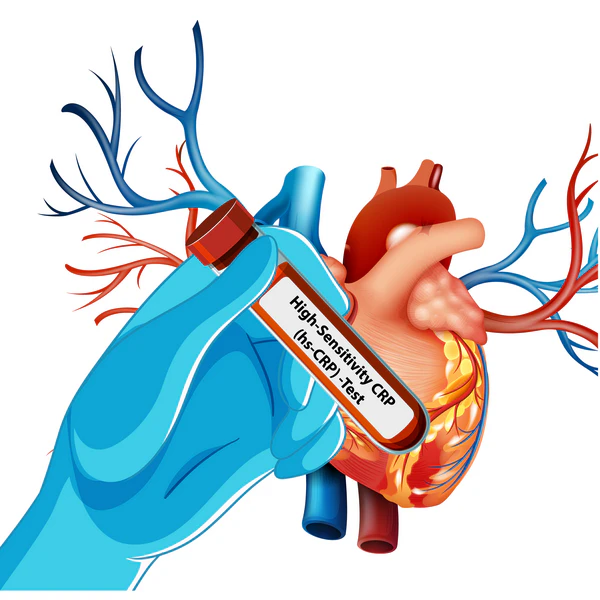
Standard CRP tests are good for bigger swings. High sensitivity CRP, often written as hs-CRP, measures smaller changes in the low range. It is mainly used for cardiovascular risk discussion, not for diagnosing an infection. Some clinical writing uses cut points like under 1 mg/L, 1 to 3 mg/L, and over 3 mg/L for cardiovascular risk grouping, but that is still risk talk, not a diagnosis. (Musunuru, 2008)
If your hs-CRP is over 10 mg/L, many clinicians pause the heart risk conversation and look for an acute driver first, because the signal can be dominated by something temporary.
Single Numbers Mislead
CRP Bounces Around In Real Life
CRP is not as stable as people expect. In a general population sample, repeat testing a few weeks apart led to meaningful reclassification for a sizable chunk of people with elevated values. In plain terms, one test can tag you as high and the next can drop you back into normal, without any big change in your true long term health. (Bower, 2012)
So if you feel fine and one CRP is high, the best first question is not What disease do I have? It is What was happening in my body that week?
Timing Errors Are Common
CRP rises and falls on a schedule. If you test too soon after a trigger, you may catch it on the way up. If you test late, you may catch the decline and miss the peak. The same illness can produce very different lab results depending on the day you draw blood. (Pepys, 2003)
If your CRP or hs-CRP is unexpectedly high, the simplest way to reduce confusion is to repeat it when life is calm. Practical timing ideas:
- Wait until you are clearly past a cold, fever, stomach bug, or dental procedure
- Avoid very hard training for 48 to 72 hours before the blood draw
- Keep sleep steady for several nights first
- Try to repeat the test at the same time of day, with similar routines
This does not game the lab. It gives you a baseline, instead of a snapshot taken during a storm.
Context That Changes CRP
Infection
A sore throat, sinus infection, skin infection, inflamed gums, or a sprained ankle can all raise CRP. Even if the issue feels small, the immune system does not grade on a curve. It reacts. This is one reason CRP can feel meaningless when used as a stand alone inflammation score. Without context, you cannot tell if you are seeing a short defense response or a chronic pattern.
Hard Exercise
Strenuous exercise can cause a short term inflammatory response. A meta-analysis by Kasapis and Thompson described a transient CRP rise after strenuous exercise, while long term training can relate to lower baseline inflammation over time. (Kasapis and Thompson, 2005) So if you trained hard, raced, lifted heavy to failure, did long runs, or stacked workouts with poor sleep, a higher CRP may reflect recovery debt, not disease.
Body Fat
Fat tissue is not just storage. It can release inflammatory signals, including IL-6, which can drive higher CRP. In NHANES data, higher BMI was associated with higher CRP, even in younger adults. (Visser et al., 1999) If you carry more body fat, you can run a higher baseline CRP even without an obvious infection. That does not mean you are broken. It means the baseline is partly reflecting metabolic load.
Genetics
Some people are built to run higher or lower CRP. Brull and colleagues identified CRP gene variants that influenced basal and stimulated CRP levels in healthy recruits and in surgical patients. (Brull et al., 2003)
That does not mean genes doom you. It means comparing your single value to someone else’s can be misleading. Your trend over time is usually more useful than your position on a generic chart.
Building A Lower Baseline
Stop Chasing The Number
Lowering CRP is not a goal by itself. The goal is a body that needs less immune alarm in daily life. When baseline CRP drops, it is usually because the inputs got cleaner: better sleep, less ultra-processed food, steadier blood sugar, less chronic stress load, and fewer hidden infections.
Also, do not confuse lower CRP today with better health forever. CRP is supposed to rise when you are injured or sick. The win is a calm baseline and an appropriate spike when needed.
Food First, With Animal Fat As A Foundation
If you want a calmer baseline, start with food that is hard to distort and easy to digest. For many people, that means building meals around ruminant meat and animal fat, then adjusting from there.
A simple structure that fits 1 to 3 meals daily:
Meal ideas:
- Ground beef or steak cooked in tallow, with eggs
- Lamb, beef shank, or oxtail with the natural fat left on
- A small serving of liver once weekly if tolerated, or other organs occasionally
- Bone broth or slow cooked collagen rich cuts, if they sit well
Avoid the usual drivers of silent inflammation in modern diets: seed oils, fried foods, ultra-processed snacks, and fortified foods. Fortification often adds isolated synthetic forms that do not behave like real food in the body.
If you include plant foods, keep them simple and watch tolerance. Some people react to high oxalate greens, nuts, or high lectin foods. If you suspect that, remove them for a few weeks and see what happens to digestion, skin, joints, and sleep.
Sleep & Stress As Lab Inputs
Poor sleep can raise inflammatory signaling. Stress can do the same. If you want labs that mean something, your week before testing matters.
Two practical targets:
- A steady sleep schedule for at least 5 to 7 nights
- No hero weeks at work or in training right before the blood draw
If you cannot do that, you can still test, but interpret cautiously.
Movement That Lowers, Not Spikes
If your life is sedentary, gentle daily movement can help circulation, glucose handling, and recovery. If your training is already intense, the next upgrade may be more rest, not more grind. A useful approach is to separate training days from recovery days on purpose. Hard sessions are fine, but stack them with sleep, food, and lower life stress, so CRP does not stay mildly elevated from constant strain.
Before changing your diet, supplements, or health routine, talk with a licensed healthcare professional. For any health concerns or questions about a medical condition, get guidance from a physician or another appropriately trained clinician.
FAQs
Is a high CRP always a sign of heart disease?
No. CRP rises from many triggers like infections, injuries, and immune flares. Heart risk discussions use hs-CRP in context, not as proof of disease.
Can exercise raise CRP levels?
Yes. Strenuous exercise can raise CRP for a short time, especially if you also slept poorly or did not recover well.
Should I retest CRP after being sick?
If you tested during or soon after illness, a retest can help once you feel fully recovered and your routine is stable again.
What is the difference between CRP and hs-CRP?
They measure the same protein. hs-CRP uses a more sensitive method for low-range levels, mainly for cardiovascular risk conversations.
Can diet alone lower CRP levels?
Diet can change baseline inflammation for many people, especially when you remove ultra-processed food and seed oils and build meals around nutrient-dense animal foods. Sleep, stress, infections, and training load still matter.
Research
Kaptoge, S. et al. (2010) C-reactive protein concentration and risk of coronary heart disease, stroke, and mortality: an individual participant meta-analysis. Lancet.
Danesh, J. et al. (2004) C-Reactive Protein and Other Circulating Markers of Inflammation in the Prediction of Coronary Heart Disease. New England Journal of Medicine.
Wensley, F. et al. (2011) Association between C reactive protein and coronary heart disease: mendelian randomisation analysis based on individual participant data. BMJ.
Zacho, J. et al. (2008) Genetically Elevated C-Reactive Protein and Ischemic Vascular Disease. New England Journal of Medicine.
Ridker, P.M. et al. (2017) Antiinflammatory Therapy with Canakinumab for Atherosclerotic Disease. New England Journal of Medicine.
Casas, J.P. et al. (2006) C-reactive protein and coronary heart disease: a critical review. Lancet.
Dehghan, A. et al. (2007) Association of three genetic loci with C-reactive protein levels and risk of coronary heart disease. JAMA.
Ridker, P.M. et al. (2000) C-Reactive Protein and Other Markers of Inflammation in the Prediction of Cardiovascular Disease in Women. New England Journal of Medicine.
Koenig, W. et al. (1999) C-Reactive Protein, a Sensitive Marker of Inflammation, Predicts Future Risk of Coronary Heart Disease in Initially Healthy Middle-Aged Men: Results From the MONICA (Monitoring Trends and Determinants in Cardiovascular Disease) Augsburg Cohort Study, 1984 to 1992. Circulation.
Elliott, P. et al. (2009) Genetic Loci associated with C-Reactive Protein Levels and Risk of Coronary Heart Disease. JAMA.
Pearson, T.A. et al. (2003) Markers of Inflammation and Cardiovascular Disease: Application to Clinical and Public Health Practice. Circulation.
Pepys, M.B. and Hirschfield, G.M. (2003) C-reactive protein: a critical update. Journal of Clinical Investigation.