Key Takeaways
- ALA is a plant fat, but DHA and EPA do different jobs.
- Most plant omega 3 stays as ALA instead of becoming DHA.
- Total omega 3 claims can make weak sources look stronger.
- Seafood gives DHA and EPA in forms the body can use fast.
- Seed oils can crowd out better fats and confuse omega 3 intake.
Omega 3 Forms
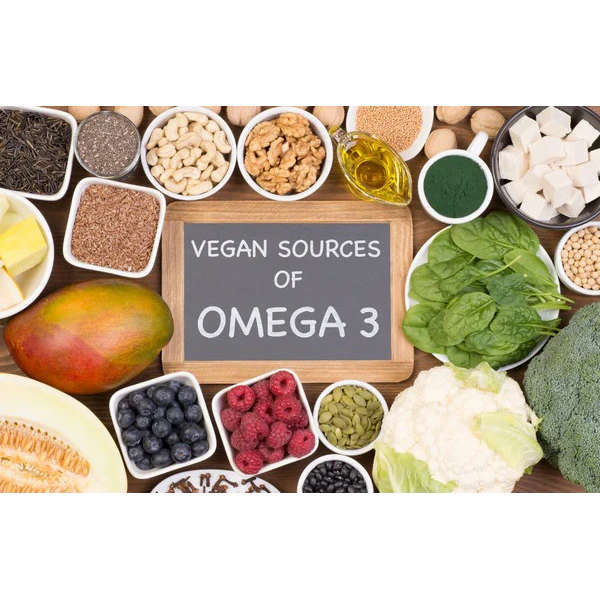
ALA In Plants
ALA stands for alpha-linolenic acid. It is the main omega 3 fat found in plant foods such as flax, chia, walnuts, and some seed oils. Many packages use the term omega 3 as if all forms do the same work. That blurs an important difference.
ALA counts as an omega 3 fat on a label, but that does not make it equal to DHA or EPA. A person can eat plenty of ALA on paper and still take in very little of the long-chain omega 3 fats most people actually want for the brain, eyes, and cell membranes (Burdge and Wootton, 2002).
Plant omega 3 has been sold as if it can stand in for marine omega 3. The human body does not support that claim very well. That is the key point.
DHA & EPA In Seafood
DHA and EPA are the longer-chain omega 3 fats found in fish, shellfish, and roe. These are the ready-made forms. The body does not need to do much extra work before using them.
DHA is highly concentrated in the brain and retina, the light-sensing part of the eye. EPA is used in cell signaling and other body processes tied to immune tone and blood vessel function. When a person wants usable omega 3, seafood gives the direct route.
That source difference is why sardines, salmon, herring, anchovies, mackerel, oysters, and roe have more value here than flax or chia, even when the plant foods carry a large omega 3 number on the label.
Why ALA Falls Short
Low Conversion
The body can convert some ALA into EPA and then into DHA, but the process is limited. Human studies have found that conversion to DHA is especially low, which means plant omega 3 often stays as ALA or is used in other ways instead of becoming much DHA (Burdge and Wootton, 2002).
Diet also shifts how much conversion happens. A controlled feeding trial found that the absolute amounts of ALA and linoleic acid, the main omega 6 fat in seed oils, influenced this pathway (Goyens et al., 2006). That means conversion is not just a neat chemistry fact from a chart. It is shaped by the full fat mix in the diet. This leaves plant omega 3 in a weaker place than the label suggests. A person may eat flax every day and still fail to build the same DHA status as someone who eats fish.
Seed Oil Burden
Modern diets are often loaded with omega 6 rich seed oils from dressings, sauces, fried foods, chips, restaurant meals, and packaged snacks. That background load can work against omega 3 balance.
A label that says high in omega 3 can create false comfort when the product still leans on industrial oils. A splash of ALA added to a seed oil heavy diet does not solve the deeper problem. The body still has to sort through a poor fat mix.
That is one reason whole meals built around animal foods and stable cooking fats tend to work better. The body gets direct DHA and EPA from seafood, plus a lower burden from the unstable, highly processed fats that often travel with plant oil products.
Misleading Labels
Total Omega 3 Claims
Many labels combine all omega 3 forms into one total number. That can make a food look far more useful than it really is. A cereal bar, plant drink, or seed blend may claim omega 3, yet provide little or no DHA and EPA. A person who wants real clarity should ignore the front label and check the nutrition details. The useful question is simple. How much DHA and EPA does this food actually provide?
ALA is still ALA. It should not be counted as if it does the same work as marine omega 3. Large observational reviews have linked higher ALA intake with some better heart outcomes, but those papers do not show that ALA reliably turns into much DHA in humans (Pan et al., 2012; Naghshi et al., 2021). Those links may reflect wider diet and lifestyle factors, not a strong replacement effect.
Marketing Shortcuts
Plant based branding often takes advantage of the public habit of treating omega 3 as one simple thing. That makes it easy to sell weak sources under a strong name.
A bottle, snack, or spread can carry the right buzzword while giving a form the body barely converts. This is a label game more than a nutrition win. Source decides whether the omega 3 is ready to use, or stuck behind several inefficient conversion steps. That is why a small serving of sardines can do more real work than a much larger number from flax oil or chia powder.
Better Food Sources
Best Animal Foods
The strongest food sources are simple and familiar:
- Sardines, mackerel, herring, and anchovies
- Salmon and trout
- Oysters, mussels, and other shellfish
- Fish roe
- Pasture-raised eggs as a smaller add-on source
These foods give DHA and EPA directly. They also bring protein, minerals, and other nutrients that do not come with isolated oils in capsules.
Meal Framework
Meals work best when they are built around animal foods instead of powders, seed blends, and processed bars. Fatty fish two to four times per week is a strong base. Shellfish or roe once or twice per week can add more DHA, EPA, copper, zinc, and other minerals. Ruminant meat, eggs, butter, ghee, and tallow fit well around that base.
A simple meal could be sardines with eggs and butter. Another could be salmon with a small side of low toxin fruit. Another could be oysters with a burger patty and tallow fried mushrooms, if tolerated. One to three solid meals per day usually keeps intake cleaner than grazing on packaged foods that hide seed oils.
This approach also cuts down the fake health halo around fortified products. A food made from industrial oils does not become a good source of omega 3 because a label says so.
Pills Versus Food
Mixed Trial Results
Fish oil capsules are often sold as an easy fix. The trial record is less impressive than the marketing. A major Cochrane review found that increasing long-chain omega 3 intake had little or no effect on many cardiovascular outcomes (Abdelhamid et al., 2020).
A large JAMA meta-analysis also found no clear reduction in major cardiovascular events from omega 3 supplements (Rizos et al., 2012). Another meta-analysis in JAMA Cardiology reached a similar result in high-risk groups (Aung et al., 2018). Those findings do not mean fish is weak. They show that isolated oils in capsules do not act like whole seafood.
Dose Concerns
More is not always better. A meta-analysis in Circulation found that marine omega 3 supplements in cardiovascular outcome trials were linked to a higher risk of atrial fibrillation, with a stronger signal at doses above 1 gram per day (Gencer et al., 2021). That is a heart rhythm issue, and it is not trivial.
A purified EPA drug has shown benefit in a narrow, high risk clinical setting, but that was a prescription product studied under specific conditions, not proof that everyone should take high-dose fish oil (Bhatt et al., 2019). For most people, seafood remains the cleaner path.
When a supplement does come up, a small, careful dose of a food based cod liver oil is a more reasonable discussion than treating generic fish oil pills as a daily insurance policy. Food still deserves first place.
Consult a licensed healthcare professional before starting, stopping, or changing any diet, supplement, medication, or wellness practice. For questions about a medical condition or symptoms, seek advice from a qualified clinician who can assess your situation.
FAQs
Is ALA The Same As DHA Or EPA?
No. ALA is the plant form of omega 3, while DHA and EPA are the marine forms. The body can convert some ALA, but only a small amount becomes DHA.
Can Flax Or Chia Cover Omega 3 Needs?
They can raise ALA intake, but they are a weak source of ready-to-use DHA and EPA. Seafood is a far better source for that goal.
Why Do Omega 3 Labels Look Better Than The Product Really Is?
Many labels count ALA, DHA, and EPA together as total omega 3. That can make a plant-based product look stronger than it is.
What Foods Give The Most Usable Omega 3?
Sardines, mackerel, herring, anchovies, salmon, shellfish, and fish roe are the strongest foods for direct DHA and EPA.
Do Fish Oil Pills Work The Same As Eating Fish?
No. Capsules give isolated oils, while fish gives omega 3 with protein, minerals, and a whole-food structure. Trial results for pills have also been mixed.
Research
Burdge, G.C. and Wootton, S.A., 2002. Conversion of alpha-linolenic acid to eicosapentaenoic, docosapentaenoic and docosahexaenoic acids in young women. British Journal of Nutrition, 88(4), pp.411-420.
Goyens, P.L.L., Spilker, M.E., Zock, P.L., Katan, M.B. and Mensink, R.P., 2006. Conversion of alpha-linolenic acid in humans is influenced by the absolute amounts of alpha-linolenic acid and linoleic acid in the diet and not by their ratio. American Journal of Clinical Nutrition, 84(1), pp.44-53.
Pan, A., Chen, M., Chowdhury, R., Wu, J.H.Y., Sun, Q., Campos, H., Mozaffarian, D. and Hu, F.B., 2012. Alpha-linolenic acid and risk of cardiovascular disease, a systematic review and meta-analysis. American Journal of Clinical Nutrition, 96(6), pp.1262-1273.
Naghshi, S., Sadeghi, O., Willett, W.C. and Esmaillzadeh, A., 2021. Dietary intake and biomarkers of alpha linolenic acid and risk of all cause, cardiovascular, and cancer mortality, systematic review and dose-response meta-analysis of cohort studies. BMJ, 375, n2213.
Abdelhamid, A.S., Brown, T.J., Brainard, J.S., Biswas, P., Thorpe, G.C., Moore, H.J., Deane, K.H.O., Summerbell, C.D., Worthington, H.V., Song, F. and Hooper, L., 2020. Omega-3 fatty acids for the primary and secondary prevention of cardiovascular disease. Cochrane Database of Systematic Reviews, 3, CD003177.
Rizos, E.C., Ntzani, E.E., Bika, E., Kostapanos, M.S. and Elisaf, M.S., 2012. Association between omega-3 fatty acid supplementation and risk of major cardiovascular disease events, a systematic review and meta-analysis. JAMA, 308(10), pp.1024-1033.
Aung, T., Halsey, J., Kromhout, D., Gerstein, H.C., Marchioli, R., Tavazzi, L., Geleijnse, J.M., Rauch, B., Ness, A., Galan, P. and Chew, E.Y., 2018. Associations of omega-3 fatty acid supplement use with cardiovascular disease risks, meta-analysis of 10 trials involving 77 917 individuals. JAMA Cardiology, 3(3), pp.225-234.
Gencer, B., Djousse, L., Al-Ramady, O.T., Cook, N.R., Buring, J.E., Albert, C.M. and Ridker, P.M., 2021. Effect of long-term marine omega-3 fatty acids supplementation on the risk of atrial fibrillation in randomized controlled trials of cardiovascular outcomes, a systematic review and meta-analysis. Circulation, 144(23), pp.1981-1990.
Bhatt, D.L., Steg, P.G., Miller, M., Brinton, E.A., Jacobson, T.A., Ketchum, S.B., Doyle, R.T., Juliano, R.A., Jiao, L., Granowitz, C. and Tardif, J.C., 2019. Cardiovascular risk reduction with icosapent ethyl for hypertriglyceridemia. New England Journal of Medicine, 380(1), pp.11-22.