
Key Takeaways
- Calcium pills can raise blood calcium fast after a dose.
- High dose calcium may raise stone and high calcium risk.
- Too much calcium can upset magnesium balance in the body.
- Food calcium and pill calcium do not act the same.
- Bone health needs more than one mineral alone.
Calcium is a key mineral. The body needs it for bones, teeth, nerve signals and muscle work. But a calcium pill is not the same as calcium in food. Large doses from supplements can push blood calcium up fast. That may change how the heart, kidneys and other minerals respond. For some people, that can bring real risks.
Heart & Blood Vessels
Fast Calcium Surges
Calcium from food tends to come with protein, fat and other minerals. It also tends to enter the blood more slowly. A supplement can give a much larger dose at one time.
Quick rises in blood calcium may affect blood vessels in a way food does not. Reviews on this topic have raised concern that isolated calcium doses may not be neutral for the heart and arteries (Waldman et al., 2013).
Heart Attack Concerns
This topic has been debated for years, but it has not gone away. In a major meta-analysis, calcium supplements were linked with a higher risk of heart attack in trial data (Bolland et al., 2010).
A later reanalysis and meta-analysis also found a higher risk of cardiovascular events with calcium supplements, with or without vitamin D (Bolland et al., 2011).
Not all papers agree to the same degree. Still, the signal has been strong enough that many authors now urge caution with routine high dose use. A later review summed up the problem well: bone benefit may be modest, while heart risk remains a live concern (Morelli et al., 2020).
Why Food May Be Different
Dietary calcium has not shown the same clear risk pattern as supplements. In one meta-analysis of cohort studies, calcium intake from food was not tied to the same concern seen with pills in trial data (Wang et al., 2014). That does not mean more is always better.
Kidney Risks
Stone Risk
Kidney stones are a common concern with calcium pills. The main issue is not that calcium is bad in all cases. The issue is that supplement calcium can raise urine calcium, which may help stone crystals form in some people.
A classic study found that high calcium from food was linked with lower stone risk, while calcium supplements were linked with higher risk in women (Curhan, 1997).
A later review also noted that calcium and vitamin D supplementation may raise stone risk in some groups (Bargagli et al., 2021).
High Blood Calcium
Too much supplemental calcium can also lead to hypercalcemia, which means high blood calcium. This can happen from overuse, from mixing products or from hidden calcium in more than one supplement.
Signs can include thirst, constipation, belly pain, nausea, weakness and more trips to the toilet. In a hospital based study, calcium supplement use was a clear factor in some cases of hypercalcemia (Machado et al., 2015). This risk matters most when a person takes large doses, adds vitamin D or has kidney or hormone problems.
Magnesium & Hypomagnesemia
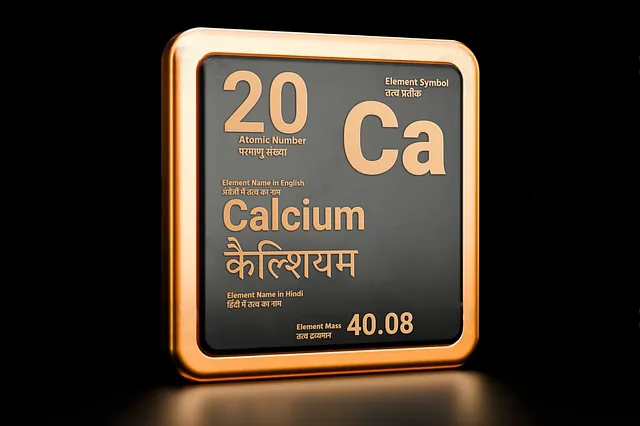
The Calcium Magnesium Link
Calcium and magnesium work as a pair in the body. Calcium helps muscles tighten. Magnesium helps them relax. Calcium helps with nerve firing. Magnesium helps keep that firing in check.
When calcium intake is high and magnesium intake is low, the balance can shift the wrong way. That may affect muscle cramps, sleep, bowel function, heart rhythm and stress response.
Reviews on magnesium have long noted that magnesium lack can affect the heart, bones and kidneys (Seelig, 1994).
What Hypomagnesemia Means
Hypomagnesemia means low magnesium in the blood. It can happen for many reasons, such as poor intake, gut loss, some drugs, heavy stress or kidney loss. It may also be made worse when calcium intake greatly outweighs magnesium intake. A review on hypomagnesemia describes how low magnesium can affect nerve, muscle and heart function (Agus, 1999).
Another paper argued that the rising calcium to magnesium ratio in supplements may be a concern, not a small detail (Costello et al., 2021).
Why This Matters For Bone Health
Many people think bone health is just a calcium issue. It is not. Bone is built from a living matrix, not just a pile of minerals. Protein structure, collagen, magnesium and other nutrients all matter.
Reviews on bone strength show that collagen is a core part of strong bone, not just bone density on a scan (Viguet-Carrin et al., 2005). This helps explain why a narrow focus on one mineral can miss the bigger picture.
When Supplement Use Gets Risky
Big Doses & Stacked Products
Risk goes up when people stack products. A person may take a bone formula, a multivitamin, an antacid and a fortified drink, all with calcium. The total can become high with little notice. This is one reason whole food intake tends to be safer. Food does not usually deliver a large bolus all at once.
Older Adults & High Use
Older adults are often told to take calcium pills for bone support. Yet they are also more likely to have kidney issues, bowel slowing, low magnesium or more than one drug or supplement in use. That can raise the odds of side effects.
One paper on older hospital patients found that mineral imbalance was common and low or high magnesium was the most common disturbance in the calcium magnesium phosphorus group (Malinowska et al., 2021).
People With Diabetes Or Heart Risk
Some newer data suggest the risk picture may be worse in people who already have metabolic stress. In a 2024 study, habitual calcium supplement use was linked with higher risk of cardiovascular disease and death in people with diabetes, while the same clear link was not seen in those without diabetes (Qiu et al., 2024). That does not prove cause in all cases. It does add one more reason to avoid casual long term use.
A Safer Way To Think About Calcium
Food First

Calcium is still needed. The better question is how to get it. Food based intake comes in a slower, more balanced form. It also comes with protein and other nutrients that support how the body uses minerals.
Do Not Ignore Magnesium
Low magnesium can look vague at first. A person may feel tired, tense, constipated or cramp prone. But that vague start does not make it trivial. When calcium intake rises, magnesium status deserves care too. Whole foods should come first. When a supplement is needed, the goal should be balance, not a flood of one mineral.
Is A Pill Needed At All
A calcium pill may make sense in some clinical cases. But routine use just because it sounds safe is a weak plan. A better approach is to look at diet, total intake, kidney stone history, bowel tolerance and magnesium status first. Bone health is bigger than a calcium number. The body needs the right mix including collagen, not just more calcium.
Before changing your diet, supplements or health routine, talk with a licensed healthcare professional. For any health concerns or questions about a medical condition, get guidance from a physician or another appropriately trained clinician.
FAQs
Can calcium supplements raise heart attack risk?
Some studies and reviews have found a link between calcium supplements and higher heart attack risk. The concern is stronger for pills than for calcium from food.
Do calcium supplements cause kidney stones?
They can raise stone risk in some people, especially when taken in larger doses or without regard to the full diet and mineral balance.
What is hypomagnesemia?
Hypomagnesemia means low magnesium in the blood. It can affect muscles, nerves, heart rhythm and overall mineral balance.
Is calcium from food safer than calcium from pills?
Food calcium appears to act differently in the body. It tends to be absorbed more slowly and has not shown the same level of concern seen with supplement bolus doses.
What are signs of too much calcium?
Constipation, thirst, nausea, belly pain, weakness and frequent urination can occur with high calcium intake or high blood calcium.
Research
Bolland, M.J., Avenell, A., Baron, J.A., Grey, A., MacLennan, G.S., Gamble, G.D. and Reid, I.R., 2010. Effect of calcium supplements on risk of myocardial infarction and cardiovascular events: meta-analysis. BMJ, 341, c3691. Available at: https://doi.org/10.1136/bmj.c3691
Bolland, M.J., Grey, A., Avenell, A., Gamble, G.D. and Reid, I.R., 2011. Calcium supplements with or without vitamin D and risk of cardiovascular events: reanalysis of the Women’s Health Initiative limited access dataset and meta-analysis. BMJ, 342, d2040. Available at: https://doi.org/10.1136/bmj.d2040
Morelli, M.B., Santulli, G. and Gambardella, J., 2020. Calcium supplements: Good for the bone, bad for the heart? A systematic updated appraisal. Atherosclerosis, 296, pp.68–73. Available at: https://doi.org/10.1016/j.atherosclerosis.2020.01.008
Wang, X., Chen, H., Ouyang, Y., Liu, J., Zhao, G., Bao, W. and Yan, M., 2014. Dietary calcium intake and mortality risk from cardiovascular disease and all causes: a meta-analysis of prospective cohort studies. BMC Medicine, 12(1). Available at: https://bmcmedicine.biomedcentral.com/articles/10.1186/s12916-014-0158-6
Waldman, T., Sarbaziha, R., Merz, C.N.B. and Shufelt, C., 2013. Calcium Supplements and Cardiovascular Disease. American Journal of Lifestyle Medicine, 9(4), pp.298–307. Available at: https://doi.org/10.1177/1559827613512593
Curhan, G.C., 1997. Comparison of Dietary Calcium with Supplemental Calcium and Other Nutrients as Factors Affecting the Risk for Kidney Stones in Women. Annals of Internal Medicine, 126(7), p.497. Available at: https://doi.org/10.7326/0003-4819-126-7-199704010-00001
Bargagli, M., Ferraro, P.M., Vittori, M., Lombardi, G., Gambaro, G. and Somani, B., 2021. Calcium and Vitamin D Supplementation and Their Association with Kidney Stone Disease: A Narrative Review. Nutrients, 13(12), p.4363. Available at: https://doi.org/10.3390/nu13124363
Machado, M., Bruce-Mensah, A., Whitmire, M. and Rizvi, A., 2015. Hypercalcemia Associated with Calcium Supplement Use: Prevalence and Characteristics in Hospitalized Patients. Journal of Clinical Medicine, 4(3), pp.414–424. Available at: https://doi.org/10.3390/jcm4030414
Seelig, M.S., 1994. Consequences of magnesium deficiency on the enhancement of stress reactions; preventive and therapeutic implications. Journal of the American College of Nutrition, 13(5), pp.429–446. Available at: https://doi.org/10.1080/07315724.1994.10718432
Agus, Z.S., 1999. Hypomagnesemia. Journal of the American Society of Nephrology, 10(7), pp.1616–1622. Available at: https://doi.org/10.1681/asn.v1071616
Costello, R.B., Rosanoff, A., Dai, Q., Saldanha, L.G. and Potischman, N.A., 2021. Perspective: Characterization of Dietary Supplements Containing Calcium and Magnesium and Their Respective Ratio—Is a Rising Ratio a Cause for Concern? Advances in Nutrition, 12(2), pp.291–297. Available at: https://doi.org/10.1093/advances/nmaa160
Viguet-Carrin, S., Garnero, P. and Delmas, P.D., 2005. The role of collagen in bone strength. Osteoporosis International, 17(3), pp.319–336. Available at: https://doi.org/10.1007/s00198-005-2035-9
Malinowska, J., Małecka-Giełdowska, M. and Ciepiela, O., 2021. Dysmagnesemia Is the Most Common Disturbance of the Calcium–Magnesium–Phosphorous Balance among Older Hospitalized People in Warsaw. Nutrients, 13(10). Available at: https://doi.org/10.3390/nu13103395
Qiu, Z., Lu, Q., Wan, Z., Geng, T., Li, R., Zhu, K., Li, L., Chen, X., Pan, A., Manson, J.E. and Liu, G., 2024. Associations of Habitual Calcium Supplementation With Risk of Cardiovascular Disease and Mortality in Individuals With and Without Diabetes. Diabetes Care, 47(2), pp.199–207. Available at: https://doi.org/10.2337/dc23-0109