Key Takeaways
- Free radicals help immune defense, cell signals, and training adaptation.
- Harm starts when free radical load stays high for too long.
- Oxidative stress can injure fats, proteins, DNA, and cell membranes.
- Hard training, smoke, toxins, and poor diet can raise damage.
- The goal is balance, repair, and lower daily stress load.
Useful Effects
Cell Signals
Free radicals help cells send messages that guide repair, defense, and energy use.
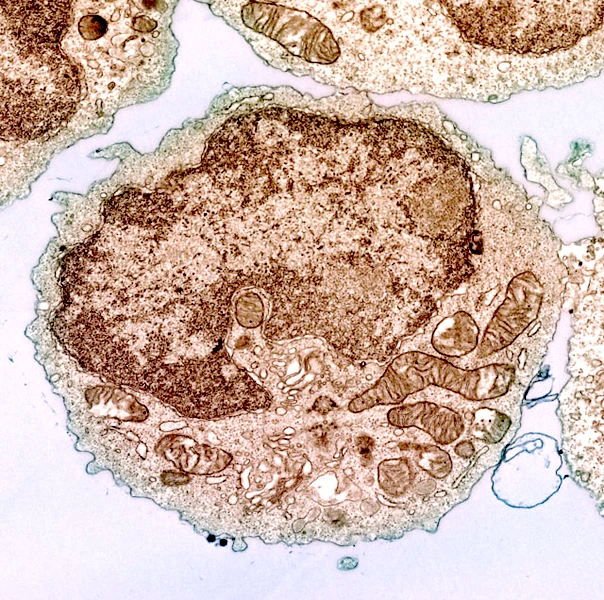
These small reactive molecules are made all day inside the body, mainly in mitochondria during energy production and by immune cells during defense.
It helps switch on repair systems, stress responses, and training adaptation when the dose stays within range.
Research on redox signaling shows that reactive oxygen species can act like signals that tell cells when to adapt and when to repair damaged parts (Schieber and Chandel, 2014).
Immune Defense
Immune cells also use free radicals to attack microbes.
During an infection, white blood cells can release reactive molecules into a tight local area to help break down bacteria and other threats.
Recent reviews on innate immunity show that reactive species are part of normal host defense and immune signaling, not just a source of injury (Andrés et al., 2022).
Training Response
Hard muscle work raises oxygen use, which raises free radical output for a short time. In that setting, the burst can help tell muscle cells to build more mitochondria and improve endurance capacity.
Human trials found that high dose antioxidant supplements can blunt some of these gains after training, which suggests that some exercise related oxidation is useful rather than harmful (Ristow et al., 2009, Paulsen et al., 2014).
Damage Load
Oxidative Stress
Free radicals turn harmful when production stays high and repair cannot keep pace. That state is called oxidative stress.
It develops when reactive molecules start hitting cell fats, proteins, and genetic material faster than the body can contain or repair them.
Reviews on human physiology describe oxidative stress as a mismatch between reactive species and defense capacity, with effects that depend on dose, timing, and tissue type (Pizzino et al., 2017, Valko et al., 2007).
Lipid Injury
Cell membranes are rich in fat, and those fats can be damaged by oxidation. When that happens, membrane structure changes and cell function can slip.
The problem is worse when tissues are loaded with fragile polyunsaturated fats from seed oils, because those fats are easier to oxidize than more stable fats.
Lipid damage can then spread into a chain reaction that harms nearby structures and pushes inflammation higher. Less unstable fat in tissues gives free radicals less weak material to attack.
Protein And DNA Stress
Proteins can also be altered by oxidation, which may change enzyme activity, transport, and repair work.
DNA can be hit as well, though the body does have repair systems that deal with a lot of this damage when the load stays modest.
The danger rises when high stress becomes chronic. Then repair systems stay busy, signaling shifts in the wrong direction, and tissue function can slowly worsen over time (Halliwell, 1994, Hong et al., 2024).
Common Triggers
Smoke And Toxins
Cigarette smoke and polluted air can drive a strong oxidative load. So can some solvents, industrial chemicals, and heavy metal exposure.
These inputs add reactive stress from outside while also pushing the body to make more of its own reactive species.
That double hit is hard on the lungs, blood vessels, and cell membranes. It also raises repair demand all day, which can drain resilience over time.
Sugar Excess
High sugar intake can worsen oxidative stress through several routes. It can raise glucose swings, increase mitochondrial stress, and promote harmful byproducts that react with proteins and fats.
Fructose heavy diets can add further metabolic strain in the liver.
A body already stressed by poor sleep, frequent eating, and processed foods will usually handle reactive load worse than a body running on stable energy and solid nutrient intake.
Heavy Training Without Recovery
Exercise helps when stress and recovery stay in balance. Trouble starts when hard training stacks up without sleep, rest days, enough food, or mineral support.
Then the normal short rise in reactive species can turn into a longer burden.
Training can improve antioxidant defenses over time, yet overload can push damage higher when recovery falls short (de Sousa et al., 2017, Powers et al., 2020).
Protective Habits
Stable Fuel
The body handles oxidative stress better when energy supply stays steady.
Frequent sugar hits, grazing, alcohol excess, seed oils, and ultra processed foods all push metabolism in the wrong direction.
A simpler diet with ruminant meat, eggs, shellfish, dairy fat if tolerated, and fewer plant toxins reduces several common stress inputs at once.
Animal foods also bring highly usable protein, retinol, copper, selenium, carnitine, taurine, and other nutrients tied to repair and energy production.
Recovery Systems
Sleep, daylight rhythm, and meal spacing are not small details. They shape cortisol rhythm, repair work, glucose handling, and immune tone.
Poor sleep can raise inflammatory strain and lower recovery capacity, which leaves tissues less able to manage normal oxidative work.
A useful rule is to earn intensity with recovery. Hard sessions need rest, enough protein, enough salt from non fortified sources, and enough calories from stable foods.
Targeted Support
The best support is basic and consistent.
- Lower seed oils.
- Cut ultra processed foods.
- Avoid chronic overfeeding and constant snacking.
- Eat red meat, eggs, shellfish, and other nutrient dense animal foods.
- Keep carbohydrates low if blood sugar control is poor or if energy swings are obvious.
- Use supplements carefully rather than broadly.
Human exercise studies found that large antioxidant doses can interfere with training adaptation in some settings, so more is not always better (Gomez Cabrera et al., 2008, Morrison et al., 2015).
Free radicals are part of life. Problems rise when the load is chronic, the tissue fats are unstable, the diet is poor, and repair never gets enough room to catch up.
For any health concerns or questions about a medical condition, get guidance from a physician or another appropriately trained clinician. Before changing your diet, supplements, or health routine, talk with a licensed healthcare professional.
Suggested Posts
Research
de Sousa, C.V. et al., 2017. The Antioxidant Effect of Exercise: A Systematic Review and Meta Analysis. Sports Medicine, 47(2), pp.277–293. DOI: 10.1007/s40279-016-0566-1. PMID: 27260682
Schieber, M. and Chandel, N.S., 2014. ROS function in redox signaling and oxidative stress. Current Biology, 24(10), pp.R453–R462. DOI: 10.1016/j.cub.2014.03.034. PMID: 24845678
Andrés, C.M.C. et al., 2022. The Role of Reactive Species on Innate Immunity. Vaccines, 10(10), Article 1735. DOI: 10.3390/vaccines10101735. PMID: 36298601
Ristow, M. et al., 2009. Antioxidants prevent health promoting effects of physical exercise in humans. Proceedings of the National Academy of Sciences of the United States of America, 106(21), pp.8665–8670. DOI: 10.1073/pnas.0903485106. PMID: 19433800
Paulsen, G. et al., 2014. Vitamin C and E supplementation hampers cellular adaptation to endurance training in humans: a double blind, randomised, controlled trial. Journal of Physiology, 592(8), pp.1887–1901. DOI: 10.1113/jphysiol.2013.267419. PMID: 24492839
Pizzino, G. et al., 2017. Oxidative Stress: Harms and Benefits for Human Health. Oxidative Medicine and Cellular Longevity, 2017, Article 8416763. DOI: 10.1155/2017/8416763. PMID: 28819546
Valko, M. et al., 2007. Free radicals and antioxidants in normal physiological functions and human disease. International Journal of Biochemistry and Cell Biology, 39(1), pp.44–84. DOI: 10.1016/j.biocel.2006.07.001. PMID: 16978905
Halliwell, B., 1994. Free radicals, antioxidants, and human disease: curiosity, cause, or consequence? Lancet, 344(8924), pp.721–724. DOI: 10.1016/S0140-6736(94)92211-X. PMID: 7915779
Hong, Y. et al., 2024. Reactive Oxygen Species Signaling and Oxidative Stress: Transcriptional Regulation and Evolution. Antioxidants, 13(3), Article 312. DOI: 10.3390/antiox13030312. PMID: 38539845
Powers, S.K. et al., 2020. Exercise induced oxidative stress: Friend or foe? Journal of Sport and Health Science, 9(5), pp.415–425. DOI: 10.1016/j.jshs.2020.04.001. PMID: 32380253
Gomez Cabrera, M.C. et al., 2008. Oral administration of vitamin C decreases muscle mitochondrial biogenesis and hampers training induced adaptations in endurance performance. American Journal of Clinical Nutrition, 87(1), pp.142–149. DOI: 10.1093/ajcn/87.1.142. PMID: 18175748
Morrison, D. et al., 2015. Vitamin C and E supplementation prevents some of the cellular adaptations to endurance training in humans. Free Radical Biology and Medicine, 89, pp.852–862. DOI: 10.1016/j.freeradbiomed.2015.10.412. PMID: 26482865
Averill Bates, D., 2024. Reactive oxygen species and cell signaling. Biochimica et Biophysica Acta Molecular Cell Research, 1871(2), Article 119573. DOI: 10.1016/j.bbamcr.2023.119573. PMID: 37949302
Trinity, J.D. et al., 2016. Regulation of exercise blood flow: Role of free radicals. Free Radical Biology and Medicine, 98, pp.90–102. DOI: 10.1016/j.freeradbiomed.2016.01.017. PMID: 26876648
Kawamura, T. and Muraoka, I., 2018. Exercise Induced Oxidative Stress and the Effects of Antioxidant Intake from a Physiological Viewpoint. Antioxidants, 7(9), Article 119. DOI: 10.3390/antiox7090119. PMID: 30189660
Finaud, J., Lac, G. and Filaire, E., 2006. Oxidative stress: relationship with exercise and training. Sports Medicine, 36(4), pp.327–358. DOI: 10.2165/00007256-200636040-00004. PMID: 16573358
König, D. et al., 2001. Exercise and oxidative stress: significance of antioxidants with reference to inflammatory, muscular, and systemic stress. Exercise Immunology Review, 7, pp.108–133. PMID: 11579745
Hoidal, J.R., 2001. Reactive oxygen species and cell signaling. American Journal of Respiratory Cell and Molecular Biology, 25(6), pp.661–663. DOI: 10.1165/ajrcmb.25.6.f213. PMID: 11726388