Key Takeaways
- The brain depends on steady fuel, oxygen and blood flow all day.
- Nerve cells and support cells work together to keep signals moving.
- Quiet rest is active brain time linked with memory and inner thought.
- Sleep helps move waste out of brain tissue through fluid flow.
- Aging can change fuel use and circulation even without disease.
Brain Basics
Core Jobs
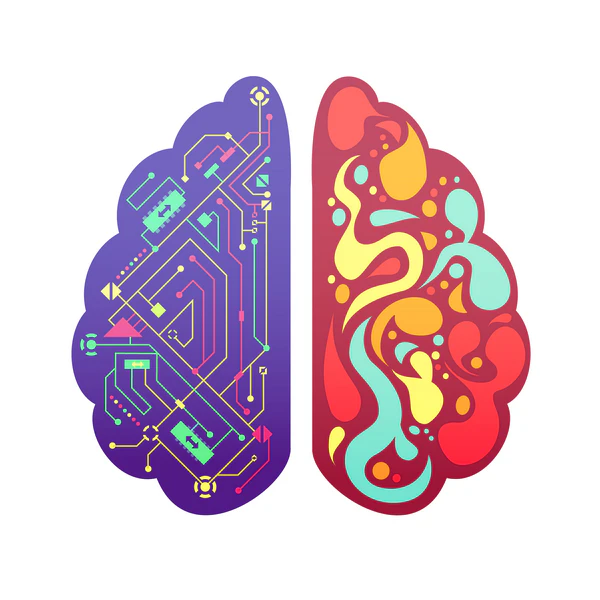
The brain runs movement, memory, emotion, attention and body control every minute of the day. It does this by passing tiny electrical and chemical signals across large networks of cells.
Those signals let you speak, plan dinner, notice danger, remember a name and keep your balance while walking (1, 2).
The brain also keeps many tasks going outside awareness. Heart rate, breathing drive, temperature control and sleep timing all depend on brain systems working in the background.
Daily life feels simple only because this activity is so constant and so well coordinated.
Cells At Work
Neurons are the main signaling cells. They send messages fast and connect into circuits that handle sight, sound, language, memory and decision making.
Astrocytes are support cells that sit beside neurons, blood vessels and synapses, which are the small junctions where one cell talks to another.
Astrocytes help manage fuel use, chemical balance and local blood flow (3, 4).
Blood vessels are part of the same working unit. The wall of the vessel, nearby support cells and neurons act together so active brain areas get more blood when they need it.
Brain function depends on this teamwork, not on neurons alone (4, 5).
Brain Energy
Fuel Demand
The brain is a small part of body weight, yet it uses a large share of the body’s energy at rest. It needs a steady supply because brain cells store very little fuel for later use.
When mental work rises in one area, energy demand rises there as well (6, 7).
Glucose is a major fuel for normal brain function. Research over many years has shown that brain activity depends on a close link between glucose delivery, oxygen use and cell signaling.
Brain energy use also shifts across regions depending on sleep, wakefulness, attention and age (6, 7).
Shared Support
Astrocytes help neurons meet changing energy needs. They take up glucose from blood, process some of it and support nearby neurons during activity.
Scientists describe this as metabolic cooperation, which means neighboring cells share work so the network can keep functioning smoothly (3, 7).
Daily life depends on this cooperation. Reading a text, driving in traffic or following a conversation all raise demand in different brain regions.
Support cells help keep the supply side matched to the signaling side so thinking stays clear.
Energy In Aging
Healthy aging often brings lower glucose use in some brain regions, especially the frontal and temporal areas.
The frontal region helps with planning, attention and impulse control.
The temporal region supports memory and language.
These shifts do not mean a person will lose function right away, though they may help explain slower recall or less mental stamina in later years (8, 9).
Age related changes in brain chemicals have also been found with magnetic resonance studies.
Some of these changes likely reflect altered cell health, altered membrane turnover and altered energy handling.
The main point for daily life is clear. Brain aging is partly a story of fuel use becoming less efficient in selected regions (8, 9).
Brain Signals Need Energy And Blood Flow
The brain uses oxygen, glucose, minerals and blood flow to keep normal signaling working.
Blood Flow & Control
Constant Supply
Brain tissue needs constant blood flow because oxygen and fuel must arrive without long breaks. Cerebral blood flow is the term for blood moving through the brain.
This flow must stay within a useful range even when blood pressure, posture or breathing changes during the day (5, 10).
Standing up quickly gives a familiar example. Blood pressure shifts with posture, yet most healthy people keep clear thinking because the brain adjusts vessel tone to protect supply.
Scientists call this autoregulation, which means the brain can steady its own blood flow across changing conditions (5, 11).
Matching Flow To Activity
Active brain areas receive more blood. This link between local brain activity and local blood flow is called neurovascular coupling.
It helps the brain send extra fuel and oxygen exactly where demand rises.
Modern brain imaging depends on this principle because scans often track blood flow changes as a stand in for local neural activity (12, 13).
This system supports everyday acts that feel effortless. Looking for your keys, solving a simple problem or listening closely in a loud room all recruit local circuits.
Blood flow shifts with that activity so the right regions keep working at the right time.
Breath & Pressure
Carbon dioxide in the blood strongly affects brain blood vessels. Higher carbon dioxide tends to widen vessels and raise brain blood flow, while lower carbon dioxide tends to narrow vessels and lower flow.
Fast breathing, exercise and posture can all change this balance (10, 14, 15).
Healthy aging may alter some parts of this control system.
Reviews and exercise studies suggest that blood flow regulation and neurovascular responses can shift with age, which may affect mental sharpness during physical stress, long days or poor sleep (16, 17, 18).
Check vs Skip
| Check | Skip |
|---|---|
| Sleep | Poor sleep |
| Blood sugar | Sugar drinks |
| Blood pressure | Late stimulants |
| B12 status | LDL only thinking |
Resting Networks
Quiet But Active
The brain stays busy even when you are not doing a task.
A famous set of regions called the default mode network becomes active during quiet wakeful rest, inner reflection and memory related thought.
Early work showed that the resting brain has organized activity rather than silence (19, 20).
Later research refined this picture and mapped the network in more detail.
Parts of the medial frontal cortex, posterior cingulate region and side areas of the parietal cortex often work together in this state.
The network seems linked with self reflection, recalling the past and imagining the future (1, 21).
Daily Life Uses
Resting network activity helps explain why solutions can appear during a shower, a walk or a quiet pause.
The brain can keep sorting, linking and reviewing information without focused external work.
Mind wandering gets a bad name, yet some of it appears tied to memory processing and internal organization.
Healthy people show a reliable default network across studies, though strength and connectivity vary from person to person.
Reviews suggest the network changes with age and with some disorders, which is one reason scientists care so much about it (22, 21).
How Brain Function Changes During The Day
Sleep & Healthy Aging
Waste Clearance
Sleep supports fluid movement through brain tissue. Researchers use the term glymphatic system for a network of fluid exchange that helps move waste products through and out of the brain.
Interest in this system grew because sleep appears to support this cleanup process more than wakefulness does (23).
Daily life gives this real weight. Poor sleep can leave attention dull, memory weak and thinking effortful the next day.
Part of that effect likely comes from many changes happening at once, including altered signaling, altered energy use and less effective waste clearance.
Aging In Context
Healthy aging changes the brain, yet change is not the same as collapse. Some regions use less glucose. Some blood flow responses become less flexible.
Some networks become less tightly connected. Many people still function well because the brain has reserve capacity and can adapt through alternate routes and learned habits (8, 16, 22).
Daily habits that support sleep, movement, blood pressure control, social engagement and mental challenge line up with the systems scientists keep studying. A healthy brain in later life still depends on the same basics as a young one. It needs fuel, flow, rest and coordinated network activity every day.
For any health concerns or questions about a medical condition, get guidance from a physician or another appropriately trained clinician. Before changing your diet, supplements or health routine, talk with a licensed healthcare professional.
Suggested Posts

Evidence Limits
Research
Buckner, R.L. and DiNicola, L.M. (2019) ‘The brain’s default network: updated anatomy, physiology and evolving insights’, Nature Reviews Neuroscience, 20(10), pp. 593–608. Available at: https://pubmed.ncbi.nlm.nih.gov/31492945/
Bélanger, M., Allaman, I. and Magistretti, P.J. (2011) ‘Brain energy metabolism: focus on astrocyte-neuron metabolic cooperation’, Cell Metabolism, 14(6), pp. 724–738. Available at: https://pubmed.ncbi.nlm.nih.gov/22152301/
Lecrux, C. and Hamel, E. (2011) ‘The neurovascular unit in brain function and disease’, Acta Physiologica, 203(1), pp. 47–59. Available at: https://pubmed.ncbi.nlm.nih.gov/21272266/
Claassen, J.A.H.R., Thijssen, D.H.J., Panerai, R.B. and Faraci, F.M. (2021) ‘Regulation of cerebral blood flow in humans: physiology and clinical implications of autoregulation’, Physiological Reviews, 101(4), pp. 1487–1559. Available at: https://pubmed.ncbi.nlm.nih.gov/33769101/
Mergenthaler, P., Lindauer, U., Dienel, G.A. and Meisel, A. (2013) ‘Sugar for the brain: the role of glucose in physiological and pathological brain function’, Trends in Neurosciences, 36(10), pp. 587–597. Available at: https://pubmed.ncbi.nlm.nih.gov/23968694/
Rae, C.D., Williams, S.R., Glatigny, M., Baeza-Lehnert, F., Barros, L.F. and Yellen, G. et al. (2024) ‘Brain energy metabolism: A roadmap for future research’, Journal of Neurochemistry, 168(5), pp. 910–954. Available at: https://doi.org/10.1111/jnc.16032
Deery, H.A., Guitart-Masip, M., Knight, M.J., Jenkinson, M. and Vadher, B. et al. (2023) ‘Lower brain glucose metabolism in normal ageing is predominantly frontal and temporal: A systematic review and pooled effect size and activation likelihood estimates meta-analyses’, Human Brain Mapping, 44(3), pp. 1251–1277. Available at: https://doi.org/10.1002/hbm.26119
Haga, K.K., Khor, Y.P., Farrall, A. and Wardlaw, J.M. (2009) ‘A systematic review of brain metabolite changes, measured with 1H magnetic resonance spectroscopy, in healthy aging’, Neurobiology of Aging, 30(3), pp. 353–363. Available at: https://doi.org/10.1016/j.neurobiolaging.2007.07.005
Willie, C.K., Tzeng, Y.C., Fisher, J.A. and Ainslie, P.N. (2014) ‘Integrative regulation of human brain blood flow’, The Journal of Physiology, 592(5), pp. 841–859. Available at: https://pubmed.ncbi.nlm.nih.gov/24396059/
Aaslid, R., Lindegaard, K.F., Sorteberg, W. and Nornes, H. (1989) ‘Cerebral autoregulation dynamics in humans’, Stroke, 20(1), pp. 45–52. Available at: https://doi.org/10.1161/01.STR.20.1.45
Phillips, A.A., Chan, F.H., Zheng, M.M.Z., Krassioukov, A.V. and Ainslie, P.N. (2016) ‘Neurovascular coupling in humans: Physiology, methodological advances and clinical implications’, Journal of Cerebral Blood Flow and Metabolism, 36(4), pp. 647–664. Available at: https://doi.org/10.1177/0271678X15617954
Ball, J.D., Edwards, M.D., Kimmerly, D.S., Burma, J.S. and others (2024) ‘Neurovascular coupling methods in healthy individuals using transcranial doppler ultrasonography: A systematic review and consensus agreement’, Journal of Cerebral Blood Flow and Metabolism, 44(12), pp. 1409–1429. Available at: https://doi.org/10.1177/0271678X241270452
Battisti-Charbonney, A., Fisher, J. and Duffin, J. (2011) ‘The cerebrovascular response to carbon dioxide in humans’, The Journal of Physiology, 589(Pt 12), pp. 3039–3048. Available at: https://doi.org/10.1113/jphysiol.2011.206052
Serrador, J.M., Sorond, F.A., Vyas, M., Gagnon, M. and Iloputaife, I. et al. (2006) ‘Cerebral blood flow during orthostasis: role of arterial CO2’, American Journal of Physiology-Regulatory, Integrative and Comparative Physiology, 290(4), pp. R1087–R1093. Available at: https://doi.org/10.1152/ajpregu.00446.2005
Nowak-Flück, D., Ainslie, P.N., Subudhi, A.W., Brosnan, M.J. and Kayser, B. et al. (2018) ‘Effect of healthy aging on cerebral blood flow, CO2 reactivity, and neurovascular coupling during exercise’, Journal of Applied Physiology, 125(6), pp. 1917–1930. Available at: https://doi.org/10.1152/japplphysiol.00050.2018
Burma, J.S., Edwards, M.D., Kimmerly, D.S., Subedi, A. and Hogervorst, E. et al. (2025) ‘Physiological influences on neurovascular coupling: A systematic review of multimodal imaging approaches and recommendations for future study designs’, Experimental Physiology, 110(1), pp. 23–41. Available at: https://doi.org/10.1113/EP092060
Burma, J.S., Kimmerly, D.S., Edwards, M.D. and others (2024) ‘A systematic review, meta-analysis and meta-regression amalgamating the driven approaches used to quantify dynamic cerebral autoregulation’, Journal of Cerebral Blood Flow and Metabolism, 44(8), pp. 1271–1297. Available at: https://doi.org/10.1177/0271678X241235878
Raichle, M.E., MacLeod, A.M., Snyder, A.Z., Powers, W.J., Gusnard, D.A. and Shulman, G.L. (2001) ‘A default mode of brain function’, Proceedings of the National Academy of Sciences of the United States of America, 98(2), pp. 676–682. Available at: https://pubmed.ncbi.nlm.nih.gov/11209064/
Raichle, M.E. (2015) ‘The brain’s default mode network’, Annual Review of Neuroscience, 38, pp. 433–447. Available at: https://doi.org/10.1146/annurev-neuro-071013-014030
Menon, V. (2023) ‘20 years of the default mode network: A review and synthesis’, Neuron, 111(16), pp. 2469–2487. Available at: https://doi.org/10.1016/j.neuron.2023.04.023
Mak, L.E., Minuzzi, L., MacQueen, G., Hall, G., Kennedy, S.H. and Milev, R. (2017) ‘The Default Mode Network in Healthy Individuals: A Systematic Review and Meta-Analysis’, Brain Connectivity, 7(1), pp. 25–33. Available at: https://doi.org/10.1089/brain.2016.0438
Hablitz, L.M. and Nedergaard, M. (2021) ‘The Glymphatic System: A Novel Component of Fundamental Neurobiology’, The Journal of Neuroscience, 41(37), pp. 7698–7711. Available at: https://pubmed.ncbi.nlm.nih.gov/34526407/