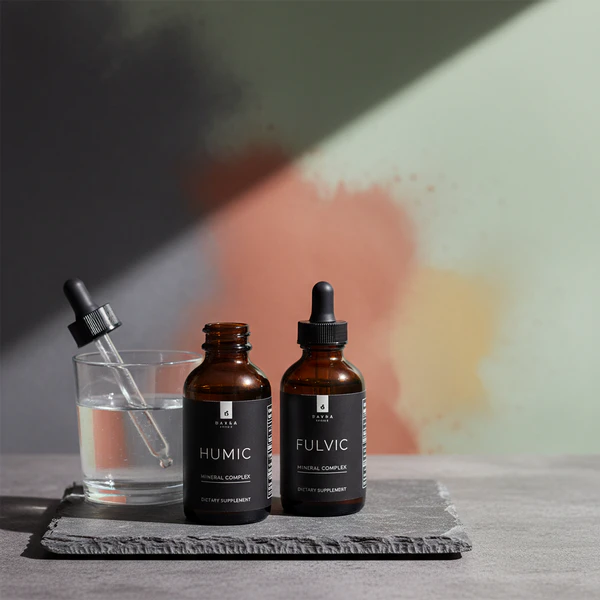
Key Takeaways
- Humic acid, fulvic acid and shilajit are different products, so labels need close reading.
- Human studies are still small, and many health claims go beyond the proof.
- Purified shilajit has more human research than common fulvic acid drops.
- Soil based products need heavy metal testing because the source can carry contaminants.
- You do not need these products when food, sleep and basic minerals are still poor.
Humic acid, fulvic acid and shilajit often get sold as the same kind of supplement, but they are not the same thing. If you buy one, you need to know what the label is actually selling.
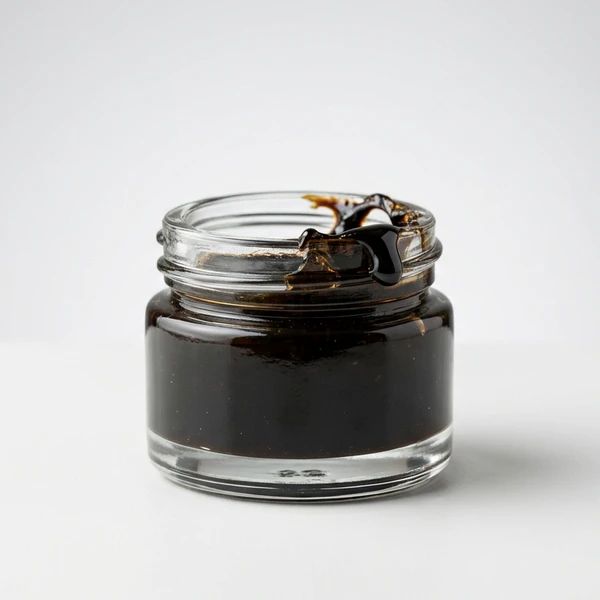
Humic acid and fulvic acid form when plant matter and microbes break down in soil over a long time. Shilajit is a dark resin from rock layers.
It can contain fulvic compounds, minerals and other organic material. A fulvic acid drop is not the same as a purified shilajit resin used in a human study.
The main question is product quality. These materials come from soil, rock and old organic matter, so the source and cleanup process decide the risk.
A good product should show the exact material, the dose, the source and heavy metal testing.
Basic Differences
Fulvic Acid
Fulvic acid dissolves more easily in water than humic acid.
Companies often sell it for minerals, gut health, energy, inflammation and detox. The claims often sound much stronger than the human evidence.
One review describes possible effects in chronic inflammation and diabetes, but much of the evidence comes from lab work, animal research and early data, not large human trials (1).
You should not treat fulvic acid as proven help for fatigue, blood sugar, gut problems or inflammation.
Humic Acid
Humic acid is larger and less water soluble. It is often sold for gut health, immune function and binding unwanted compounds in the gut.
One review describes anti inflammatory effects of humic substances, but it does not prove every humic acid product improves health in people (2).
A label can say the product binds toxins, but you still need human evidence for the exact product and dose.
Most bottles do not have that proof. They usually rely on broad claims about humic substances instead of clear trials on the product in your hand.
Shilajit
Shilajit has more human research than generic humic acid or fulvic acid drops. Most useful studies used purified shilajit, not raw resin and not random dark liquids sold online.
Raw shilajit can carry heavy metals and other contaminants. Purification is not a small detail. It is the difference between a tested material and a risky mystery product.
A study on purified shilajit does not prove every shilajit product works. It also does not prove fulvic acid drops give the same result.
Dark color, bitter taste and a mountain origin story are not proof of safety.
Human Studies
Hormones
One placebo controlled trial tested purified shilajit in healthy middle aged men.
After 90 days, the shilajit group had higher total testosterone, free testosterone and DHEAS than the placebo group (3).
Another trial tested processed shilajit in men with low sperm count. Semen measures improved after 90 days in that study group (4).
These results are useful, but they are narrow. They come from specific shilajit products, in specific groups, over a short period.
They do not prove fulvic acid drops raise testosterone, and they do not prove every shilajit product helps fertility.
Strength & Recovery
A small exercise study tested shilajit during fatiguing exercise. The study reported less loss of muscular strength after supplementation (5).
Another study found changes in skeletal muscle gene expression after oral shilajit use (6). These findings are early signals, not proof that shilajit is a reliable recovery supplement for everyone.
If you want better strength and recovery, the base still comes first.
Sleep, lifting, sunlight, meat, eggs, shellfish and enough animal fat will do more than a resin supplement when the basics are poor.
Vascular Markers
One small trial tested purified shilajit in older adults with hypertension. The study reported changes in oxidative stress, arterial stiffness and endothelial function markers (7).
You should not read this as proof that shilajit prevents heart disease. It only shows one purified product changed some markers in one small study group. Stronger claims need larger human trials.
Trace Minerals Need Balance
Minerals can push each other out of balance when dosing is random.
Safety Concerns
Contamination
Humic acid, fulvic acid and shilajit come from soil, rock or old organic material. Those sources can carry heavy metals, microbes and other contaminants.
Toxicology studies on specific fulvic and humic preparations found no major safety concern under the tested conditions (8, 9).
Those results only apply to the tested materials. They do not clear every product on the market.
A good label should show heavy metal testing. It should name the material and give the amount per serving.
It should also identify the company behind the product. Vague blends with no clear dose and no testing are not worth using.
Dose
More is not better with these products. Many shilajit studies used about 250 milligrams twice daily for around 90 days. Some exercise work used about 500 milligrams daily.
Very high label doses deserve caution. If you use one, take it with food and avoid stacking it with several mineral products at the same time.
Stop if you notice stomach pain, loose stool, itching, swelling, headaches, dark urine or new fatigue.
Clear Reasons To Skip
You should avoid casual use during pregnancy or breast feeding. Active kidney disease, active liver disease, gout, iron overload and complex medication use also make these products a poor choice.
Children and teenagers do not need humic acid, fulvic acid or shilajit. Healthy adults without a clear reason can skip them too. These products are not essential nutrients.
Check vs Skip
| Check | Skip |
|---|---|
| Magnesium | Iron supplements |
| Copper | Zinc supplements |
| Selenium | Large mixed doses |
| Iodine from food | Anything Fortified |
Better Use Rules
Food Comes First
Food should come before soil based supplements.
Meat, eggs, shellfish, liver, full fat dairy if tolerated and animal fat give complete protein, retinol, choline, copper, zinc, iodine and other nutrients your body can use.
A few drops of fulvic acid cannot replace those foods. Humic acid or fulvic acid is the wrong priority when sleep is poor, meals are weak and snacks run the day.
Test One Product
Use one product at a time if you decide to test it. Choose purified shilajit or a clearly tested humic and fulvic product. Avoid blends that hide the dose.
Track digestion, sleep, appetite, mood, training and new symptoms. Two to four weeks is enough to notice poor tolerance. Longer use needs a clear reason.
Basic lab work can help when use continues for months. Liver enzymes, kidney markers, iron markers and inflammation markers give better feedback than label claims.
Read The Label
A good label gives plain facts. It names the material, gives the dose, states the source, shows contaminant testing and names the company.
Dark color is not proof of purity. Bitter taste is not proof of quality. A nice label is not proof of clean material.
Buy only when the company proves the product is clean. Skip it when the label hides basic details.
For any health concerns or questions about a medical condition, get guidance from a physician or another appropriately trained clinician. Before changing your diet, supplements, or health routine, talk with a licensed healthcare professional.
Suggested Posts
Evidence Limits
Research
Winkler, J. and Ghosh, S. (2018) Therapeutic Potential of Fulvic Acid in Chronic Inflammatory Diseases and Diabetes. Journal of Diabetes Research. Available at https://doi.org/10.1155/2018/5391014
van Rensburg, C.E.J. (2015) The Antiinflammatory Properties of Humic Substances. A Mini Review. Phytotherapy Research. Available at https://doi.org/10.1002/ptr.5319
Pandit, S. et al. (2016) Clinical evaluation of purified Shilajit on testosterone levels in healthy volunteers. Andrologia. Available at https://doi.org/10.1111/and.12482
Biswas, T.K. et al. (2010) Clinical evaluation of spermatogenic activity of processed Shilajit in oligospermia. Andrologia. Available at https://doi.org/10.1111/j.1439-0272.2009.00956.x
Keller, J.L. et al. (2019) The effects of Shilajit supplementation on fatigue induced decreases in muscular strength and serum hydroxyproline levels. Journal of the International Society of Sports Nutrition. Available at https://doi.org/10.1186/s12970-019-0270-2
Das, A. et al. (2016) The Human Skeletal Muscle Transcriptome in Response to Oral Shilajit Supplementation. Journal of Medicinal Food. Available at https://doi.org/10.1089/jmf.2016.0010
Patil, S.G. et al. (2023) Effect of purified Shilajit on oxidative stress, arterial stiffness and endothelial function in elderly with hypertension. Indian Journal of Physiology and Pharmacology. Available at https://doi.org/10.25259/IJPP_447_2022
Murbach, T.S. et al. (2020) A toxicological evaluation of a fulvic and humic acids preparation. Toxicology Reports. Available at https://doi.org/10.1016/j.toxrep.2020.08.030
Dai, C. et al. (2020) A Comprehensive Toxicological Assessment of Fulvic Acid. Evidence Based Complementary and Alternative Medicine. Available at https://doi.org/10.1155/2020/8899244
Sharma, P. et al. (2003) Shilajit. Evalution of its effects on blood chemistry of normal human subjects. Ancient Science of Life.
Agarwal, S.P. et al. (2007) Shilajit. A review. Phytotherapy Research. Available at https://doi.org/10.1002/ptr.2100
Barouji, S.R. et al. (2020) Health Beneficial Effects of Moomiaii in Traditional Medicine. Galen Medical Journal. Available at https://doi.org/10.31661/gmj.v9i0.1743
Carrasco Gallardo, C. et al. (2012) Can nutraceuticals prevent Alzheimer’s disease. Potential therapeutic role of a formulation containing shilajit and complex B vitamins. Archives of Medical Research. Available at https://doi.org/10.1016/j.arcmed.2012.10.010
Das, A. et al. (2019) Skin Transcriptome of Middle Aged Women Supplemented With Natural Herbo mineral Shilajit Shows Induction of Microvascular and Extracellular Matrix Mechanisms. Journal of the American College of Nutrition. Available at https://doi.org/10.1080/07315724.2018.1564088
de Melo, B.A.G., Motta, F.L. and Santana, M.H.A. (2016) Humic acids. Structural properties and multiple functionalities for novel technological developments. Materials Science and Engineering C. Available at https://doi.org/10.1016/j.msec.2015.12.001
Gvozdeva, Y. et al. (2025) Biomedical Applications of Humic Substances. From Natural Biopolymers to Therapeutic Agents. Antioxidants. Available at https://doi.org/10.3390/antiox14091139
Zykova, M.V. et al. (2025) Pharmacological Effects of Humic Substances and Their Signaling Mechanisms. Molecules. Available at https://doi.org/10.3390/molecules31010114