Key Takeaways
- Your kidneys protect blood concentration by changing urine volume across each normal day.
- Vasopressin tells the collecting ducts to save water when blood gets concentrated.
- Aquaporins are small water channels that let water move through kidney cells.
- Urine concentration depends on salt gradients, urea handling, thirst and hormone signals.
- Very high thirst or very dilute urine needs proper medical assessment.
Kidney Water Control
Blood Water Level
Your blood needs a narrow mix of water, salt and dissolved minerals. Your kidneys help hold that range steady by changing how much water leaves in urine.
They do this all day, even when you are not thinking about thirst, sweat, heat or meal timing.
The key control signal is vasopressin, also called arginine vasopressin or antidiuretic hormone.
It is made in the brain and released from the back part of the pituitary gland when blood gets more concentrated.
Thirst rises at the same time, so the brain and kidneys work as one water control system (1).
When water intake is low, vasopressin rises and urine volume falls. When water intake is high, vasopressin drops and urine volume rises.
Daily Urine Changes
Normal urine is not meant to look the same every hour. A strong kidney can make dilute urine after extra fluid and concentrated urine when the body needs to save water.
This flexible range protects blood volume and blood sodium without forcing one fixed urine color all day.
Salt intake, sweat loss, protein intake, stress hormones, blood glucose, kidney function and some medical conditions can change urine volume.
Frequent night urination, severe thirst or large daily urine output should not be brushed off as normal hydration.
The adult threshold for true excess urine is often assessed by total volume over a full day, not by bathroom trips alone.
Endotext describes arginine vasopressin disorders as conditions with large volumes of dilute urine, often with thirst and a need for careful testing (1).
Vasopressin Signal
Brain To Kidney
Vasopressin starts with sensors in the brain that read blood concentration. When blood has too little water for its salt load, those sensors trigger both thirst and vasopressin release.
The hormone then travels through the blood to the kidney collecting ducts.
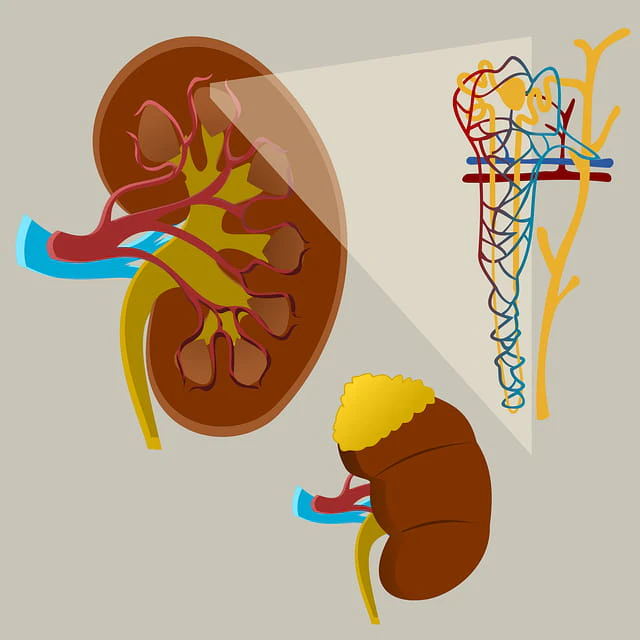
The collecting duct is near the end of the nephron, which is the working filter unit of the kidney. At this point, much of the salt and waste handling has already happened.
The collecting duct decides how much water should be pulled back into the body before urine leaves.
Vasopressin binds to V2 receptors on kidney cells. This signal raises cell messengers that move aquaporin 2 channels into the urine facing side of the cell.
More aquaporin 2 at that surface means more water can cross back into the body (2).
Saving Water
Vasopressin opens a route through the cell membrane, then water follows the concentration pull already built inside the kidney.
The kidney medulla, which is the deeper part of the kidney, holds a salty inner environment that draws water from the collecting duct.
With low vasopressin, fewer aquaporin 2 channels sit at the surface, so water stays in the urine tube and leaves the body.
With higher vasopressin, more channels appear at the surface, so water moves back into blood and urine becomes more concentrated.
Aquaporin 2 channels can move to and from the cell surface. Longer signals can also change how much aquaporin 2 the kidney makes.
Reviews describe this short term movement and longer term control as central to water balance disorders (2, 3).
Kidney Markers Need Context
Hydration, blood pressure, blood sugar and infection risk can all affect kidney stress.
Aquaporins & Flow
Water Channels
Aquaporins are protein channels that let water cross cell membranes far faster than it could move through the fatty membrane alone.
The kidney uses several aquaporins, but aquaporin 2 gets the most attention because vasopressin directly controls it in the collecting duct.
Human evidence from inherited nephrogenic diabetes insipidus showed how important aquaporin 2 is.
Researchers found mutations in the aquaporin 2 gene in a person whose kidneys could not concentrate urine in response to vasopressin.
The study concluded that aquaporin 2 is required for vasopressin dependent urine concentration (4).
Aquaporin 3 and aquaporin 4 sit on the blood facing side of collecting duct cells. Water can enter through aquaporin 2, move through the cell, then leave through these other channels.
This gives water a path from urine back into the blood when the hormone signal and kidney gradient are both right.
Urine Strength
The kidney also needs a strong inner salt gradient to make concentrated urine.
The loop of Henle builds much of this gradient by moving salt out of one limb while water movement differs across nearby segments. Urea also helps support the deep kidney gradient during water saving states.
A review on urinary concentration describes this system as a linked process involving the loop of Henle, collecting duct, urea transport and vasopressin regulated aquaporin 2 movement.
The main point is direct. Aquaporins need the kidney gradient, while the gradient needs healthy tubular work (5).
Drinking plenty fluid can also keep vasopressin low and wash down concentrating demand.
Check vs Skip
| Check | Skip |
|---|---|
| Blood pressure | Spinach |
| Blood sugar | Almonds |
| Hydration | Swiss Chard |
| UTI symptoms | Carbohydrates |
Common Disruptions
Too Much Water
Drinking far beyond thirst can lower vasopressin and push the kidney to make very dilute urine.
Most healthy kidneys can remove extra water, but there are limits. If water intake exceeds the kidney’s ability to clear free water, blood sodium can fall.
Low blood sodium can be serious because water shifts into cells, including brain cells. The problem is not solved by repeating the idea that more water is always better.
Good hydration supports normal blood concentration, while forced overdrinking can work against that goal.
Endotext notes that primary polydipsia can cause excess urine from high fluid intake and may lead to low sodium if intake exceeds kidney clearance.
This is one reason persistent thirst, very high fluid intake or confusion with low sodium needs trained clinical assessment (1).
Weak Hormone Response
Low vasopressin output can cause large amounts of dilute urine. Kidney resistance to vasopressin can look similar, because the hormone signal does not produce enough water saving action in the collecting duct.
Both states can raise thirst and increase the risk of dehydration if intake does not match water loss.
Medical texts now often use arginine vasopressin deficiency and arginine vasopressin resistance for these disorders.
The older name diabetes insipidus still appears in medical writing, but it is different from blood sugar diabetes. It is mainly a water balance disorder with dilute urine and high urine volume (1).
Testing looks at urine volume, urine concentration, blood concentration and sometimes copeptin, which is a stable marker linked to vasopressin release.
This is not a home guessing issue. Similar symptoms can come from high glucose, mineral changes, kidney disease or excess fluid intake.
Minerals
Water balance is also mineral balance. Sodium helps set blood concentration, while potassium and magnesium support normal cell function and kidney handling of electrolytes.
Heavy sweating, very low salt intake, high fluid intake and illness can all change the water and sodium relationship.
A strong traditional diet gives the body better raw material than processed food.
For general food choices, the cleaner base is whole animal foods, mineral rich salt used to taste and avoidance of fortified grain products.
Fortified grains add synthetic minerals and refined starch without solving the deeper problem of nutrient quality.
People with kidney disease, high blood pressure, heart failure or abnormal blood sodium need individual guidance. The same advice does not suit everyone.
Kidney Risk Check
Useful Daily Signals
Urine Color Context
Urine color can help, but it should not rule the day. Pale urine after fluid intake is expected. Darker urine after sleep, heat or sweat can also be expected.
A single color check gives less information than the full picture of thirst, output, sweat, diet, sleep and symptoms.
The body should be able to make more urine after higher intake and save water after lower intake.
Human studies found urinary aquaporin 2 fell after water loading and rose with concentrated salt exposure, which supports the idea that hydration state changes aquaporin 2 handling (6).
Concern rises when urine stays very dilute despite thirst, when night urination becomes heavy or when urine output becomes high every day.
Concern also rises when fluid intake feels compulsive or when thirst stays strong despite normal intake. These signs deserve proper testing, not internet rules about water targets.
Better Support
Drink to thirst most of the time, raise intake when heat and sweat demand it and avoid forcing large fluid loads without a clear reason.
Salt food to taste unless a clinician has given a specific sodium plan for a medical condition.
Eat nutrient dense meals made up of ruminant meat, organs when tolerated, eggs, wild seafood, butter, ghee and tallow.
These foods provide protein, minerals and fat soluble nutrients without the refined starch load and synthetic fortification found in modern grain based foods.
Avoid using caffeine, alcohol or constant sipping as a false hydration plan. These habits can blur thirst signals and change urine timing. A cleaner routine with real meals, mineral rich food and water guided by thirst gives the body fewer mixed signals.
For any health concerns or questions about a medical condition, get guidance from a physician or another appropriately trained clinician. Before changing your diet, supplements or health routine, talk with a licensed healthcare professional.
Suggested Posts

Evidence Limits
Research
Ball, S. and Levy, M. 2026. Diabetes Insipidus AVP Deficiency and AVP Resistance. Endotext. PMID 25905242.
Wilson, J.L.L., Miranda, C.A. and Knepper, M.A. 2013. Vasopressin and the regulation of aquaporin 2. Clinical and Experimental Nephrology. PMID 24072646.
Noda, Y. et al. 2021. Updates and perspectives on aquaporin 2 and water balance disorders. International Journal of Molecular Sciences. DOI 10.3390/ijms222312950. PMID 34884753.
Deen, P.M.T. et al. 1994. Requirement of human renal water channel aquaporin 2 for vasopressin dependent concentration of urine. Science. DOI 10.1126/science.8140421. PMID 8140421.
Sands, J.M. and Layton, H.E. 2009. The physiology of urinary concentration. Seminars in Nephrology. DOI 10.1016/j.semnephrol.2009.03.008. PMID 19523568.
Elliot, S. et al. 1996. Urinary excretion of aquaporin 2 in humans, a potential marker of collecting duct responsiveness to vasopressin. Journal of the American Society of Nephrology. PMID 8704105.
Ranieri, M. et al. 2019. Vasopressin aquaporin 2 pathway, recent advances in understanding water balance disorders. F1000Research. DOI 10.12688/f1000research.16654.1. PMID 30854175.
Park, E.J. and Kwon, T.H. 2015. A minireview on vasopressin regulated aquaporin 2 in kidney collecting duct cells. Electrolyte & Blood Pressure. DOI 10.5049/EBP.2015.13.1.1. PMID 26240595.
Schrier, R.W. 2008. Vasopressin and aquaporin 2 in clinical disorders of water homeostasis. Seminars in Nephrology. DOI 10.1016/j.semnephrol.2008.03.004. PMID 18519093.
Moeller, H.B., Fuglsang, C.H. and Fenton, R.A. 2016. Renal aquaporins and water balance disorders. Best Practice & Research Clinical Endocrinology & Metabolism. DOI 10.1016/j.beem.2016.06.012. PMID 27573594.