Key Takeaways
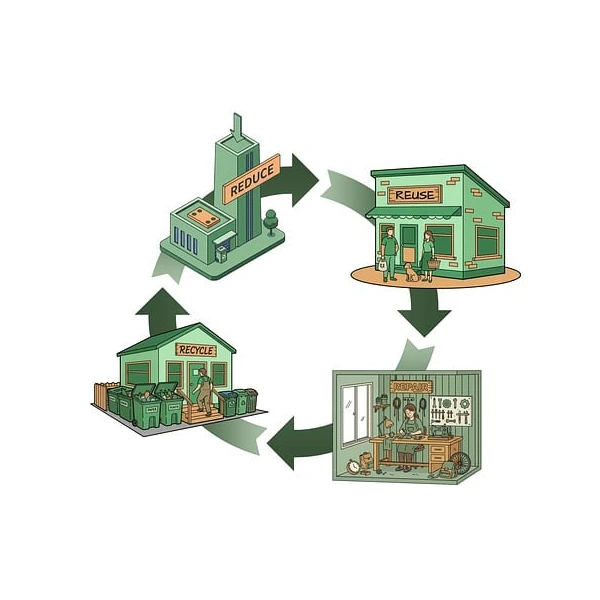
- Greener daily life starts with buying less and using what you already own.
- Food waste, home energy, transport and shopping create large daily pressure.
- Reuse and repair usually beat recycling because they prevent new waste.
- Small habits work best when they are repeated without making life harder.
- Sustainable living should feel steady, useful and easy to keep.
Daily Greener Choices
Start With Less
Sustainable living starts before you buy anything. Every new item needs materials, energy, transport and packaging before it reaches your home.
The EPA says reducing and reusing are among the most effective ways to save natural resources, cut pollution and save money because they stop waste before it exists (1).
You do not need to turn your life into a project. You need fewer automatic purchases, fewer disposable items and better use of what you already have.
A greener home often starts with a pause before buying. Ask whether you will use the item often, repair it easily and keep it out of the trash.
Use What You Own
The cleanest product is often the one already in your drawer. Reusing a bottle, bag, jar or container saves more than replacing everything with new green looking products.
Buying a new eco item can still create more demand for materials, shipping and packaging. A home full of new sustainable products can still be a home full of overbuying.
Look around before you shop. Old towels can become cleaning cloths. Glass jars can hold leftovers.
A strong bag can carry groceries for years. These are not glamorous changes, but they keep useful things in use longer.
Food & Kitchen Habits
Waste Less Food
Food waste is one of the easiest places to make daily life greener. Growing, moving and storing food uses land, water, energy and labor. When food gets thrown away, those resources are thrown away too.
Ireland’s Environmental Protection Agency says food waste produces an estimated 8 to 10 percent of global greenhouse gas emissions (2).
Use a short plan before shopping. Check what is already in the fridge, buy only what you can eat and cook the food most likely to spoil first.
Leftovers should be visible, not buried behind new groceries. A clear shelf for food that needs using can save money and reduce waste fast.
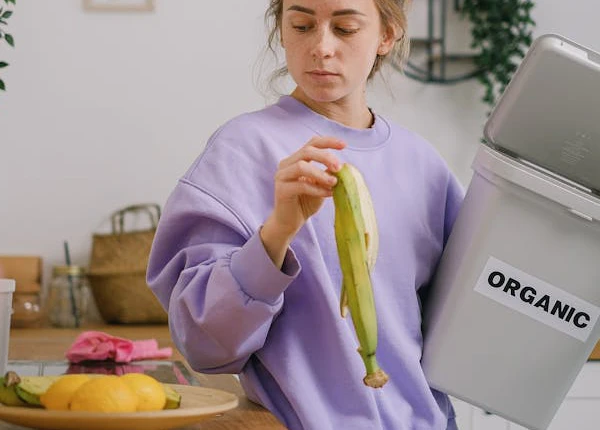
Food scraps should be the last step, not the first answer. Compost can help with unavoidable scraps, but preventing waste does more good than handling waste after it happens.
Cook More Simply
Simple cooking makes waste easier to control. When meals need many special items, half used jars and rare ingredients often die in the fridge.
A smaller food routine with repeat ingredients keeps the kitchen cleaner and calmer. You can plan around eggs, meat and simple low waste sides without filling the house with packaged snack food.
Avoid turning greener eating into processed plant product shopping. Many packaged substitutes still bring long ingredient lists, heavy processing and waste.
A butcher counter, eggs and plain dairy can leave less packaging than a cart filled with boxed products.
Store Food Better
Good storage can save more food than another shopping list. Keep meat cold, freeze portions early and move cooked food into clear containers.
Put older food at the front so you see it first. If you cannot see food, you are more likely to forget it.
Labels help when the fridge gets busy. A small piece of tape with the date can prevent guessing. Freezing works best before food is already close to spoiling.
Once food smells wrong or looks unsafe, do not gamble with it.
Energy & Water
Home Energy
Home energy habits matter because buildings use power every day.
The IEA says energy efficiency covers buildings, appliances and transport, and its 2025 report tracks how efficiency affects demand, emissions, affordability and energy security (3).
Start with the habits you repeat most. Turn off lights in empty rooms, use fans when they make sense and wash full laundry loads.
Keep filters clean so cooling systems do not work harder than needed. Use daylight before turning on lights during the day.
Temperature choices also shape energy use. The IEA’s energy behavior work lists moderated heating and cooling temperatures as part of lower energy demand pathways (4).
Water Use
Water waste is often quiet. A dripping tap, long shower or running hose can waste more than you notice.
Heating water also uses energy, so hot water habits carry a double cost. Shorter showers, full laundry loads and prompt leak repairs make daily life greener without much thought.
Outdoor water deserves care too. Water early in the day, use mulch where it makes sense and choose plants that suit your local climate.
A yard should not need constant rescue from the hose. Healthy soil holds water better and reduces stress during dry weather.
Waste & Buying
Refuse First
The EPA lists refuse, reduce, reuse, repair and recycle as key steps for waste and says the most effective way to reduce waste is to avoid creating it in the first place (5).
Refusing extra items is a powerful habit because it stops the waste before it enters your home. You can say no to plastic cutlery, printed receipts and extra packaging when you do not need them.
Recycling should not be treated as permission to buy more. Recycling uses sorting, transport and processing.
Some materials are useful in local systems, while others are weak or poorly accepted. Buying less and reusing more comes first.
Use this short order before throwing things away.
- Refuse what you do not need
- Reuse or repair what still works
- Recycle only when local rules accept it
Buy Longer Lasting Things
A cheap item that breaks fast is often expensive for your wallet and the planet. Longer lasting goods reduce repeat buying, packaging and disposal.
Look for solid materials, replaceable parts and simple designs. A repairable item gives you more years before trash becomes the only option.
Second hand buying can also cut demand for new production. Furniture, tools and many household items can serve for years after the first owner is done with them.
Buy used when quality is clear and safety is not a concern. Avoid second hand items that carry mold, pests or hidden damage.
Clean With Less
Most homes do not need a cabinet full of special cleaners. Many products overlap and add plastic, fragrance and chemical load to the house.
Use fewer products and choose the ones that do the job clearly. A simple cleaning routine also makes it easier to know what you actually need to replace.
Microfiber cloths can clean many surfaces with less product, though they need care because synthetic fibers can shed.
Cotton cloths from old shirts or towels can also work well. The main goal is less waste, less fragrance and fewer single use wipes.
Transport & Community
Drive Less Often
Transport choices shape daily impact, especially when every short trip becomes a car trip. Walking, biking, car sharing and grouping errands can reduce fuel use.
The IEA says behavior change in buildings and transport is part of the work needed to improve energy intensity faster by 2030 (4).
You do not need to give up every drive. Start by cutting the easiest trips. Combine errands into one route.
Walk nearby when the distance is safe and reasonable. A short weekly reduction is easier to keep than a dramatic plan that fails in one month.
Share More
Sharing reduces how many things every home needs to own. Tools, party items, sports gear and extra chairs often sit unused most of the year.
Borrowing or renting makes sense when an item is used only once in a while. The EPA also lists borrowing, renting and sharing as useful ways to reduce waste from items used rarely (5).
Community habits also make greener living easier. A neighbor with a ladder can save five people from buying the same ladder.
A local repair shop can keep appliances out of the dump. A reuse group can move useful items to people who need them.
Keep It Steady
Greener daily life works best when the habit is easy enough to repeat. A refill bottle helps if you carry it.
A repair habit helps if you know where to take broken items. A food plan helps if it matches the way you actually eat. The habit has to survive normal weeks, not only motivated weeks.
Choose one change at a time and make it boring. Use the same shopping bag. Keep the same leftovers shelf.
Wash the same refill bottle each night. Repeated boring habits cut more waste than big bursts of effort that disappear.
For any health concerns or questions about a medical condition, get guidance from a physician or another appropriately trained clinician. Before changing your diet, supplements or health routine, talk with a licensed healthcare professional.
Suggested Posts


Research
United States Environmental Protection Agency, 2026. Reducing and Reusing Basics. US EPA.
Environmental Protection Agency Ireland, 2026. Food Waste Prevention. EPA Ireland.
International Energy Agency, 2025. Energy Efficiency 2025. IEA.
International Energy Agency, 2023. Energy Efficiency and Behaviour. IEA.
United States Environmental Protection Agency, 2026. What You Can Do About Climate Change, Waste. US EPA.
United Nations Environment Programme, 2026. Sustainable Development Goals. UNEP.
United Nations Environment Programme, 2024. Food Waste Index Report 2024. UNEP.
United Nations Environment Programme, 2021. Making Peace With Nature, A Scientific Blueprint to Tackle the Climate, Biodiversity and Pollution Emergencies. UNEP.
Intergovernmental Panel on Climate Change, 2022. Climate Change 2022, Mitigation of Climate Change. IPCC.
Garnett, T., 2011. Where are the best opportunities for reducing greenhouse gas emissions in the food system, including the food chain? Food Policy, 36, S23 to S32. DOI 10.1016/j.foodpol.2010.10.010.
Poore, J. and Nemecek, T., 2018. Reducing food’s environmental impacts through producers and consumers. Science, 360, 987 to 992. DOI 10.1126/science.aaq0216. PMID 29853680.
Ivanova, D. et al., 2020. Quantifying the potential for climate change mitigation of consumption options. Environmental Research Letters, 15, 093001. DOI 10.1088/1748-9326/ab8589.
Creutzig, F. et al., 2022. Demand side solutions to climate change mitigation consistent with high levels of well being. Nature Climate Change, 12, 36 to 46. DOI 10.1038/s41558-021-01219-y.
Tukker, A. et al., 2010. Environmentally extended input output tables and models for Europe. Journal of Industrial Ecology, 14, 37 to 46. DOI 10.1111/j.1530-9290.2009.00203.x.
Gössling, S., Humpe, A. and Bausch, T., 2020. Does ‘flight shame’ affect social norms? Changing perspectives on the desirability of air travel in Germany. Journal of Cleaner Production, 266, 122015. DOI 10.1016/j.jclepro.2020.122015.
Schanes, K., Dobernig, K. and Gözet, B., 2018. Food waste matters, A systematic review of household food waste practices and their policy implications. Journal of Cleaner Production, 182, 978 to 991. DOI 10.1016/j.jclepro.2018.02.030.
Cecere, G., Mancinelli, S. and Mazzanti, M., 2014. Waste prevention and social preferences, the role of intrinsic and extrinsic motivations. Ecological Economics, 107, 163 to 176. DOI 10.1016/j.ecolecon.2014.07.007.
Whitmarsh, L. and O’Neill, S., 2010. Green identity, green living? The role of pro environmental self identity in determining consistency across diverse pro environmental behaviours. Journal of Environmental Psychology, 30, 305 to 314. DOI 10.1016/j.jenvp.2010.01.003.