Key Takeaways
- Tongue scraping can lower tongue coating and help reduce bad breath.
- The tongue can hold bacteria, food debris and dead cells.
- Scrapers may reduce odor compounds better than brushing the tongue.
- Gentle use protects the tongue from cuts, soreness and irritation.
- Cleaner breath still depends on saliva, gum care, food and dental checks.
Tongue Coating
Surface Film
Your tongue has many small bumps across its surface. Food debris, dead cells, saliva proteins and bacteria can sit between those bumps.
The back of the tongue often holds more coating because it is harder to clean and has more grooves. This coating can look white, yellow or thick when buildup is high.
A coated tongue can become a source of bad breath because bacteria break down proteins and release strong smelling sulfur gases.
Hydrogen sulfide and methyl mercaptan are two common gases linked with mouth odor (1).
Oral Bacteria
The tongue is one of the largest bacterial surfaces in the mouth. Its rough surface gives bacteria many places to sit.
Some bacteria are part of normal oral life, while others can add to odor, plaque and gum irritation when the mouth is poorly cleaned.
Research on tongue coating describes it as a microbial layer linked with bad breath and oral health problems (2).
Bacteria on the tongue also interact with saliva and food. Dry mouth can make coating thicker because saliva normally washes the surface.
Eating carbohydrates can feed acid forming bacteria and leave more residue. Better breath depends on tongue cleaning, saliva flow and fewer daily food leftovers sitting in the mouth.
Mouth Balance
Tongue scraping should support oral balance. The aim is to remove loose coating and reduce odor, while leaving the tissue comfortable.
A scraper should never cut, burn or leave the tongue sore. A healthy tongue cleaning habit feels gentle enough to repeat without fear.
Research Findings
Breath Results
A Cochrane review found weak evidence that tongue scrapers or tongue cleaners reduced volatile sulfur compounds slightly more than brushing the tongue in adults with bad breath (3).
A clinical study on mechanical tongue cleaning found that cleaning the tongue reduced bad breath and tongue coating (4).
Scraper Vs Brush
A clinical trial compared a tongue cleaner, tongue scraper and toothbrush for lowering oral sulfur compounds.
The scraper and cleaner worked better than a toothbrush for reducing odor compounds after tongue cleaning (5).
Another clinical trial found that both brushing and scraping reduced tongue coating, while the scraper performed better for lowering volatile sulfur compounds (6).
A systematic review on mechanical tongue cleaning found positive effects on oral malodor when tongue cleaning was added to tooth brushing (7).
A study of oral cleaning that included tongue scraping found improvement in bad breath and inflammatory markers in people with intra oral halitosis (8).
Evidence Limits
The research is useful, but it is not perfect. Many studies are small, short or focused on breath odor rather than deeper gum outcomes.
Tongue scraping has the best support for reducing tongue coating and sulfur breath compounds. Strong claims beyond breath and coating need more careful evidence.
Dry Mouth Raises Dental Risk
Dry mouth raises dental risk.
Daily Use
Gentle Technique
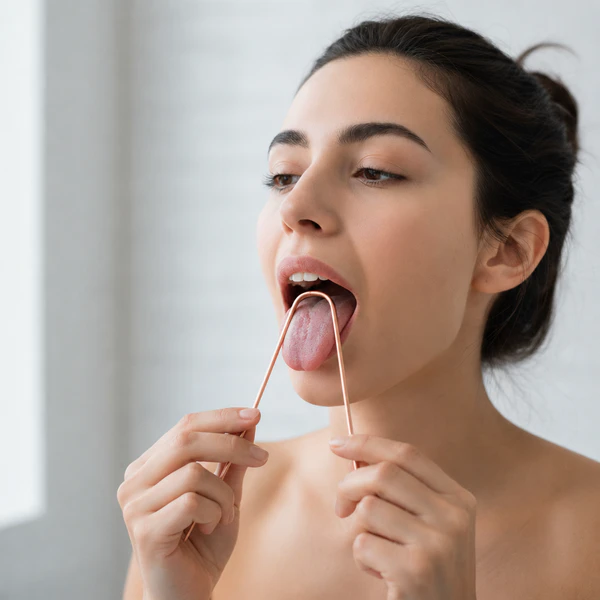
Use a clean scraper with a smooth edge.
- Place it near the back of the tongue without gagging,
- then pull forward with light pressure.
- Rinse the scraper after each pass.
Two to five gentle passes are usually enough for most people.
Hard scraping can irritate the tongue. Pain, bleeding, burning or raw spots mean the pressure is too high or the tool is too sharp.
The tongue surface heals quickly, but repeated injury can make the habit harmful. A gentle routine gives better long term use than aggressive scraping.
Scrape in the morning if tongue coating is worse after sleep. Mouth breathing and dry sleep can leave the tongue coated by morning.
A short scrape before brushing can remove the loose layer first. Follow with brushing and cleaning between teeth so the whole mouth gets cleaned.
Cleaning Order
A clean order works well. Scrape the tongue, rinse the scraper, brush teeth gently and clean between teeth.
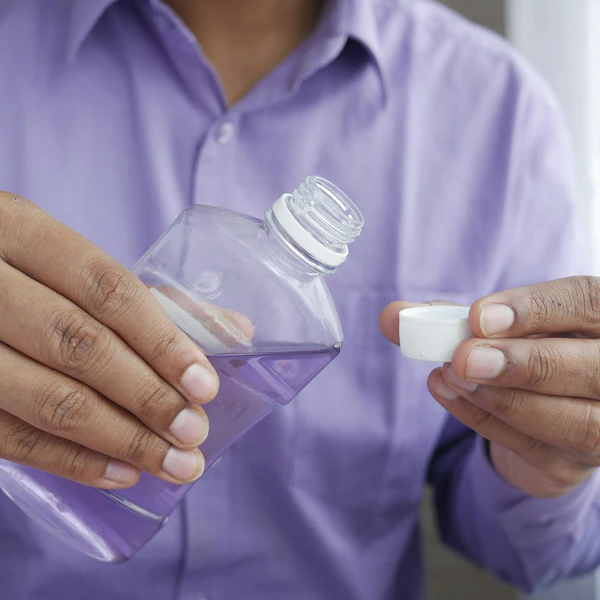
Water can be used afterward if the mouth feels coated. Strong mouthwash is not needed for most people, and harsh rinses can disturb the mouth or dry the tissue.
Warning Signs
Tongue scraping should not hide a bigger problem. Bad breath that returns every day can come from gum disease, tooth decay, dry mouth, reflux, tonsil stones or sinus drainage.
A thick coating that keeps returning despite careful cleaning may point to dry mouth, smoking, mouth breathing, poor food choices or illness.
A dentist or clinician should check ongoing odor, pain, bleeding or sores.
Avoid scraping open cuts, ulcers or painful patches. White patches that do not wipe away, red raw areas, swelling, bleeding or tongue pain need a proper exam.
People with bleeding problems, immune suppression or heart valve risk should be extra careful with mouth injury. Gentle cleaning protects the tongue while still lowering buildup.
Use vs Avoid
| Use | Avoid |
|---|---|
| Good saliva flow | Frequent sugar |
| Nasal breathing | Dry mouth |
| Gentle brushing | Harsh mouthwash |
| Mineral rich food | Mouth breathing |
Food & Saliva
Dry Mouth
Saliva protects the mouth all day. It washes the tongue, buffers acid and helps keep bacteria from sitting in one place too long.
Dry mouth can make tongue coating and bad breath worse. Mouth breathing during sleep is a common reason the tongue feels dry in the morning.
Alcohol based mouthwash can also dry the mouth for some people. A strong mint burn can feel clean while the tissue becomes drier.
Dry tissue can smell worse later because saliva is one of the mouth’s main cleaning tools. Plain water, nose breathing and a gentler routine often work better than harsh rinses.
Hydration means more than drinking water all day. Salt and minerals help the body hold fluid well.
Broth, salted real meals and mineral rich foods can support fluid balance. Very low salt intake with high water intake can still leave some people feeling dry and weak.
Meal Choices
Food changes the mouth after every meal. Bread, crackers, cereal, sweets and sweet drinks leave starch and sugar that bacteria can use.
Meat, eggs, seafood, butter, ghee, tallow, broth and full fat dairy give protein, fat and minerals without the same sticky sugar load. Fewer snacks give saliva more quiet time to clean the tongue and teeth.
Mouth Risk Check
Better Breath
Full Mouth Care
Tongue scraping works best beside good full mouth care. Brush along the gumline with a soft brush.
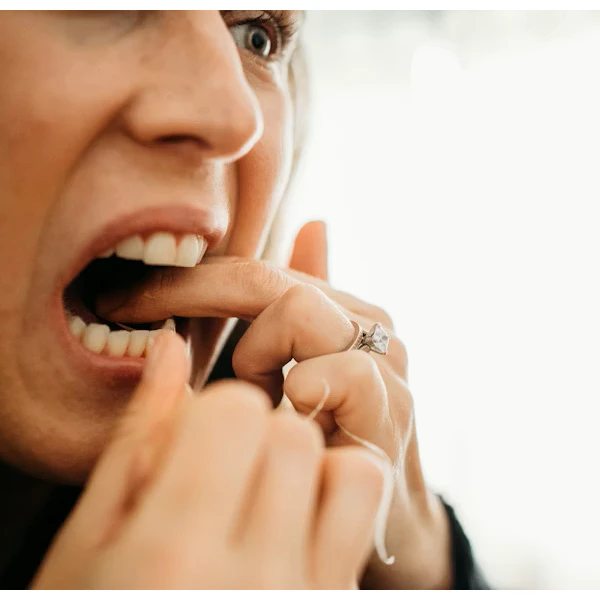
Clean between teeth with floss or small brushes. Scrape the tongue gently. Keep the mouth moist and avoid constant sugar exposure.
Gums matter because gum pockets can hold odor producing bacteria. A clean tongue will not fix bleeding gums or tartar under the gumline.
Tartar needs dental tools. Bad breath that stays after tongue cleaning and flossing deserves a dental check.
A simple routine is usually enough. Scrape gently once daily, brush twice daily and clean between teeth daily.
Avoid turning oral care into a harsh routine full of alcohol rinses, whitening products and aggressive scraping. The mouth does better with steady care than repeated irritation.
Cleaner Signals
A healthier tongue usually looks less coated and feels comfortable. Breath should improve without needing constant mint cover. Food should taste normal. The tongue should not feel raw after cleaning.
Daily results can vary with sleep, hydration and food. A late night, dry room or sweet snack day can leave more coating in the morning.
Better sleep, nose breathing and real meals often reduce the buildup. Tongue scraping then becomes a small cleanup step instead of a fight against daily residue.
Tongue scraping research supports a clear use. It can reduce coating, lower odor compounds and help breath when the tongue is the source. It should stay gentle, clean and consistent. The best results come from pairing it with saliva support, gum cleaning, fewer sugar hits and proper dental care when symptoms keep returning.
For any health concerns or questions about a medical condition, get guidance from a physician or another appropriately trained clinician. Before changing your diet, supplements or health routine, talk with a licensed healthcare professional.
Suggested Posts
Evidence Limits
Research
Tungare, S. and Paranjpe, A.G. 2023. Halitosis. StatPearls. Available at: https://www.ncbi.nlm.nih.gov/books/NBK534859/
AlBeshri, S. et al. 2025. Perspectives on tongue coating. Etiology, clinical implications, and management. BDJ Open. Available at: https://pmc.ncbi.nlm.nih.gov/articles/PMC12367605/
Outhouse, T.L. et al. 2006. Tongue scraping for treating halitosis. Cochrane Database of Systematic Reviews. Available at: https://pubmed.ncbi.nlm.nih.gov/16625641/
Choi, H.N. et al. 2021. The effect of mechanical tongue cleaning on oral malodor and tongue coating. International Journal of Environmental Research and Public Health, 19(1), 108. Available at: https://pmc.ncbi.nlm.nih.gov/articles/PMC8751028/
Seemann, R. et al. 2001. Effectiveness of mechanical tongue cleaning on oral levels of volatile sulfur compounds. Journal of the American Dental Association. Available at: https://pubmed.ncbi.nlm.nih.gov/11665351/
Pedrazzi, V. et al. 2004. Tongue cleaning methods. A comparative clinical trial employing a toothbrush and a tongue scraper. Journal of Periodontology. Available at: https://pubmed.ncbi.nlm.nih.gov/15341360/
Van der Sleen, M.I. et al. 2010. Effectiveness of mechanical tongue cleaning on breath odour and tongue coating. A systematic review. International Journal of Dental Hygiene. Available at: https://pubmed.ncbi.nlm.nih.gov/20961381/
Acar, B. et al. 2019. Effects of oral prophylaxis including tongue cleaning on halitosis and gingival inflammation. Clinical Oral Investigations. Available at: https://pubmed.ncbi.nlm.nih.gov/30218226/
Slot, D.E. et al. 2015. Treatment of oral malodour. Medium term efficacy of mechanical and chemical agents. A systematic review. Journal of Clinical Periodontology. Available at: https://pubmed.ncbi.nlm.nih.gov/25682952/
Kuo, Y.W. et al. 2013. Toothbrushing versus toothbrushing plus tongue cleaning in reducing halitosis and tongue coating. A systematic review and meta analysis. Nursing Research, 62(6), pp. 422 to 429. Available at: https://www.ncbi.nlm.nih.gov/books/NBK79924/
Li, Y. et al. 2021. Oral, tongue coating microbiota and metabolic disorders. Frontiers in Cardiovascular Medicine, 8, 730203. Available at: https://www.frontiersin.org/journals/cardiovascular-medicine/articles/10.3389/fcvm.2021.730203/full
Shirakawa, S. et al. 2024. Safety and clinical evaluation of a sonic tongue brush. Journal of Prosthetic Dentistry. Available at: https://www.sciencedirect.com/science/article/pii/S002065392300936X
Mei, L. et al. 2026. Tongue brushing and oral probiotics for the treatment of halitosis. A randomized controlled trial. Journal of Breath Research. Available at: https://pubmed.ncbi.nlm.nih.gov/41604763/
Bollen, C.M.L. and Beikler, T. 2012. Halitosis. The multidisciplinary approach. International Journal of Oral Science, 4(2), pp. 55 to 63. Available at: https://pmc.ncbi.nlm.nih.gov/articles/PMC3412664/
Aylikci, B.U. and Colak, H. 2013. Halitosis. From diagnosis to management. Journal of Natural Science, Biology and Medicine, 4(1), pp. 14 to 23. Available at: https://pmc.ncbi.nlm.nih.gov/articles/PMC3633265/