Key Takeaways
- Sea salt keeps more natural texture, taste, and character than table salt.
- The clearest gains come from flavor, texture, and lighter industrial handling.
- Sea salt contains trace minerals, though the amounts usually stay small.
- Common table salt is a stripped and standardized factory made commodity.
- Sea salt suits simple whole food meals far better than refined table salt.
Salt Origins
Sea salt health benefits begin with origin and handling, because sea salt comes from seawater that dries down into crystals, while common table salt usually goes through heavier refining so the finished product looks whiter, flows faster, and behaves the same way in factories, storage, and packaging.
Britannica’s overview of salt manufacture explains that natural brines contain several dissolved salts and that different salts separate at different stages during evaporation, which helps explain why natural salt begins with more complexity than the narrow white product sold as table salt (Britannica, 2026).
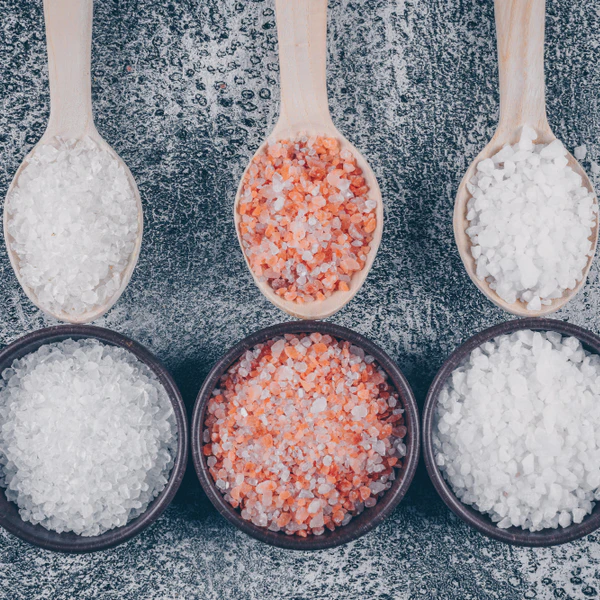
That difference shows up at once in the kitchen, because unrefined sea salt may look flaky, coarse, damp, gray, or off white, and those features give it a more natural feel on food. A review of commercial salts found differences in grain size, additives, purity, and trace composition, which helps explain why sea salt and table salt behave differently on meat, eggs, fish, and broth (Carapeto et al., 2018).
Refining Damage
Common table salt deserves criticism because industrial refining strips away natural variation so the product meets a narrow standard for sameness, easy flow, and commercial shelf behavior.
Britannica notes that calcium and magnesium compounds may be removed by chemical treatment before crystallization, which makes the industrial goal clear enough without any extra spin, since the process is built to remove what industry sees as defects rather than preserve the character of a natural mineral salt (Britannica, 2026).
That process often continues after refining, because additives may be used so the salt keeps flowing and storing the way the industry wants. United States regulations allow yellow prussiate of soda, also called sodium ferrocyanide, to be used in salt as an anticaking agent and as an aid in producing dendritic crystals, which shows how far common table salt has moved from a simple natural ingredient and why this article does not recommend it as the best everyday choice.
Real Benefits
The strongest benefits of sea salt are easy to notice at the table, because sea salt often gives food a fuller, cleaner taste than refined table salt. That benefit is larger than it may first seem, because better seasoning helps whole foods stand on their own. Meals built from meat, butter, stock, eggs, and sea salt can feel complete with very little else, and that suits a high fat animal based way of eating far better than a pantry built around refined fillers and industrial condiments.
Better Texture
Texture is another clear gain, because crystal size changes the way salt lands on food and the way the tongue receives it. Coarse sea salt helps build a good crust on meat, flaky sea salt gives a crisp finish at the plate, and fine sea salt works well in cooking where even dissolving is needed, which gives a cook more control without adding clutter to the kitchen.
A natural crystal shape can make a plain meal more satisfying, and that effect supports simpler eating with fewer processed extras.
Trace Minerals
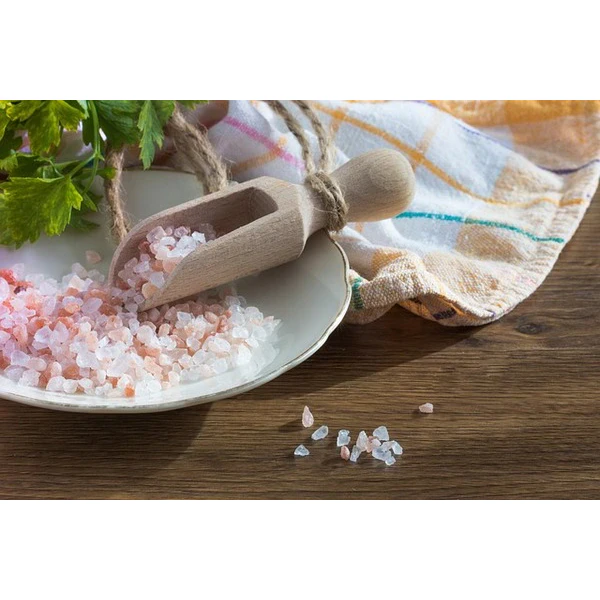
Sea salt contains trace minerals. An analysis of pink salt sold in Australia found a broader mineral profile than refined table salt, including calcium, potassium, magnesium, manganese, iron, and sulfur, although the levels varied across products and normal serving sizes still supplied only small amounts (Fayet-Moore et al., 2020).
Mineral nutrition reviews show that minerals support fluid balance, muscle work, nerve signaling, and many other body functions, which explains why interest in unrefined sea salt keeps growing (Soetan et al., 2010; Shankar, 2020).
The useful correction is about scale, because a pinch of salt will never cover broad mineral needs, and those needs are met far better through nutrient dense meals than through larger amounts of salt.
Health Limits
Sea salt should never be sold as a low sodium food, because both sea salt and table salt remain mostly sodium chloride. The strongest case for sea salt rests on better taste, better texture, lighter processing, and retention of natural trace minerals, while the strongest case against table salt rests on how heavily the product is stripped and standardized.
Clear writing helps here, because honest claims are stronger than inflated ones. Sea salt earns its place through kitchen quality and closeness to a natural mineral source, while common table salt remains a factory obedient commodity built for sameness and commercial convenience.
Iodine Questions
Sea salt is not always a reliable source of iodine, and that point should stay visible because some households assume all salt covers that need. Reviews on mineral deficiency show that iodine remains important for thyroid function and that deficiencies still occur in many populations, so households relying only on unrefined sea salt need iodine from other foods rather than from blind assumptions about the salt itself (Shankar, 2020).
The broader issue is still pantry quality and closeness to natural food and sea salt remains the better everyday fit when the goal is simpler ingredients and less industrial tampering.
Daily Use
Sea salt works best where the food itself is already good and only needs clean seasoning to taste complete. Eggs, red meat, fish, bone broth, butter, and roast vegetables all respond well to a salt with real texture and a clean finish, and those foods align well with a way of eating that favors animal fats, avoids seed oils, and keeps processed fillers low.
One fine unrefined sea salt for cooking and one flaky sea salt for finishing will cover most kitchens without fuss. Fine crystals work well in soups, stocks, and pan sauces, while flaky crystals shine on meat, eggs, and fish just before serving.
Daily Choice
Sea salt works best when treated as a real cooking staple with modest mineral value and strong kitchen value. Better taste, better texture, lighter processing, and a stronger fit with whole food meals are all honest reasons to choose it every day, especially when the alternative is a refined commodity shaped for factory convenience first. Sea salt is the better everyday option when the goal is simple food, fewer industrial interventions, and better results on the plate.
For any health concerns or questions about a medical condition, get guidance from a physician or another appropriately trained clinician. Before changing your diet, supplements, or health routine, talk with a licensed healthcare professional.
FAQs
What are the health benefits of sea salt?
Sea salt offers better flavor, better texture, and a less refined form of salt that suits simple home cooking. It also contains trace minerals, though the amounts usually stay small.
Is unrefined sea salt better than table salt?
Unrefined sea salt is the better everyday choice in this article because it is less processed, less standardized, and closer to its natural source than common table salt.
Does sea salt have less sodium than table salt?
Sea salt and table salt are both mostly sodium chloride, so sea salt should not be treated as a low-sodium food even when the crystals look larger or more natural.
Does sea salt contain important minerals?
Sea salt contains trace minerals such as magnesium, calcium, potassium, and iron, though the amounts in normal use are usually too small to serve as a major source.
Is sea salt good for daily use?
Sea salt works very well for daily use when meals are built from whole foods and seasoned with care, especially in kitchens that want to avoid heavily refined pantry products.
Research
Britannica (2026) ‘Salt manufacture’, Encyclopaedia Britannica. Available at: https://www.britannica.com/science/salt/Salt-manufacture
Carapeto, C., Brum, S. and Rocha, M.J. (2018) ‘Which Table Salt to Choose?’, Journal of Nutrition & Food Sciences, 8, 701. Available at: https://doi.org/10.4172/2155-9600.1000701
Fayet-Moore, F., Wibisono, C., Carr, P., Duve, E., Petocz, P., Lancaster, G. and Blumfield, M. (2020) ‘An Analysis of the Mineral Composition of Pink Salt Available in Australia’, Foods, 9(10), 1490. Available at: https://doi.org/10.3390/foods9101490
Soetan, K.O., Olaiya, C.O. and Oyewole, O.E. (2010) ‘The importance of mineral elements for humans, domestic animals and plants: A review’, African Journal of Food Science, 4(5), pp. 200–222. Available at: https://academicjournals.org/article/article1380713863_Soetan%20et%20al.pdf
Shankar, A.H. (2020) ‘Mineral Deficiencies’, in Hunter’s Tropical Medicine and Emerging Infectious Diseases, pp. 1048–1054. Available at: https://doi.org/10.1016/B978-0-323-55512-8.00145-9
Loyola, I.P., Jesus, P.R. de, Fragoso, T.S., et al. (2022) ‘Comparison between the Effects of Hymalaian Salt and Common Salt Intake on Urinary Sodium and Blood Pressure in Hypertensive Individuals’, Arquivos Brasileiros de Cardiologia, 118(5), pp. 875–882. Available at: https://abccardiol.org/en/article/comparison-between-the-effects-of-hymalaian-salt-and-common-salt-intake-on-urinary-sodium-and-blood-pressure-in-hypertensive-individuals/
Dorna, M. de S. and Seki, M.M. (2022) ‘Consumo de Sal do Himalaia e Sal de Mesa entre Indivíduos Hipertensos’, Arquivos Brasileiros de Cardiologia, 118(5), pp. 883–884. Available at: https://doi.org/10.36660/abc.20220243
Lee, B.H., Yang, A.R., Kim, M.Y., McCurdy, S. and Boisvert, W.A. (2016) ‘Natural sea salt consumption confers protection against hypertension and kidney damage in Dahl salt-sensitive rats’, Food & Nutrition Research, 61(1), 1264713. Available at: https://doi.org/10.1080/16546628.2017.1264713
eCFR (2026) ‘21 CFR 172.490 Yellow prussiate of soda’. Available at: https://www.ecfr.gov/current/title-21/chapter-I/subchapter-B/part-172/subpart-E/section-172.490
Greenwood, H. et al. (2024) ‘Long-Term Effect of Salt Substitution for Cardiovascular Outcomes: A Systematic Review and Meta-analysis’, Annals of Internal Medicine, 177(5), pp. 643–655. Available at: https://doi.org/10.7326/M23-2626
Brand, A. et al. (2022) ‘Replacing salt with low-sodium salt substitutes for cardiovascular health in adults, children and pregnant women’, Cochrane Database of Systematic Reviews, 8(8), CD015207. Available at: https://doi.org/10.1002/14651858.CD015207
Yin, X. et al. (2022) ‘Effects of salt substitutes on clinical outcomes: a systematic review and meta-analysis’, Heart, 108(20), pp. 1608–1615. Available at: https://doi.org/10.1136/heartjnl-2022-321332
Aliasgharzadeh, S. et al. (2022) ‘Effect of salt reduction interventions in lowering blood pressure: A comprehensive systematic review and meta-analysis of controlled clinical trials’, PLOS ONE, 17(12), e0277929. Available at: https://doi.org/10.1371/journal.pone.0277929
Jafarnejad, S. et al. (2020) ‘The hypotensive effect of salt substitutes in stage 2 hypertension: a systematic review and meta-analysis’, BMC Cardiovascular Disorders, 20(1), 98. Available at: https://doi.org/10.1186/s12872-020-01347-x
Peng, Y.-G. et al. (2014) ‘Effects of salt substitutes on blood pressure: a meta-analysis of randomized controlled trials’, American Journal of Clinical Nutrition, 100(6), pp. 1448–1454. Available at: https://doi.org/10.3945/ajcn.114.089235
Adler, A.J. et al. (2014) ‘Reduced dietary salt for the prevention of cardiovascular disease’, Cochrane Database of Systematic Reviews, 2014(12), CD009217. Available at: https://doi.org/10.1002/14651858.CD009217.pub3
Neal, B. et al. (2021) ‘Effect of Salt Substitution on Cardiovascular Events and Death’, New England Journal of Medicine, 385(12), pp. 1067–1077. Available at: https://doi.org/10.1056/NEJMoa2105675
Apurbo Sarker, A., Ghosh, A., Sarker, K., Basu, D. and Sen, D.J. (n.d.) ‘Halite; The Rock Salt: Enormous Health Benefits’. Available at: https://wjpr.s3.ap-south-1.amazonaws.com/article_issue/1480495868.pdf
Healthline (2024) ‘Sea Salt: Uses, Benefits, and Downsides’. Available at: https://www.healthline.com/nutrition/sea-salt-benefits
Mayo Clinic (2024) ‘What’s the difference between sea salt and table salt?’. Available at: https://www.mayoclinic.org/healthy-lifestyle/nutrition-and-healthy-eating/expert-answers/sea-salt/faq-20058512
Mayo Clinic Health System (2022) ‘Is sea salt healthier than table salt?’. Available at: https://www.mayoclinichealthsystem.org/hometown-health/speaking-of-health/is-sea-salt-healthier-than-table-salt
Welch, R.M. (2005) ‘Harvesting health: agricultural linkages for improving human nutrition’, in Micronutrients in South and Southeast Asia, pp. 9–10.
Krebs-Smith, S.M., Guenther, P.M., Subar, A.F., Kirkpatrick, S.I. and Dodd, K.W. (2010) ‘Americans do not meet federal dietary recommendations’, The Journal of Nutrition, 140(10), pp. 1832–1838. Available at: https://doi.org/10.3945/jn.110.124826
Borwankar, R., Sanghvi, T. and Houston, R. (2007) ‘What is the extent of vitamin and mineral deficiencies? Magnitude of the problem’, Food and Nutrition Bulletin, 28, pp. S174–S181. Available at: http://foodandnutritionbulletin.org/FNB/index.php/FNB/issue/view/138
Broadley, M.R., White, P.J., Bryson, R.J., Meacham, M.C., Bowen, H.C., Johnson, S.E., Hawkesford, M.J., McGrath, S.P., Zhao, F.-J., Breward, N., Harriman, M. and Tucker, M. (2006) ‘Biofortification of UK food crops with selenium’, Proceedings of the Nutrition Society, 65, pp. 169–181. Available at: http://dx.doi.org/10.1079/PNS2006490
Bell, R.W. and Dell, B. (1995) ‘Environmental factors affecting boron deficiency’, in Bell, R.W.A. and Rerkasem, B. (eds.) Causes of Sterility in Wheat. Murdoch University, pp. 95–106.