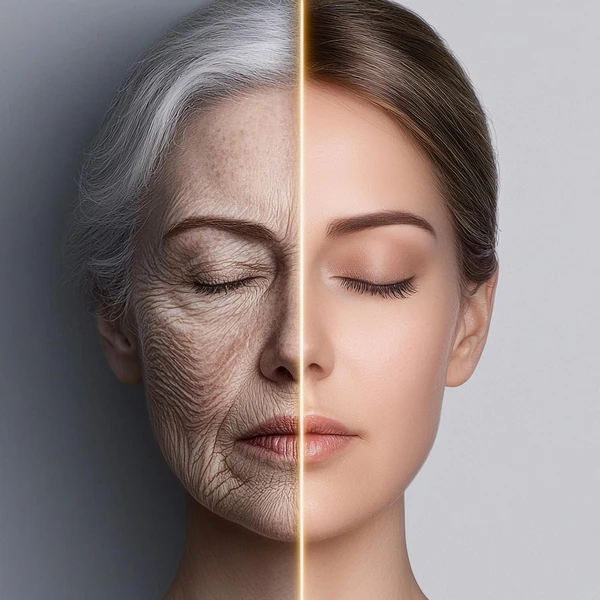
Key Takeaways
- Longevity supplements often change lab markers without proving longer life or stronger health.
- Big supplement stacks raise risk because several products can push the same pathway.
- NAD products, resveratrol, berberine, spermidine and urolithin A still need stronger human proof.
- Whole animal foods, sunlight, sleep and strength training give the body a safer base.
- Use fewer products, track changes and review medications before adding any daily supplement.
Longevity Supplement Basics
Common Supplement Types
Longevity supplements are usually sold with big promises and small print. The common list includes
- NAD precursors,
- resveratrol,
- spermidine,
- urolithin A,
- berberine,
- quercetin,
- fisetin and
- alpha ketoglutarate.
These products are often promoted from cell studies, animal studies and short human trials.
A 2025 review on NAD precursors found rising interest in human aging, but it also found open questions about dose, study quality, target groups and long term results (1).
Nicotinamide riboside can raise NAD in blood, but a higher blood marker does not prove better aging by itself (2).
NMN studies have shown changes in blood NAD, sleep quality or walking measures in some older adults, but these results do not prove longer life or lower disease risk (3).
You can spend a lot of money and still have no clear way to know whether the product is helping.
Evidence Limits
Many trials are short. Many trials use small groups. Many trials measure things that are easier to change than real health outcomes.
A blood marker, a sleep score or a lab number can move without proving better strength, better memory, fewer falls or longer life. This is why strong supplement claims deserve slow reading.
Resveratrol is a good example. A large review found many clinical trials, mixed results and many gaps that make strong health claims hard to defend (4).
Urolithin A has some human data for muscle and mitochondrial markers, but a review still treated the evidence as early and incomplete (5). Interest is not the same as proof.
Large reviews of antioxidant and vitamin supplements have often found little benefit for major outcomes, and some have found harm signals in certain groups (6, 7).
This does not mean nutrients are useless. It means isolated pills can act differently from nutrients in whole food.
Realistic Expectations
The body does not age because of one missing molecule. Energy, sleep, minerals, sunlight, muscle, stress and food quality all shape how the body feels over time.
Eggs, liver, seafood, meat, dairy from well raised animals, bone broth and natural fats provide nutrients in forms the body can use.
Cod liver oil is the better choice when someone is considering omega 3 fats, retinol or vitamin D. It gives a more complete mix than synthetic vitamin D or isolated fish oil.
Stack Risks
Dose Overlap
You may take an NAD product for energy, berberine for glucose, resveratrol for aging, magnesium for sleep and vitamin D for a lab result.
Dose overlap happens when several products affect the same system. Berberine can affect glucose and lipid markers in trials, which is why people often use it for metabolic goals (8).
Many products add B vitamins, zinc, calcium, vitamin D or plant extracts that were not the main reason for buying them. Fortified powders and blends can raise intake without the person noticing.
Medication Interactions
Natural products can still change drug response. Supplements may affect blood sugar, blood pressure, bleeding, sleep, mood, liver enzymes or kidney load.
People using blood thinners, glucose lowering drugs, blood pressure drugs, immune drugs or surgery related medicines need medical review before adding these products.
Long Term Use
Short term tolerance does not prove long term safety. A person can feel fine for a few weeks while a product slowly changes sleep, digestion, liver enzymes, minerals or appetite.
Fisetin, spermidine and alpha ketoglutarate are common in aging circles, but human data remain limited for broad daily use.
A small fisetin pilot study may be interesting, but it cannot prove safety for everyone who wants to take it for years (9).
A supplement should have a clear reason. It should have a dose. It should have a stopping point.
Sleep, digestion, mood, training, appetite and lab work should be watched. Starting ten products at once makes this almost impossible.
Long Life Claims Need Real Outcomes
Lab markers do not always mean longer life.
Safety Concerns
Blood Sugar Effects
Blood sugar support can help some people and harm others. Berberine is the main example because its evidence is tied to metabolic syndrome rather than aging itself.
Food quality should come before glucose targeting pills. Meals based on whole foods and natural fats can reduce the need for constant snacking.
Removing seed oils, refined starches, fortified grains and ultra processed foods removes a major burden. A supplement should not be used to hide the effect of poor food.
Heart & Bleeding Risk
Heart rhythm and bleeding risk need respect. High dose marine omega 3 supplements have been linked to higher atrial fibrillation risk in reviews of cardiovascular trials, especially at higher doses (10).
Vitamin E, beta carotene and calcium also show the risk of isolated nutrients. Some trials and reviews have found harm signals in certain groups or at high doses.
The body uses nutrients in networks. Pushing one isolated compound can disturb another.
Liver & Kidney Load
The liver and kidneys process much of what comes into the body. A large stack adds capsules, fillers, extracts, sweeteners and concentrated compounds on top of food and medication.
People with liver disease, kidney disease, gallbladder problems, pregnancy, cancer treatment or planned surgery need extra care. Even healthy people can feel worse from a stack and miss the cause.
Product quality varies widely. Clear labels, independent testing and simple formulas reduce uncertainty, but they do not prove benefit.
Proprietary blends make it hard to know the true dose. A cleaner method is to change one thing at a time and watch the result.
Stronger Signal vs Weaker Signal
| Stronger signal | Weaker signal |
|---|---|
| Strength | Single supplement |
| Blood sugar | One lab marker |
| Blood pressure | Anti aging claim |
| Sleep | Mouse study only |
Natural Support
Nutrition
Aging support starts with food that builds tissue. Protein, creatine, taurine, retinol, copper, selenium, choline, carnitine and natural fats are easier to obtain from whole foods than from fortified powders.
Liver, eggs, seafood, meat, dairy and bone broth provide a broad nutrient mix. These foods support muscle, bile flow, brain function, hormones and mineral balance.
Copper and retinol deserve attention in people who have lived on fortified grains, low fat foods and seed oils.
Retinol rich foods and copper rich foods help the body handle minerals in a more balanced way.
Magnesium glycinate may help when intake is low or stress is high. Trace minerals and electrolytes are often more sensible than exotic aging blends.
Sleep & Sunlight
Sleep and sunlight are stronger than most supplement claims. Poor sleep worsens hunger, glucose control, mood, blood pressure and training response.
Morning light and steady sleep timing help the body keep a stable rhythm. These habits cost little and have fewer risks than a large stack.
Sunlight also supports vitamin D production, mood and daily rhythm. Low vitamin D can reflect low sunlight, inflammation, low magnesium, poor liver health or general poor health.
Chasing one lab number with synthetic vitamin D can miss the deeper issue. Cod liver oil is a better traditional source of retinol, vitamin D and omega 3 fats.
Testing & Tracking
Tracking keeps supplement use honest. Useful checks may include glucose, insulin, liver enzymes, kidney markers, ferritin, complete blood count, thyroid markers, lipids and vitamin D with context.
The safest stack is usually small. Each product should earn its place. A person should know why it is used, what should improve and what would mean it should stop. A shelf full of bottles can look serious while making health harder to understand.
For any health concerns or questions about a medical condition, get guidance from a physician or another appropriately trained clinician. Before changing your diet, supplements or health routine, talk with a licensed healthcare professional.
Suggested Posts

Evidence Limits
Research
Vinten, K.T. et al. (2025) NAD+ precursor supplementation in human ageing: clinical evidence and challenges, Nature Metabolism, 7(10), pp. 1974–1990. Available at: https://pubmed.ncbi.nlm.nih.gov/41083806/ (Accessed: 26 March 2026).
Martens, C.R. et al. (2018) Chronic nicotinamide riboside supplementation is well-tolerated and elevates NAD+ in healthy middle-aged and older adults, Nature Communications, 9(1), p. 1286. Available at: https://pubmed.ncbi.nlm.nih.gov/29599478/ (Accessed: 26 March 2026).
Morifuji, M. et al. (2024) Ingestion of β-nicotinamide mononucleotide increased blood NAD levels, maintained walking speed, and improved sleep quality in older adults in a double-blind randomized, placebo-controlled study, GeroScience, 46, pp. 3119–3134. Available at: https://pubmed.ncbi.nlm.nih.gov/38789831/ (Accessed: 26 March 2026).
Brown, K. et al. (2024) Resveratrol for the Management of Human Health: How Far Have We Come? A Systematic Review of Resveratrol Clinical Trials to Highlight Gaps and Opportunities, International Journal of Molecular Sciences, 25(2), p. 747. Available at: https://pmc.ncbi.nlm.nih.gov/articles/PMC10815776/ (Accessed: 26 March 2026).
Kuerec, A.H. et al. (2024) Targeting aging with urolithin A in humans: A systematic review, Ageing Research Reviews, 100, p. 102406. Available at: https://pubmed.ncbi.nlm.nih.gov/39002645/ (Accessed: 26 March 2026).
Bjelakovic, G. et al. (2007) Mortality in randomized trials of antioxidant supplements for primary and secondary prevention: systematic review and meta-analysis, JAMA. Available at: https://pubmed.ncbi.nlm.nih.gov/17327526/
Fortmann, S.P. et al. (2013) Vitamin and mineral supplements in the primary prevention of cardiovascular disease and cancer: an updated systematic evidence review for the U.S. Preventive Services Task Force, Annals of Internal Medicine. Available at: https://pubmed.ncbi.nlm.nih.gov/24217421/
Liu, D. et al. (2025) Efficacy and safety of berberine on the components of metabolic syndrome: a systematic review and meta-analysis of randomized placebo-controlled trials, Frontiers in Pharmacology, 16, p. 1572197. Available at: https://pubmed.ncbi.nlm.nih.gov/40740996/ (Accessed: 26 March 2026).
Lee, E. and Burns, M. (2024) The Effects of Fisetin on Reducing Biological Aging: A Pilot Study, Alternative Therapies in Health and Medicine, 30(9), pp. 6–10. Available at: https://pubmed.ncbi.nlm.nih.gov/39269340/ (Accessed: 26 March 2026).
Gencer, B. et al. (2021) Effect of long-term marine omega-3 fatty acids supplementation on the risk of atrial fibrillation in randomized controlled trials of cardiovascular outcomes: a systematic review and meta-analysis, Circulation. Available at: https://pubmed.ncbi.nlm.nih.gov/34612056/
Khan, S.U. et al. (2019) Effects of nutritional supplements and dietary interventions on cardiovascular outcomes: an umbrella review and evidence map, Annals of Internal Medicine. Available at: https://pubmed.ncbi.nlm.nih.gov/31284304/
Bjelakovic, G. et al. (2012) Antioxidant supplements for prevention of mortality in healthy participants and patients with various diseases, Cochrane Database of Systematic Reviews. Available at: https://pubmed.ncbi.nlm.nih.gov/22419320/
Jenkins, D.J.A. et al. (2018) Supplemental vitamins and minerals for CVD prevention and treatment, Journal of the American College of Cardiology. Available at: https://pubmed.ncbi.nlm.nih.gov/29852980/
Zhang, Y. et al. (2019) Association between vitamin D supplementation and mortality: systematic review and meta-analysis, BMJ. Available at: https://pubmed.ncbi.nlm.nih.gov/31405892/
Rizos, E.C. et al. (2012) Association between omega-3 fatty acid supplementation and risk of major cardiovascular disease events: a systematic review and meta-analysis, JAMA. Available at: https://pubmed.ncbi.nlm.nih.gov/22968891/
Bolland, M.J. et al. (2010) Effect of calcium supplements on risk of myocardial infarction and cardiovascular events: meta-analysis, BMJ. Available at: https://pubmed.ncbi.nlm.nih.gov/20671013/
Miller, E.R. et al. (2005) Meta-analysis: high-dosage vitamin E supplementation may increase all-cause mortality, Annals of Internal Medicine. Available at: https://pubmed.ncbi.nlm.nih.gov/15537682/
Zahoor, H.S. et al. (2024) Effect of resveratrol supplementation on metabolic risk markers and anthropometric parameters in individuals with obesity or overweight: a systematic review and meta-analysis of randomized controlled trials, Metabolism Open. Available at: https://pubmed.ncbi.nlm.nih.gov/39967810/
Prokopidis, K. et al. (2025) The Effect of Nicotinamide Mononucleotide and Riboside on Skeletal Muscle Mass and Function: A Systematic Review and Meta-Analysis, Journal of Cachexia, Sarcopenia and Muscle, 16(3), p. e13799. Available at: https://pubmed.ncbi.nlm.nih.gov/40275690/ (Accessed: 26 March 2026).
Manson, J.E. et al. (2019) Vitamin D supplements and prevention of cancer and cardiovascular disease, New England Journal of Medicine. Available at: https://pubmed.ncbi.nlm.nih.gov/30415629/
Klein, E.A. et al. (2011) Vitamin E and the risk of prostate cancer: the Selenium and Vitamin E Cancer Prevention Trial, JAMA. Available at: https://pubmed.ncbi.nlm.nih.gov/21990298/
Omenn, G.S. et al. (1996) Effects of a combination of beta carotene and vitamin A on lung cancer and cardiovascular disease, New England Journal of Medicine. Available at: https://pubmed.ncbi.nlm.nih.gov/8602180/
Loftfield, E. et al. (2024) Multivitamin use and mortality risk in 3 prospective US cohorts, JAMA Network Open. Available at: https://pubmed.ncbi.nlm.nih.gov/38922615/
Elhassan, Y.S. et al. (2019) Nicotinamide riboside augments the aged human skeletal muscle NAD+ metabolome and induces transcriptomic and anti-inflammatory signatures, Cell Reports. Available at: https://pubmed.ncbi.nlm.nih.gov/31412242/
Yi, L. et al. (2023) The efficacy and safety of β-nicotinamide mononucleotide supplementation in healthy middle-aged adults: a randomized, multicenter, double-blind, placebo-controlled, parallel-group, dose-dependent clinical trial, GeroScience, 45(1), pp. 29–43. Available at: https://pubmed.ncbi.nlm.nih.gov/36482258/ (Accessed: 26 March 2026).
van der Made, S.M. et al. (2015) Resveratrol does not influence metabolic risk markers related to cardiovascular health in overweight and slightly obese subjects: a randomized, placebo-controlled crossover trial, PLOS ONE. Available at: https://pubmed.ncbi.nlm.nih.gov/25790328/
Freeberg, K.A. et al. (2023) Dietary Supplementation With NAD+-Boosting Compounds in Humans: Current Knowledge and Future Directions, The Journals of Gerontology: Series A, 78, pp. 2435–2448. Available at: https://pubmed.ncbi.nlm.nih.gov/37068054/ (Accessed: 26 March 2026).
Orr, M.E. et al. (2024) A randomized placebo-controlled trial of nicotinamide riboside in older adults with mild cognitive impairment, GeroScience, 46(1), pp. 665–682. Available at: https://pubmed.ncbi.nlm.nih.gov/37994989/ (Accessed: 26 March 2026).
Schwarz, C. et al. (2022) Effects of Spermidine Supplementation on Cognition and Biomarkers in Older Adults With Subjective Cognitive Decline: A Randomized Clinical Trial, JAMA Network Open, 5(5), p. e2213875. Available at: https://pubmed.ncbi.nlm.nih.gov/35616942/ (Accessed: 26 March 2026).
Huang, H. (2022) A Multicentre, Randomised, Double Blind, Parallel Design, Placebo Controlled Study to Evaluate the Efficacy and Safety of Uthever NMN Supplement, an Orally Administered Supplementation in Middle Aged and Older Adults, Frontiers in Aging, 3, p. 851698. Available at: https://pubmed.ncbi.nlm.nih.gov/35821806/ (Accessed: 26 March 2026).
Wirth, M. et al. (2018) The effect of spermidine on memory performance in older adults at risk for dementia: A randomized controlled trial, Cortex, 109, pp. 181–188. Available at: https://pubmed.ncbi.nlm.nih.gov/30388439/ (Accessed: 26 March 2026).
Keohane, P. et al. (2024) Supplementation of spermidine at 40 mg/day has minimal effects on circulating polyamines: an exploratory double-blind randomized controlled trial in older men, Nutrition Research, 132, pp. 1–14. Available at: https://pubmed.ncbi.nlm.nih.gov/39405978/ (Accessed: 26 March 2026).
Yadegar, S. et al. (2024) Effects and safety of resveratrol supplementation in older adults: A comprehensive systematic review, Phytotherapy Research, 38(5), pp. 2448–2461. Available at: https://pubmed.ncbi.nlm.nih.gov/38433010/ (Accessed: 26 March 2026).
Liu, S. et al. (2022) Effect of Urolithin A Supplementation on Muscle Endurance and Mitochondrial Health in Older Adults: A Randomized Clinical Trial, JAMA Network Open, 5(1), p. e2144279. Available at: https://pubmed.ncbi.nlm.nih.gov/35050355/ (Accessed: 26 March 2026).
Singh, A. et al. (2022) Urolithin A improves muscle strength, exercise performance, and biomarkers of mitochondrial health in a randomized trial in middle-aged adults, Cell Reports Medicine, 3(5), p. 100633. Available at: https://pubmed.ncbi.nlm.nih.gov/35584623/ (Accessed: 26 March 2026).
Ye, Y. et al. (2021) Efficacy and Safety of Berberine Alone for Several Metabolic Disorders: A Systematic Review and Meta-Analysis of Randomized Clinical Trials, Frontiers in Pharmacology, 12, p. 653887. Available at: https://pubmed.ncbi.nlm.nih.gov/33981233/ (Accessed: 26 March 2026).
Tabrizi, R. et al. (2020) The effects of quercetin supplementation on lipid profiles and inflammatory markers among patients with metabolic syndrome and related disorders: A systematic review and meta-analysis of randomized controlled trials, Critical Reviews in Food Science and Nutrition, 60(11), pp. 1855–1868. Available at: https://pubmed.ncbi.nlm.nih.gov/31017459/ (Accessed: 26 March 2026).
Demidenko, O. et al. (2021) Rejuvant®, a potential life-extending compound formulation with alpha-ketoglutarate and vitamins, conferred an average 8 year reduction in biological aging, after an average of 7 months of use, in the TruAge DNA methylation test, Aging Albany NY, 13(22), pp. 24485–24499. Available at: https://pubmed.ncbi.nlm.nih.gov/34847066/ (Accessed: 26 March 2026).
Mimio Health (2026) Best Longevity Supplements 2026: Science-Backed Guide.
Naturecan TH (2026) 10 Best Longevity and Anti-Ageing Supplements.
iHerb (2026) Top 10 Supplements For Longevity | Wellness Hub.
WellnessPulse (2026) Longevity Supplements: Latest Google Trends Revealed.
Fortune (2026) The 6 Best NAD Supplements of 2026: Approved by Experts.
Environment Energy Leader (2026) 15 longevity supplements that may support aging well.
NOVOS (2026) David Sinclair Supplements: 2026 List & Dosage Guide.
Aging With Strength (2026) CheatSheet: The top 11 longevity supplements.
Innerbody (2026) Best Anti-Aging Supplements | Increase your longevity 2026.