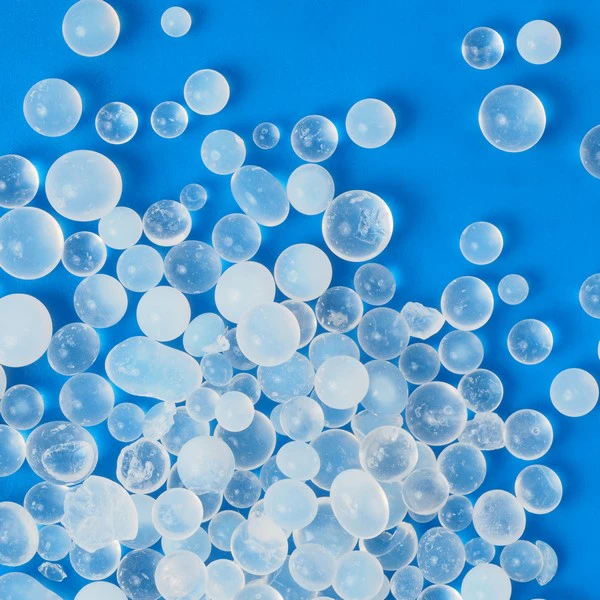
Key Takeaways
- Silica is a trace mineral found in skin, hair, nails, and bone.
- It helps support collagen, the tough protein in firm body tissues.
- Some human trials found better hair strength and less brittle nails.
- The form matters because the body absorbs some types better.
- Food, water, and simple daily habits can help support silica status.
Silica is a trace mineral. The body needs only a small amount, but it is found in skin, hair, nails, bone, and other firm tissues (Nielsen, 2014; Jurkić et al., 2013).
Silica seems to help the body build and keep strong connective tissue, which is the tissue that gives skin, joints, blood vessels, and bone their shape and strength (Nielsen, 2014; de Araújo et al., 2016).
Why Silica Matters
Collagen & Tissue
Collagen is the main protein in skin and other tough tissues. It acts like a mesh under the skin and inside joints, tendons, and blood vessel walls.
Reviews on silicon nutrition describe silica as linked with collagen formation and connective tissue health (Nielsen, 2014; Jurkić et al., 2013).
The body still needs enough protein and other nutrients to build strong tissue. Still, silica appears to be one part of that work.
Skin, Hair & Nails
Skin needs a strong deep layer called the dermis. The dermis holds collagen and elastic fibers that help skin stay firm. Hair and nails depend on strong protein structure too.
A placebo-controlled trial in women with sun damaged skin found that 20 weeks of choline stabilized orthosilicic acid had a positive effect on skin surface and skin mechanical traits, and it also improved brittleness scores for hair and nails (Barel et al., 2005).
Another placebo-controlled trial in women with fine hair found that the same silica form improved hair tensile strength.
Tensile strength means how well a hair strand can handle pulling before it breaks. The study also found thicker hair after the test period (Wickett et al., 2007).
Bone Support
Silica is not only about looks. Research reviews also link silicon with bone health and bone formation (Nielsen, 2014; Jugdaohsingh, 2007).
Hair, skin, and nails do not exist apart from the rest of the body. Good structure is a whole body issue.
What The Research Shows
Human Trials
The strongest human data for beauty uses come from oral studies on specific silica forms, not from every product sold online.
In the 2005 Barel study, women took choline-stabilized orthosilicic acid for 20 weeks. Compared with placebo, the silica group showed better skin measures and less brittle hair and nails (Barel et al., 2005).
In the 2007 Wickett study, women with fine hair took the same form for nine months. The silica group showed stronger hair and a rise in hair cross-sectional area, which means the hair shafts got thicker (Wickett et al., 2007).
Absorption Matters
Not all silica is the same. The body absorbs some forms much better than others. A study comparing foods and supplements found that silicon absorption varied a lot by source.
Forms closer to orthosilicic acid were absorbed better than more solid, less soluble forms (Sripanyakorn et al., 2009).
Reviews note that human data are still more limited than animal or lab data, and not all outcomes have been tested in large trials (Nielsen, 2014; Jurkić et al., 2013).
Food & Daily Sources
Water & Food
Silica comes from water and food. Reviews note that it is found in drinking water and in plant and animal sources, though the amount and the form can vary (de Araújo et al., 2016).
The body tends to absorb silica best when it is present in soluble forms. For that reason, some mineral waters can be a useful source.
Food can help too, though the usable amount depends on the food and how the silica is bound inside it (Sripanyakorn et al., 2009).
For a simple approach, focus on a steady diet with enough protein, mineral rich water, and whole foods instead of chasing one trendy powder.
Food grade diatomaceous earth gives you silica in a natural mineral form from fossilized freshwater algae. It is mostly amorphous silica, with trace minerals that support the raw material needs of hair, skin, nails, teeth, bones and connective tissue (11, 12).
Supportive Nutrients
Silica does not build tissue on its own. Skin, hair, and nails also need enough protein and enough nutrients for collagen formation.
Helpful basics include:
- Protein rich meals from whole foods
- Foods rich in copper and other trace minerals
- Food based vitamin C sources when needed
- Good hydration from clean water
This kind of base plan gives the body raw material for repair and growth. Silica fits into that bigger picture.
Meal Rhythm
Body tissues do not heal well on a diet full of snack foods and sweet drinks. Simple meal rhythm can help.
One to three meals a day with enough protein and fat may work better than constant grazing for people who want steadier intake and fewer poor food choices.
That habit does not raise silica by itself. It just makes it easier to eat real food on purpose.
Should Someone Use A Supplement?
When It May Make Sense
A silica supplement may make sense for a person with poor diet quality, very brittle nails, weak hair shafts, or low intake from food and water.
Still, it helps to keep goals real. Changes in nails and hair take time because these tissues grow slowly.
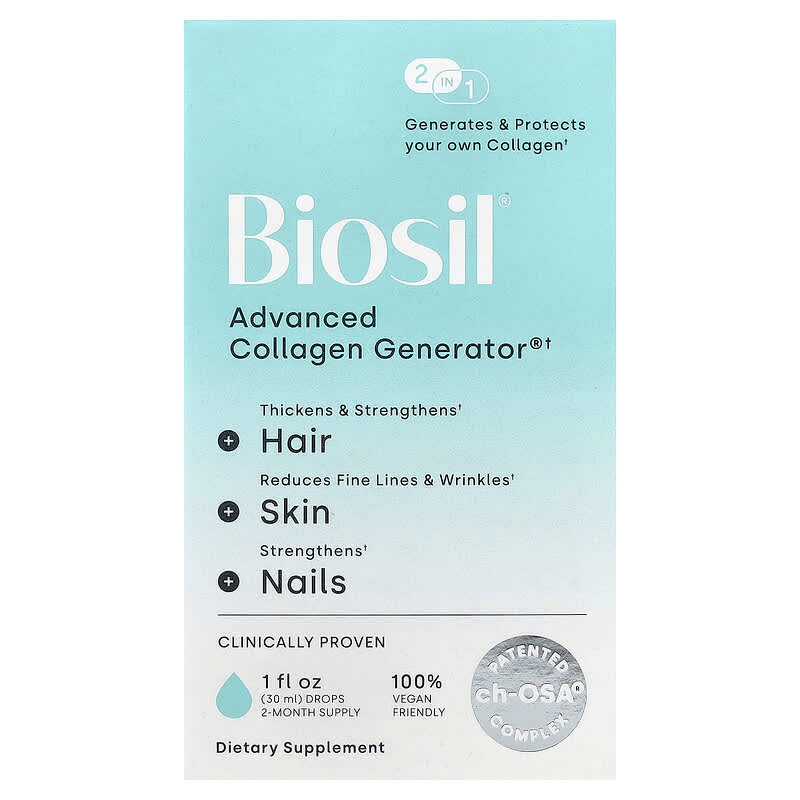
The best supported supplemental form in the human beauty trials is choline-stabilized orthosilicic acid (Barel et al., 2005; Wickett et al., 2007).
What To Watch For
A label that says silica does not tell the whole story. The form, dose, and absorption all matter.
Reviews and absorption studies stress that bioavailability, which means how much the body can take in and use, differs between products (Sripanyakorn et al., 2009; Jurkić et al., 2013).
It also helps to keep supplements in their place. They can support a good plan, but they do not replace good meals, sleep, and enough protein.
A Practical View
For most people, the smart path is basic and calm. Eat enough whole food. Drink good water. Get enough protein.
If you want stronger hair or nails you should also look at the full picture. Low protein intake, illness, stress, poor sleep, and other nutrient gaps can all affect how hair and nails look.

Credit — amazon.com
Before changing your diet, supplements, or health routine, talk with a licensed healthcare professional. For any health concerns or questions about a medical condition, get guidance from a physician or another appropriately trained clinician.
Suggested Posts


Research
Barel, A., Calomme, M., Timchenko, A., De Paepe, K., Demeester, N., Rogiers, V., Clarys, P. and Vanden Berghe, D. (2005) ‘Effect of oral intake of choline-stabilized orthosilicic acid on skin, nails and hair in women with photodamaged skin’, Archives of Dermatological Research, 297(4), pp. 147–153. Available at: https://pubmed.ncbi.nlm.nih.gov/16205932/
Wickett, R.R., Kossmann, E., Barel, A., Demeester, N., Clarys, P., Vanden Berghe, D. and Calomme, M. (2007) ‘Effect of oral intake of choline-stabilized orthosilicic acid on hair tensile strength and morphology in women with fine hair’, Archives of Dermatological Research, 299(10), pp. 499–505. Available at: https://pubmed.ncbi.nlm.nih.gov/17960402/
Nielsen, F.H. (2014) ‘Update on the possible nutritional importance of silicon’, Journal of Trace Elements in Medicine and Biology, 28(4), pp. 379–382. Available at: https://pubmed.ncbi.nlm.nih.gov/25081495/
Jurkić, L.M., Cepanec, I., Pavelić, S.K. and Pavelić, K. (2013) ‘Biological and therapeutic effects of ortho-silicic acid and some ortho-silicic acid-releasing compounds: New perspectives for therapy’, Nutrition & Metabolism, 10(1), p. 2. Available at: https://pubmed.ncbi.nlm.nih.gov/23298332/
de Araújo, L.A., Addor, F. and Campos, P.M.B.G.M. (2016) ‘Use of silicon for skin and hair care: an approach of chemical forms available and efficacy’, Anais Brasileiros de Dermatologia, 91(3), pp. 331–335. Available at: https://pubmed.ncbi.nlm.nih.gov/27438201/
Sripanyakorn, S., Jugdaohsingh, R., Thompson, R.P.H. and Powell, J.J. (2009) ‘The comparative absorption of silicon from different foods and food supplements’, British Journal of Nutrition, 102(6), pp. 825–834. Available at: https://pubmed.ncbi.nlm.nih.gov/19356271/
Pritchard, A., et al. (2024) ‘Silicon Supplementation for Bone Health: An Umbrella Review Attempting to Translate from Animals to Humans’, Nutrients, 16(3), p. 339. Available at: https://pubmed.ncbi.nlm.nih.gov/38337624/
Marcowycz, A., et al. (2015) ‘Digestive absorption of silicon, supplemented as orthosilicic acid-vanillin complex’, Molecular Nutrition & Food Research, 59(8), pp. 1584–1589. Available at: https://pubmed.ncbi.nlm.nih.gov/
Jugdaohsingh, R., et al. (2004) ‘Dietary silicon intake is positively associated with bone mineral density in men and premenopausal women of the Framingham Offspring cohort’, Journal of Bone and Mineral Research, 19(2), pp. 297–307. Available at: https://pubmed.ncbi.nlm.nih.gov/
Rondanelli, M., et al. (2021) ‘Silicon: A neglected micronutrient essential for bone health’, Experimental Biology and Medicine, 246(13), pp. 1500–1511. Available at: https://pubmed.ncbi.nlm.nih.gov/
Wells, K. (2023) Diatomaceous Earth Benefits for Health & Home. Wellness Mama. Available at: https://wellnessmama.com/
Axe, J. (2024) Diatomaceous Earth Benefits, Uses and Side Effects. Dr. Axe. Available at: https://draxe.com/