Key Takeaways
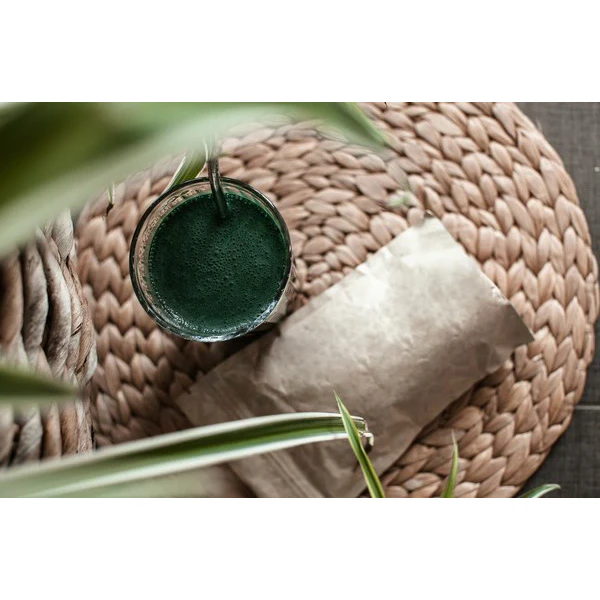
- Spirulina is a blue green algae powder used as a food add on.
- It may help blood fats, blood sugar, and blood pressure in some adults.
- It is not a key food if meals already include meat, eggs, and dairy.
- Clean sourcing matters because algae can hold toxins and metals.
- Some people should skip it, such as those with immune issues.
Spirulina is a blue green algae. Many brands sell it as a green powder or pill. People use it to boost health, yet it is still just one food.
Nutrient Basics
Protein & Amino Acids
Spirulina has protein which is made of small parts called amino acids. Amino acids help build and fix body tissue. Still, spirulina is not a full meal.
Some people add a small amount to a drink after a hard day or hard ride. The goal is support, not main fuel.
Minerals & Pigments
Spirulina can carry a mix of minerals. Some batches have iron. Some also have copper. Copper helps the body use iron in a safe, steady way.
Too much iron on its own can be a stress for the body, so a food with both can be a plus when the rest of the diet is solid.
Spirulina also has a deep blue pigment called phycocyanin. A pigment is a natural color that may act as an antioxidant. Antioxidants help calm wear and tear from stress.
Research reviews often track signs tied to stress in the body, like swelling markers and oxidative stress markers. Some trials show changes in these lab signs with spirulina use (Mousavi et al., 2025).
Digestive Tolerance
Some people feel fine with spirulina. Others get gas, belly pain, or loose stool. A strong taste can also cause gagging. Dose size makes a big change.
A tiny pinch can be fine, while a full spoon can upset the gut. A slow start helps many people avoid issues.
What Research Shows
A meta-analysis published in @nutrients_MDPI and mentioned by @Guardian shows that microalgae supplements may help to mitigate cardiometabolic risk.
— MDPI (@MDPIOpenAccess) March 9, 2026
Read the study: https://t.co/xySyvLsJvH or view the news story: https://t.co/fezxZBy9Mu pic.twitter.com/eYbZd42feB
Blood Pressure
Some adults take spirulina for blood pressure. Blood pressure is the force of blood on artery walls. High blood pressure raises heart risk over time.
A large review of trials found spirulina use was linked with lower blood pressure in adults in some study sets, though results can vary by trial and dose (Shiri et al., 2025).
Another review also looked at systolic and diastolic pressure, which are the top and bottom numbers on a cuff reading (Machowiec et al., 2021).
Blood pressure still ties back to sleep, stress, salt needs and meal base. Many people also do best with steady meals, not all day snacks.
Blood Fats & Blood Sugar
Some trials and reviews look at blood fats, also called lipids. These tests can include total cholesterol, LDL, HDL, and triglycerides.
A GRADE rated review and dose response review found spirulina use was linked with changes in lipid markers in some groups (Rahnama et al., 2023).
An older meta-analysis also found changes in blood lipids across trials, though trial size and quality can vary (Serban et al., 2016).
Some people also use spirulina for blood sugar. Blood sugar is the sugar level in the blood after meals and between meals.
A review of trials in type 2 diabetes found spirulina use was linked with changes in blood sugar markers in some studies (Hatami et al., 2021).
Diet still matters more than any add on. Many people see steadier blood sugar when meals focus on meat, eggs, fish, and full fat dairy, with low sugar and low starch. This also tends to cut cravings and reduce all day eating.
Allergy & Immune Notes
Some people try spirulina for hay fever and nose symptoms. A trial in allergic rhinitis, which is nose swelling from pollen or dust, found symptom changes with spirulina in some people (Cingi et al., 2008).
This may relate to immune signals called cytokines, which are messengers that guide immune action.
Immune action can cut both ways. People with autoimmune disease may react in a bad way.
Autoimmune disease is when the immune system attacks body tissue. Anyone in that group should treat spirulina with care and talk with a clinician.
Best Uses In Real Life
Simple Ways To Take It
Spirulina works best in small amounts. Many people start with a pinch and build up over a week or two.
Here are easy ways to use it (one method can be tried at a time):
- Blend a pinch into cold water with a squeeze of lime.
- Mix into plain, full fat yogurt or kefir for a thick, mild taste.
- Stir into a smoothie made with full fat dairy and a small amount of fruit.
- Add to cooled bone broth, then stir well.
Food Pairing Ideas
Spirulina taste can be sea like. Fat can soften the taste. Full fat yogurt, kefir, or cream can help. Salt can also help, but the salt should be plain and not a fortified salt.
Some people mix spirulina into raw egg yolk and cream, then blend with ice. Egg yolk adds rich fat and key nutrients.
People who do not tolerate raw egg can use gently cooked eggs on the side and keep spirulina in a drink.
Spirulina should not be used as a way to fix a poor diet full of seed oils, refined grains, and sweet drinks.
Those foods can drive swelling and hunger. A better base is meat, eggs, fish, shellfish and full fat dairy, with low starch and no seed oils.
Timing & Amount
A simple plan works well:
- Start with a very small pinch once per day.
- Stay there for 3 to 5 days.
- Move up slowly, only if the gut feels calm.
Some athletes use spirulina near training. A short trial in trained cyclists found changes in some exercise measures after about three weeks of use (Gurney et al., 2022). Results can vary by person, and food base still matters most.
Safety & Buying Tips
Quality & Testing
Spirulina is grown in water. That can be a risk. Algae can pick up heavy metals. Some algae can also carry toxins from other algae in the same water. One toxin group is called microcystins.
Good brands test each batch. Labels may list tests for heavy metals and microcystins. Third party testing is a good sign.
A low price from an unknown source can be a red flag. Powder can also go stale. Light and heat can harm it. A tight lid and a cool spot can help.
Possible Side Effects
Some side effects are mild and pass with a smaller dose. These can include:
- Nausea
- Gas or cramps
- Loose stool
- Headache
Skin issues can also show up in some people. If itching, hives, or swelling starts, use should stop and care should be sought.
Higher Risk Groups
Some people should avoid spirulina unless a clinician guides it. This matters most for:
- Pregnancy or breast feeding
- Autoimmune disease
- Use of immune suppressing drugs
- Use of blood thinners
- A clotting disorder
- Phenylketonuria (PKU), a rare gene condition tied to amino acid use
Spirulina can also shift lab tests in some cases. People with chronic disease should be extra careful with new add ons.
Consult a licensed healthcare professional before starting, stopping, or changing any diet, supplement, medication, or wellness practice. For questions about a medical condition or symptoms, seek advice from a qualified clinician who can assess your situation.
Suggested Posts

Research
Shiri, H. et al. (2025) ‘The Effect of Spirulina Supplementation on Blood Pressure in Adults: A GRADE-Assessed Systematic Review and Meta-Analysis of Randomized Clinical Trials’, Phytotherapy Research. https://doi.org/10.1002/ptr.8377. PMID: 39529406
Mousavi, S. et al. (2025) ‘Spirulina supplementation and its effects on inflammation and oxidative stress: A systematic review and Meta-analysis on randomized clinical trials’, Journal of Functional Foods, 131, 106945. https://doi.org/10.1016/j.jff.2025.106945
Rahnama, I. et al. (2023) ‘The effect of Spirulina supplementation on lipid profile: GRADE-assessed systematic review and dose-response meta-analysis of data from randomized controlled trials’, Pharmacological Research. https://doi.org/10.1016/j.phrs.2023.106802. PMID: 37263369
Serban, M.-C. et al. (2016) ‘A systematic review and meta-analysis of the impact of Spirulina supplementation on plasma lipid concentrations’, Clinical Nutrition. https://doi.org/10.1016/j.clnu.2015.09.007. PMID: 26433766
Hatami, E. et al. (2021) ‘The effect of spirulina on type 2 diabetes: a systematic review and meta-analysis’, Diabetes Therapy. https://doi.org/10.1007/s40200-021-00760-z. PMID: 34178867
Cingi, C. et al. (2008) ‘The effects of spirulina on allergic rhinitis’, European Archives of Oto-Rhino-Laryngology. https://doi.org/10.1007/s00405-008-0642-8. PMID: 18343939
Gurney, T. et al. (2022) ‘Twenty-one days of spirulina supplementation lowers heart rate during submaximal cycling and augments power output during repeated sprints in trained cyclists’, Applied Physiology, Nutrition, and Metabolism, 47(1), pp. 18–26. https://doi.org/10.1139/apnm-2021-0344. PMID: 34399066
Fu, Z. et al. (2025) ‘Effects of spirulina supplementation alone or with exercise on cardiometabolic health in overweight and obese adults: a systematic review and meta-analysis’, Frontiers in Nutrition. https://doi.org/10.3389/fnut.2025.1624982
Machowiec, P. et al. (2021) ‘Effect of Spirulina Supplementation on Systolic and Diastolic Blood Pressure: Systematic Review and Meta-Analysis of Randomized Controlled Trials’, Nutrients, 13(9), 3054. https://doi.org/10.3390/nu13093054. PMID: 34578932
Mohiti, S. et al. (2021) ‘Spirulina supplementation and oxidative stress and pro-inflammatory biomarkers: A systematic review and meta-analysis of controlled clinical trials’, Clinical and Experimental Pharmacology and Physiology. https://doi.org/10.1111/1440-1681.13510. PMID: 33908048
Zarezadeh, M. et al. (2021) ‘Spirulina supplementation and anthropometric indices: A systematic review and meta-analysis of controlled clinical trials’, Phytotherapy Research. https://doi.org/10.1002/ptr.6834. PMID: 32967062
Bohórquez-Medina, S.L. et al. (2021) ‘Impact of spirulina supplementation on obesity-related metabolic disorders: A systematic review and meta-analysis of randomized controlled trials’, NFS Journal, 25, pp. 21–30. https://doi.org/10.1016/j.nfs.2021.09.003
Moradi, S. et al. (2023) ‘The effects of spirulina supplementation on serum iron and ferritin, anemia parameters, and fecal occult blood in adults with ulcerative colitis: A randomized, double-blinded, placebo-controlled trial’, Clinical Nutrition ESPEN. https://doi.org/10.1016/j.clnesp.2023.08.019. PMID: 37739734
Mazloomi, S.M. et al. (2022) ‘The effect of Spirulina sauce, as a functional food, on cardiometabolic risk factors, oxidative stress biomarkers, glycemic profile, and liver enzymes in nonalcoholic fatty liver disease patients: A randomized double-blinded clinical trial’, Food Science & Nutrition. https://doi.org/10.1002/fsn3.2368. PMID: 35154670
Hernández-Lepe, M.A. et al. (2019) ‘Hypolipidemic Effect of Arthrospira (Spirulina) maxima Supplementation and a Systematic Physical Exercise Program in Overweight and Obese Men: A Double-Blind, Randomized, and Crossover Controlled Trial’, Marine Drugs, 17(5), 270. https://doi.org/10.3390/md17050270
Gurney, T. et al. (2020) ‘Spirulina supplementation improves oxygen uptake in arm cycling exercise’, European Journal of Applied Physiology, 120, pp. 2657–2664. https://doi.org/10.1007/s00421-020-04487-2. PMID: 32892320
Kalafati, M. et al. (2010) ‘Ergogenic and antioxidant effects of spirulina supplementation in humans’, Medicine & Science in Sports & Exercise, 42(1), pp. 142–151. https://doi.org/10.1249/MSS.0b013e3181ac7a45. PMID: 20010119
Martínez-Sámano, J. et al. (2018) ‘Spirulina maxima Decreases Endothelial Damage and Oxidative Stress Indicators in Patients with Systemic Arterial Hypertension: Results from Exploratory Controlled Clinical Trial’, Marine Drugs, 16(12), 496. https://doi.org/10.3390/md16120496. PMID: 30544795
Miczke, A. et al. (2016) ‘Effects of spirulina consumption on body weight, blood pressure, and endothelial function in overweight hypertensive Caucasians: a double-blind, placebo-controlled, randomized trial’, European Review for Medical and Pharmacological Sciences, 20(1), pp. 150–156. PMID: 26813468
Park, H.J. et al. (2008) ‘A randomized double-blind, placebo-controlled study to establish the effects of spirulina in elderly Koreans’, Annals of Nutrition & Metabolism. https://doi.org/10.1159/000151486. PMID: 18714150