
Key Takeaways
- Some sugar cravings may start with low salt or fluid loss.
- Sodium helps nerves, muscles and fluid balance work well.
- Heat, sweat, stress and lots of plain water can lower salt.
- Fast sugar may feel helpful when the body feels flat and weak.
- Simple meals with salt and whole foods may calm cravings.
Sugar cravings do not always start with a need for sweets. In some cases, your body may be low on salt and other key minerals and that low state can feel like a push toward sugar.
Salt Is Essential
Sodium Basics
Sodium is an essential mineral. It helps control fluid balance, nerve signals and muscle action in the body (WHO, 2025).
Public health groups often focus on excess sodium, but the same sources also note that the body does need some sodium each day for basic function (CDC, 2025).
When sodium drops, the body can feel off fast. Energy may dip. Focus may get worse.
You may feel shaky, dull or weak. In that state, quick sugar can seem very appealing because it may feel like the fastest way to get relief.
Salt & Taste
Salt intake can shape taste over time. In a classic feeding study, people who ate a low sodium diet for months changed how salty foods tasted and what salt level they liked best (Bertino et al., 1982).
Your brain responds to shifts in taste and body need together. A craving does not always arrive as a neat message that says eat salt.
It may show up as a broad pull toward strong, rich, or fast acting foods. Sweet foods fit that pattern well.
Salt Loss Can Teach Appetite
Human salt appetite is real, but it is not always easy to spot. A review on salt appetite notes that prior sodium loss can increase later drive for salt, even if that drive is shaped by learning and habit as well as body need (Leshem, 2009).
Salt Need Can Feel Like Sugar
Fast Fuel Feels Good
When a person feels drained, the brain often looks for quick help. Sugar is fast, easy and common. That does not prove the body is truly low on sugar.
It may only mean the person wants fast relief from feeling bad. Food craving research shows that cravings are shaped by body state, reward, memory and habit, not just by one nutrient gap (Pelchat, 2002).
Low Salt & Low Energy
Sodium helps keep blood volume and normal cell function steady (Strazzullo and Leclercq, 2014).
When that balance is off, a person may feel flat or foggy. Many people then reach for candy, juice, soda or baked treats because those foods are linked with quick comfort.
The craving can be stronger after long gaps without food, after heat exposure, or after hard exercise.
In these cases, sugar may be the food that gets the blame or the credit, even when the deeper issue started with fluid and salt loss.
Body Signals Can Get Mixed
Salt loss does not always lead to a clean salt craving. Some people do want salty broth, meat or salted eggs.
Others want both sweet and salty foods. Some only notice that they feel off and keep snacking. That is one reason the idea behind this topic makes sense.
A sugar craving might actually be a salt craving for minerals, or at least partly so, when the body is trying to fix a low energy state tied to sodium and fluid balance.
Trace Minerals Need Balance
Minerals can push each other out of balance when dosing is random.
When This Happens Most
Heat & Sweat
Sweat carries sodium out of the body. Sports medicine guidance notes that people who sweat a lot can lose meaningful amounts of both water and electrolytes, which is why rehydration plans often include sodium as well as fluid (Sawka et al., 2007).
This can happen with training, outdoor work, hot weather, or long sauna use. A person who gets home from a hot day and wants soda, ice cream, or fruit juice may not only want sweetness.
Lots Of Plain Water
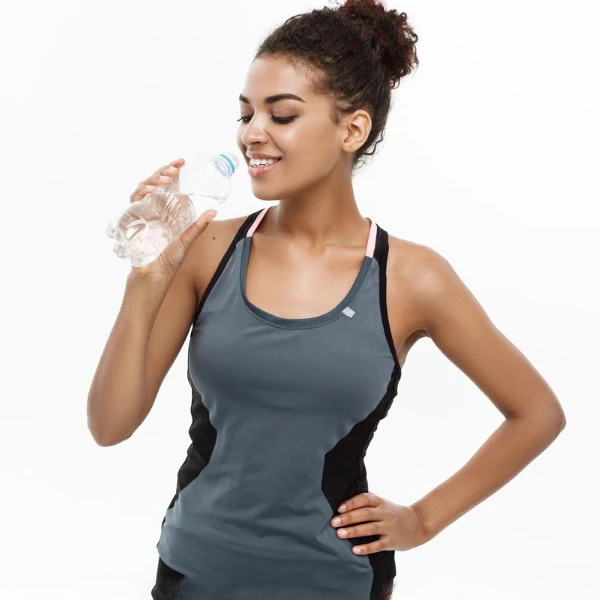
Plain water is useful, but high intake without food or salt can leave some people feeling worse, not better, after heavy sweat loss.
Your body needs both fluid and electrolytes to restore balance after substantial sweating (FDA, 2024). Your body handles water better when minerals are not ignored.
Stress
Stress can change appetite and raise the pull toward quick, tasty foods. Long gaps between meals can do the same.
When those patterns happen along with low salt intake, heat, or sweat, sweet cravings can hit even harder.
Common times this may show up include:
- after a hard workout with only water
- during hot weather
- after hours without food
- after vomiting or diarrhea
- during high stress with poor sleep
Check vs Skip
| Check | Skip |
|---|---|
| Magnesium | Iron supplements |
| Copper | Zinc supplements |
| Selenium | Large mixed doses |
| Iodine from food | Anything Fortified |
Food
Start With A Meal
A real meal is often more helpful than a sweet snack. A meal with protein, salt and fluid may calm the body faster and for longer.
Eggs, beef, yogurt, broth, cheese, fish and other whole foods can help restore both energy and minerals.
For someone who suspects the craving is really about salt, a simple step is to eat a salted meal first and then wait. If the craving drops, that is useful information.
Simple Salt Ideas
Practical options can include salted broth, eggs with salt, beef with salt, plain yogurt with a pinch of salt, or a meal that includes potassium rich foods like meat, dairy, or fruit if those foods are well tolerated.
After heavy sweat loss, heat, or illness sodium and potassium both support normal hydration and nerve and muscle function (CDC, 2025).
Watch The Pattern
It helps to look for clues:
- Does the craving show up after sweating?
- Does it come with headache, weakness, or lightheadedness?
- Does a salty meal calm it better than sweets?
- Does it get worse after lots of plain water?
Patterns like these do not prove a diagnosis, but they can point to a useful next step.
Not Every Craving
Some cravings are tied to habit, reward, poor sleep, stress, or blood sugar swings after ultra-processed food. Research on cravings shows that there is no single cause for all cases (Hill, 2007).
Sweet cravings can sometimes be a sign that the body feels under powered and salt loss is one reason that can happen.
Red Flags
Severe weakness, fainting, confusion, chest pain, severe vomiting, or major fluid loss need prompt medical care. Those signs are bigger than a food craving.
Before changing your diet, supplements, or health routine, talk with a licensed healthcare professional. For any health concerns or questions about a medical condition, get guidance from a physician or another appropriately trained clinician.
Suggested Posts
Evidence Limits
Research
Bertino, M., Beauchamp, G.K. and Engelman, K., 1982. Long-term reduction in dietary sodium alters the taste of salt. American Journal of Clinical Nutrition, 36(6), pp.1134-1144. Available at: https://www.sciencedirect.com/science/article/pii/S0002916523157649
Centers for Disease Control and Prevention, 2025. About sodium and health. Available at: https://www.cdc.gov/salt/about/index.html
Centers for Disease Control and Prevention, 2025. Effects of sodium and potassium. Available at: https://www.cdc.gov/salt/sodium-potassium-health/index.html
Food and Drug Administration, 2024. Sodium in your diet. Available at: https://www.fda.gov/food/nutrition-education-resources-materials/sodium-your-diet
Hill, A.J., 2007. The psychology of food craving. Proceedings of the Nutrition Society, 66(2), pp.277-285. Available at: https://pubmed.ncbi.nlm.nih.gov/17544561/
Leshem, M., 2009. Biobehavior of the human love of salt. Neuroscience and Biobehavioral Reviews, 33(1), pp.1-17. Available at: https://pubmed.ncbi.nlm.nih.gov/18708089/
Pelchat, M.L., 2002. Of human bondage: food craving, obsession, compulsion, and addiction. Physiology and Behavior, 76(3), pp.347-352. Available at: https://pubmed.ncbi.nlm.nih.gov/12117571/
Sawka, M.N., Burke, L.M., Eichner, E.R., Maughan, R.J., Montain, S.J. and Stachenfeld, N.S., 2007. Exercise and fluid replacement. Medicine and Science in Sports and Exercise, 39(2), pp.377-390. Available at: https://pubmed.ncbi.nlm.nih.gov/17277604/
Strazzullo, P. and Leclercq, C., 2014. Sodium. Advances in Nutrition, 5(2), pp.188-190. Available at: https://pmc.ncbi.nlm.nih.gov/articles/PMC3951800/
World Health Organization, 2025. Sodium reduction. Available at: https://www.who.int/news-room/fact-sheets/detail/sodium-reduction
McCance, R.A., 1936. Experimental sodium chloride deficiency in man. The Lancet.
Drewnowski, A., Kurth, C.L. and Rahaim, J.E., 1991. Taste preferences in human obesity: environmental and familial factors. American Journal of Clinical Nutrition.
Leshem, M., Abutbul, A. and Eilon, R., 1999. Salt appetite in humans: the role of experience. Physiology & Behavior.
Beauchamp, G.K., Bertino, M. and Engelman, K., 1987. Failure to compensate decreased dietary sodium with increased table salt usage. Journal of the American Medical Association.
Weingarten, H.P. and Elston, D., 1990. The phenomenology of food cravings. Appetite.
Drewnowski, A., 1997. Taste preferences and food intake. Annual Review of Nutrition.
Mattes, R.D., 1997. Physiologic responses to sensory stimulation by food: nutritional implications. Journal of the American Dietetic Association.
Wurtman, R.J. and Wurtman, J.J., 1989. Carbohydrate craving, obesity and brain serotonin. Appetite.
Benton, D., 2010. The plausibility of sugar addiction and its role in obesity and eating disorders. Clinical Nutrition.