Key Takeaways
- Tallow is a stable cooking fat made from rendered beef or mutton fat.
- It gives energy, supports heat based cooking, and adds rich taste.
- Beef tallow has mostly saturated and monounsaturated fats, with very little water.
- Skin use may help dryness, though strong human studies are still limited.
- Quality, source, and how you cook with it shape the final result.
What Tallow Is
Rendered Animal Fat
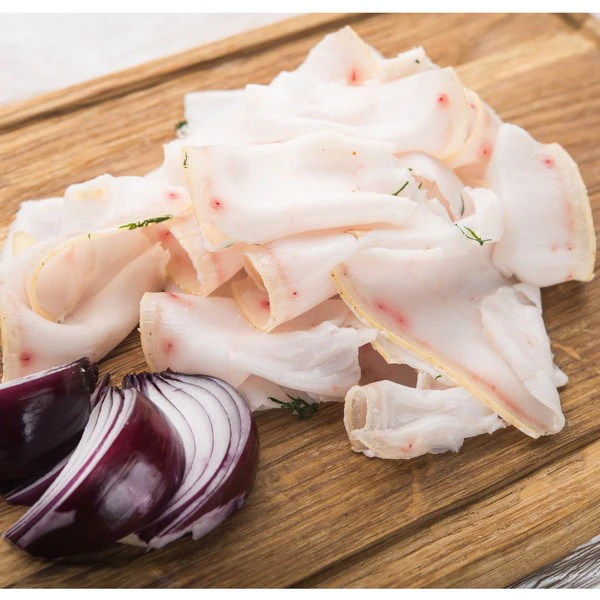
Tallow is rendered animal fat, most often from beef and sometimes from mutton. Rendering is a slow melt and strain process that turns raw fat into a firm cooking fat with a long shelf life (Britannica, 2023).
At room temp, tallow is solid or semi solid. It melts when warm, which makes it easy to use in a pan, in roasts, or in homemade skin balms. People have used it for food, soap, candles, and skin care for a very long time. That long use does not prove every health claim, though it does show tallow is not some new trend.
Why People Use It Again
Many home cooks now want fats that are less refined and less prone to breaking down in high heat. Tallow fits that need well because it has low water content and stays firm and stable in normal kitchen use (Talbot, 2011). It also gives a deep savory taste that works well with eggs, burgers, potatoes, and roast meat.
Tallow Nutrition
Main Fat Types
Beef tallow is made up mostly of saturated fat and monounsaturated fat, with small amounts of polyunsaturated fat. FoodData Central shows tallow is almost all fat, so it gives dense energy in a small amount (USDA, 2019).
One fat in tallow gets a lot of attention. That fat is stearic acid. Stearic acid has not shown the same blood lipid effect seen with some other saturated fats in all studies. In a well known feeding study, stearic acid had a neutral effect on plasma cholesterol compared with other fats (Bonanome and Grundy, 1988).
A later review also found that different saturated fats can act in different ways, rather than as one single group (Panth et al., 2018).
Vitamins & Minor Nutrients
Tallow is not a broad vitamin source like liver, egg yolks, or shellfish. Still, animal fats can carry small amounts of fat soluble vitamins, which are vitamins that mix with fat and are best absorbed with fat. These include vitamins A, D, E, and K, though the exact amount can vary by animal diet, cut, and processing (Gilbert, 2013; Booth, 2012).
Grass fed beef fat may also differ from grain fed fat in fatty acid mix, though the gap in day to day diet impact can be smaller than many ads suggest (Nogoy et al., 2022).
Health Effects
Blood Lipids & Heart Risk
Claims about tallow often swing too far in both directions. It is not fair to treat all saturated fats as the same. It is also not fair to call any single fat a cure. Large reviews have found that the link between saturated fat intake and heart disease is weaker and less clear than older public advice suggested (Siri Tarino et al., 2010; Chowdhury et al., 2014).
That does not prove every person will respond the same way. Some people see a rise in LDL after a big jump in saturated fat. Others do not. Whole diet, body weight, insulin resistance, and food quality all shape the result. A useful middle ground is simple. Use tallow as a real food fat in place of highly refined oils or heavily processed spreads, then watch how you feel and how your own lab work changes over time.
Heat Stability
Tallow is valued for frying and roasting because it is more heat stable than many oils rich in fragile polyunsaturated fat. A stable fat is less likely to break down during cooking.
That does not give you a free pass to burn food. Any fat can form unwanted compounds when pushed too hard for too long. Very high heat, smoke, and repeated deep frying will lower quality over time.
Skin Use
Tallow is also used on skin in soaps, creams, and homemade balms. A recent scoping review found interest in tallow for skin use is growing, but high quality human evidence is still limited (Russell et al., 2024). That said, some people with dry skin like its thick feel and simple ingredient list. Patch testing first is wise, since any skin product can irritate some people.
Best Uses
In The Kitchen
Tallow works best where a firm fat helps texture or heat control. Good uses include pan frying eggs, searing burgers, roasting root veg, or greasing a cast iron pan.
You can also mix a spoon of tallow into ground beef before cooking if the meat is very lean. That helps with taste and keeps the meat from drying out.
Use small amounts at first if you are new to it. A teaspoon or two in a meal is enough for most people to learn how it cooks and tastes.
Around The Home
Outside the kitchen, tallow has been used in soap, candles, and leather care. Some people also use it in simple skin balms, often mixed with beeswax.
Choose clean, well strained tallow for home use. Store it in a sealed jar away from heat and light. In the fridge it can last a long time, though smell and taste should guide you.
Choosing Good Tallow
What To Look For
Good tallow should smell mild and clean, not sharp, sour, or burnt. The color can range from white to pale yellow. A deeper yellow tone may reflect the animal diet. Look for a product with few or no extra ingredients. Many people prefer tallow from grass fed cattle, though basic freshness and careful rendering are often more important than label claims alone (Nogoy et al., 2022).
Avoid products with added flavorings, seed oils or long ingredient lists. Pure rendered fat is the point.
When To Be Careful
Commercial fried foods made with animal fat can still be poor food if they are heavily breaded, overcooked, or fried over and over in the same vat. The fat source does not erase the harm of harsh processing. Some processed foods also use fats in ways that can form trans fats or oxidized fats during industrial treatment. Those products are very different from fresh tallow you use once at home in a pan (Nagpal et al., 2021).
Before changing your diet, supplements, or health routine, talk with a licensed healthcare professional. For any health concerns or questions about a medical condition, get guidance from a physician or another appropriately trained clinician.
FAQs
Is tallow healthier than seed oils?
Tallow is less processed than many seed oils and is usually more stable in heat. That makes it a solid choice for roasting and frying at home. Health effects still depend on the full diet, portion size, and how the food is cooked.
Can you cook with tallow every day?
Many people can use tallow often as part of a varied diet built on whole foods. Daily use still needs balance, since tallow is very energy dense and easy to overuse.
Does tallow raise cholesterol?
Some people may see changes in blood lipids when they eat more saturated fat. Stearic acid seems more neutral than some other saturated fats, but response can vary from person to person.
Is beef tallow good for skin?
Some people find it soothing on dry skin because it is rich and occlusive. Human research is still limited, so it is smart to patch test and stop if irritation starts.
How do you store tallow?
Keep it in a sealed jar away from heat, air, and bright light. For longer storage, place it in the fridge and use a clean spoon each time.
Research
Bonanome, A. and Grundy, S., 1988. Effect of dietary stearic acid on plasma cholesterol and lipoprotein levels. New England Journal of Medicine. Available at: https://www.nejm.org/doi/full/10.1056/NEJM198806023182302
Encyclopaedia Britannica, 2023. Tallow. Available at: https://www.britannica.com/science/tallow
Talbot, G., 2011. Sources of saturated and other dietary fats. Reducing Saturated Fats in Foods, pp.47 to 76. Available at: https://doi.org/10.1533/9780857092472.1.47
U.S. Department of Agriculture, 2019. FoodData Central, beef tallow nutrition data. Available at: https://fdc.nal.usda.gov/
Panth, N., Abbott, K.A., Dias, C.B., Wynne, K. and Garg, M.L., 2018. Differential effects of medium and long chain saturated fatty acids on blood lipid profile, a systematic review and meta analysis. The American Journal of Clinical Nutrition, 108(4), pp.675 to 687. Available at: https://doi.org/10.1093/ajcn/nqy167
Gilbert, C., 2013. What is vitamin A and why do we need it. Community Eye Health, 26(84), p.65. Available at: https://www.ncbi.nlm.nih.gov/pmc/articles/PMC3936685/
Booth, S.L., 2012. Vitamin K, food composition and dietary intakes. Food and Nutrition Research, 56. Available at: https://doi.org/10.3402/fnr.v56i0.5505
Nogoy, K.M.C., Sun, B., Shin, S., Lee, Y., Zi Li, X., Choi, S.H. and Park, S., 2022. Fatty acid composition of grain and grass fed beef and their nutritional value and health implication. Food Science of Animal Resources, 42(1), pp.18 to 33. Available at: https://doi.org/10.5851/kosfa.2021.e73
Siri Tarino, P., Sun, Q., Hu, F. and Krauss, R., 2010. Meta analysis of prospective cohort studies evaluating the association of saturated fat with cardiovascular disease. American Journal of Clinical Nutrition, 91(3), pp.535 to 546. Available at: https://academic.oup.com/ajcn/article/91/3/535/4597110
Chowdhury, R., Warnakula, S., Kunutsor, S., Crowe, F., Ward, H.A., Johnson, L., Franco, O.H., Butterworth, A.S., Forouhi, N.G., Thompson, S.G., Khaw, K.T., Mozaffarian, D. and Danesh, J., 2014. Association of dietary, circulating, and supplement fatty acids with coronary risk, a systematic review and meta analysis. Annals of Internal Medicine. Available at: https://www.acpjournals.org/doi/10.7326/M13-1788
Russell, M.F., Sandhu, M., Vail, M., Haran, C., Batool, U., Leo, J., Russell, M. and Leo, J., 2024. Tallow, rendered animal fat, and its biocompatibility with skin, a scoping review. Cureus, 16(5). Available at: https://www.cureus.com/articles/256700-tallow-rendered-animal-fat-and-its-biocompatibility-with-skin-a-scoping-review
Nagpal, T., Sahu, J.K., Khare, S.K., Bashir, K. and Jan, K., 2021. Trans fatty acids in food, a review on dietary intake, health impact, regulations and alternatives. Journal of Food Science, 86(12), pp.5159 to 5174. Available at: https://doi.org/10.1111/1750-3841.15977
Barendse, W., 2014. Should animal fats be back on the table. A critical review of the human health effects of animal fat. Animal Production Science, 54, pp.831 to 855. Available at: https://doi.org/10.1071/AN13536
Calder, P.C., 2015. Functional roles of fatty acids and their effects on human health. Journal of Parenteral and Enteral Nutrition, 39, pp.18S to 32S. Available at: https://doi.org/10.1177/0148607115595980
Denke, M., 1994. Role of beef and beef tallow, an enriched source of stearic acid, in a cholesterol lowering diet. The American Journal of Clinical Nutrition, 60(6), pp.1044S to 1049S. Available at: https://doi.org/10.1093/ajcn/60.6.1044s
Shahidi, F., 2016. Tocopherols and tocotrienols in common and emerging dietary sources, occurrence, applications, and health benefits. International Journal of Molecular Sciences, 17(10). Available at: https://doi.org/10.3390/ijms17101745
Traber, M.G., 2014. Vitamin E inadequacy in humans, causes and consequences. Advances in Nutrition, 5(5), pp.503 to 514. Available at: https://doi.org/10.3945/an.114.006254
Alshahrani, F. and Aljohani, N., 2013. Vitamin D, deficiency, sufficiency and toxicity. Nutrients, 5(9), pp.3605 to 3616. Available at: https://doi.org/10.3390/nu5093605
Rizvi, S., Raza, S.T., Ahmed, F., Ahmad, A., Abbas, S. and Mahdi, F., 2014. The role of vitamin E in human health and some diseases. Sultan Qaboos University Medical Journal, 14(2), p.e157. Available at: https://www.ncbi.nlm.nih.gov/pmc/articles/PMC3997530/
Cummins, E.J., Colgan, S.F., Grace, P.M., Fry, D.J., McDonnell, K.P. and Ward, S.M., 2002. Human risks from the combustion of SRM derived tallow in Ireland. Human and Ecological Risk Assessment, 8(5), pp.1177 to 1192. Available at: https://doi.org/10.1080/1080-700291905873
Chujo, H., Yamasaki, M., Nou, S., Koyanagi, N., Tachibana, H. and Yamada, K., 2003. Effect of conjugated linoleic acid isomers on growth factor induced proliferation of human breast cancer cells. Cancer Letters, 202(1), pp.81 to 87. Available at: https://doi.org/10.1016/S0304-3835(03)00478-6
Shiraishi, R., Iwakiri, R., Fujise, T., Kuroki, T., Kakimoto, T., Takashima, T., Sakata, Y., Tsunada, S., Nakashima, Y., Yanagita, T. and Fujimoto, K., 2010. Conjugated linoleic acid suppresses colon carcinogenesis in azoxymethane pretreated rats with long term feeding of diet containing beef tallow. Journal of Gastroenterology, 45(6), pp.625 to 635. Available at: https://doi.org/10.1007/s00535-010-0206-8
Szpicer, A., Onopiuk, A., Półtorak, A. and Wierzbicka, A., 2019. Influence of tallow replacement by oat beta glucan and canola oil on the fatty acid and volatile compound profiles of low fat beef burgers. CyTA Journal of Food, 17(1), pp.926 to 936. Available at: https://doi.org/10.1080/19476337.2019.1674924
Zhang, D., Wang, T., Yang, G., Hu, J., Meng, P. and Liu, W., 2024. Composition, thermal, and microstructural characteristics of mutton tallows in comparison with beef tallows. European Journal of Lipid Science and Technology. Available at: https://doi.org/10.1002/ejlt.202400037
Melenotte, C., Brouqui, P. and Botelho Nevers, E., 2012. Severe measles, vitamin A deficiency, and the Roma community in Europe. Emerging Infectious Diseases, 18(9), pp.1537 to 1539. Available at: https://doi.org/10.3201/eid1809.111701