Key Takeaways
- Sea moss provides a wide range of trace minerals needed for daily body function
- Natural iodine in sea moss supports normal thyroid hormone balance
- Antioxidant compounds in sea moss help protect cells from oxidative stress
- Whole sea moss gel offers a simple way to increase mineral intake
- Small daily servings can provide concentrated nutrients from the ocean
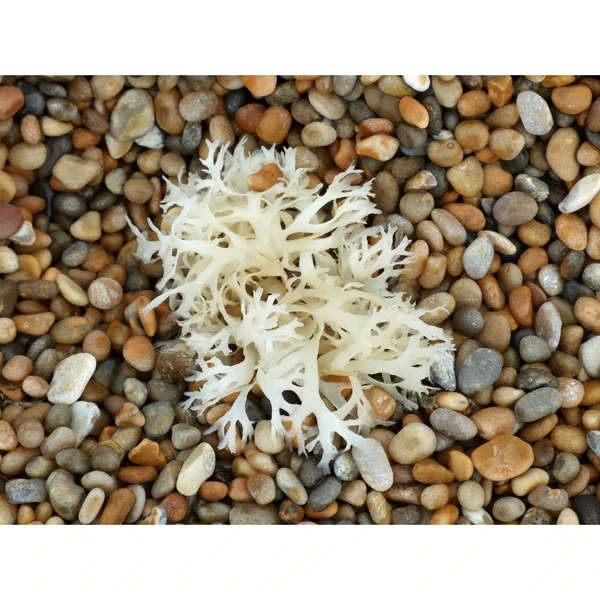
Sea moss is a type of red sea algae that grows in clean coastal waters. For centuries it has been used as a whole food in island cultures and coastal regions.
Its value comes from a dense supply of minerals, vitamins, and natural antioxidant compounds. These nutrients support core body systems such as the thyroid, immune system, and cellular repair.
Mineral Density
Trace Minerals
Sea moss absorbs minerals from seawater while it grows. This process allows the plant to hold many essential nutrients that the human body also requires.
Researchers examining edible seaweeds found that marine algae contain a wide range of minerals including iodine, potassium, magnesium, calcium, and selenium (MacArtain, 2007).
These minerals play critical roles in nerve signals, muscle contraction, and fluid balance throughout the body.
Unlike many processed foods, sea moss provides these minerals in their natural whole food form.
Whole foods often allow the body to absorb nutrients more efficiently because they come with natural cofactors and enzymes.
Electrolytes For Fluid Balance
Minerals such as potassium and magnesium act as electrolytes. Electrolytes help regulate water movement in and out of cells.
Marine algae products have been shown to contain meaningful amounts of these minerals, which contribute to hydration and normal muscle function (Wells et al., 2017).
Natural Iodine For Thyroid Support
Iodine is one of the most important nutrients found in sea vegetables. The thyroid gland uses iodine to produce thyroid hormones that regulate metabolism, body temperature, and energy production.
Studies on edible seaweed consumption show that seaweed intake can improve iodine status in people with low intake (Combet et al., 2014).
Because iodine levels in land foods can vary widely depending on soil quality, sea vegetables often provide a reliable source.
Natural Vitamin Content
Sea moss contains several B vitamins that support metabolism and nervous system function. These nutrients help convert food into usable energy for cells.
Edible seaweeds have been identified as natural sources of B vitamins and other micronutrients important for human nutrition (Burtin, 2003).
Sea moss also contains vitamin E compounds and other protective plant chemicals. Vitamin E acts as an antioxidant.
Antioxidants protect cell membranes from damage caused by unstable molecules known as free radicals.
Marine plant foods contain many bioactive compounds that support normal cellular defense systems (Holdt & Kraan, 2011).
Some edible seaweeds also contain vitamin K. Vitamin K helps regulate normal blood clotting and contributes to bone health.
Although sea moss is not usually eaten in large quantities, even small servings can add meaningful micronutrients to the diet.
Antioxidant Compounds In Sea Moss
Marine Polyphenols
Sea moss contains natural compounds known as polyphenols. Polyphenols help neutralize free radicals that form during normal metabolism and environmental stress.
Research into marine algae shows that many seaweed species contain antioxidant molecules that may help protect tissues from oxidative damage (Cornish & Garbary, 2010).
Protective Plant Pigments
Red sea algae, including species commonly called sea moss, contain pigments that help the plant survive intense sunlight and saltwater conditions.
These pigments act as natural protective compounds. When consumed as food, they may contribute to the antioxidant capacity of the diet.
Scientists studying edible seaweeds report that these marine plants contain several bioactive compounds linked to antioxidant activity (Cherry et al., 2019).
Support For Cellular Health
Antioxidants help protect proteins, fats, and DNA from damage caused by oxidative stress. Dietary antioxidants from whole foods contribute to the body’s natural repair and defense systems.
Marine algae are being studied for their potential role as functional foods due to their antioxidant and nutrient content (Shannon & Abu-Ghannam, 2019).
Ways To Use Sea Moss
Sea moss is usually prepared as a gel after soaking and blending the dried plant. This method keeps the food close to its natural state.
Sea Moss Gel
Typical preparation steps include:
- Rinse dried sea moss to remove sea salt and debris
- Soak in clean water for 12 to 24 hours
- Blend with fresh water until smooth
- Store as a thick gel in the refrigerator
One to two tablespoons are often added to smoothies, yogurt, soups, or drinks.
Simple Mineral Drink
A common preparation includes:
- 1 tablespoon sea moss gel
- Fresh coconut water
- A small pinch of unrefined mineral salt
This creates a mineral rich drink that provides electrolytes and trace nutrients.
Pairing With Nutrient Dense Meals
Sea moss is often used alongside nutrient dense foods such as eggs, seafood and grass fed meats. Combining mineral rich sea plants with animal foods can help provide a broad spectrum of nutrients from whole foods.
Consult a licensed healthcare professional before starting, stopping, or changing any diet, supplement, medication, or wellness practice. For questions about a medical condition or symptoms, seek advice from a qualified clinician who can assess your situation.
Suggested Posts


Research
Burtin, P., 2003. Nutritional value of seaweeds. Electronic Journal of Environmental, Agricultural and Food Chemistry. https://citeseerx.ist.psu.edu/
Cherry, P. et al., 2019. Marine algae as a source of nutraceuticals: current status and future trends. Journal of Applied Phycology. https://link.springer.com/
Combet, E. et al., 2014. Low-level seaweed supplementation improves iodine status in iodine-insufficient women. British Journal of Nutrition. https://www.cambridge.org/
Cornish, M.L. and Garbary, D.J., 2010. Antioxidants from macroalgae: potential applications in human health and nutrition. Algae. https://www.e-algae.org/
Holdt, S.L. and Kraan, S., 2011. Bioactive compounds in seaweed: functional food applications and legislation. Journal of Applied Phycology. https://link.springer.com/
MacArtain, P. et al., 2007. Nutritional value of edible seaweeds. Nutrition Reviews. https://academic.oup.com/
Shannon, E. and Abu-Ghannam, N., 2019. Seaweeds as nutraceuticals for health and nutrition. Phycologia. https://www.tandfonline.com/
Wells, M.L. et al., 2017. The health benefits of seaweed and seaweed extracts. Nutrition Reviews. https://academic.oup.com/
Bath, S.C., Steer, C.D., Golding, J., Emmett, P. and Rayman, M.P., 2013. Effect of inadequate iodine status in UK pregnant women on cognitive outcomes in their children: Results from the Avon Longitudinal Study of Parents and Children (ALSPAC). The Lancet, 382(9889), pp.331–337. https://doi.org/
Guo, F., Huang, C., Cui, Y., Momma, H., Niu, K. and Nagatomi, R., 2019. Dietary seaweed intake and depressive symptoms in Japanese adults: A prospective cohort study. Nutrition Journal, 18(1), 58. https://doi.org/
Panahi, Y., Badeli, R., Karami, G.-R., Badeli, Z. and Sahebkar, A., 2015. A randomized controlled trial of 6-week Chlorella vulgaris supplementation in patients with major depressive disorder. Complementary Therapies in Medicine, 23(4), pp.598–602. https://doi.org/
Combet, E., Ma, Z.F., Cousins, F., Thompson, B. and Lean, M.E.J., 2014. Low-level seaweed supplementation improves iodine status in iodine-insufficient women. British Journal of Nutrition. https://doi.org/
Teas, J., Hurley, T.G., Hebert, J.R., Franke, A.A. and Sepkovic, D.W., 2009. Dietary seaweed modifies estrogen and phytoestrogen metabolism in healthy postmenopausal women. Journal of Nutrition. https://doi.org/
Teas, J., Braverman, L.E. and Kurzer, M.S., 2004. Seaweed and soy: companion foods in Asian cuisine and their effects on thyroid function in American women. Journal of Medicinal Food. https://doi.org/
Dawczynski, C., Schubert, R. and Jahreis, G., 2007. Amino acids, fatty acids, and dietary fibre in edible seaweed products. Food Chemistry. https://doi.org/
Ortiz, J., Romero, N., Robert, P., Araya, J., Lopez-Hernandez, J., Bozzo, C., Navarrete, E., Osorio, A. and Rios, A., 2006. Dietary fiber, amino acid, fatty acid and tocopherol contents of the edible seaweeds Ulva lactuca and Durvillaea antarctica. Food Chemistry. https://doi.org/
Heffernan, N., Smyth, T.J., FitzGerald, R.J., Soler-Vila, A. and Brunton, N., 2014. Antioxidant activity and phenolic content of pressurised liquid and solid–liquid extracts from four Irish origin macroalgae. International Journal of Food Science & Technology, 49(7), pp.1765–1772. https://doi.org/
Rajauria, G., Jaiswal, A.K., Abu-Ghannam, N. and Gupta, S., 2010. Antimicrobial, antioxidant and free radical-scavenging capacity of brown seaweed extracts. International Journal of Food Science & Technology. https://doi.org/
Cofrades, S., López-López, I., Bravo, L., Ruiz-Capillas, C. and Jiménez-Colmenero, F., 2010. Nutritional and antioxidant properties of different brown and red Spanish edible seaweeds. Food Science and Technology International. https://doi.org/
Cornish, M.L. and Garbary, D.J., 2010. Antioxidants from macroalgae: potential applications in human health and nutrition. Algae. https://doi.org/
Cornish, M.L., Critchley, A.T. and Mouritsen, O.G., 2017. Consumption of seaweeds and the human brain. Journal of Applied Phycology, 29(5), pp.2377–2398. https://doi.org/
Cherry, P. et al., 2019. Marine algae as a source of nutraceuticals: current status and future trends. Journal of Applied Phycology. https://doi.org/
Shannon, E. and Abu-Ghannam, N., 2019. Seaweeds as nutraceuticals for health and nutrition. Phycologia. https://doi.org
Brown, E.M., Allsopp, P.J., Magee, P.J., Gill, C.I., Nitecki, S., Strain, C.R. and McSorley, E.M., 2014. Seaweed and human health. Nutrition Reviews. https://doi.org
Wells, M.L. et al., 2017. The health benefits of seaweed and seaweed extracts. Nutrition Reviews. https://doi.org/1
Gupta, S. and Abu-Ghannam, N., 2011. Bioactive potential and possible health effects of edible brown seaweeds. Trends in Food Science & Technology. https://doi.org/
Holdt, S.L. and Kraan, S., 2011. Bioactive compounds in seaweed: functional food applications and legislation. Journal of Applied Phycology. https://doi.org/
Mohamed, S., Hashim, S.N. and Rahman, H.A., 2012. Seaweeds: A sustainable functional food for complementary and alternative therapy. Trends in Food Science & Technology, 23(2), pp.83–96. https://doi.org/
Alghazwi, M., Kan, Y.Q., Zhang, W., Gai, W.P., Garson, M.J. and Smid, S., 2016. Neuroprotective activities of natural products from marine macroalgae during 1999–2015. Journal of Applied Phycology, 28(6), pp.3599–3616. https://doi.org/1
Barbosa, M., Valentão, P. and Andrade, P., 2014. Bioactive compounds from macroalgae in the new millennium: Implications for neurodegenerative diseases. Marine Drugs, 12(9), pp.4934–4972. https://doi.org/1
Tamama, K., 2021. Potential benefits of dietary seaweeds as protection against COVID-19. Nutrition Reviews, 79(7), pp.814–823. https://doi.org/
MacArtain, P., Gill, C.I., Brooks, M., Campbell, R. and Rowland, I.R., 2007. Nutritional value of edible seaweeds. Nutrition Reviews. https://doi.org/
Burtin, P., 2003. Nutritional value of seaweeds. Electronic Journal of Environmental, Agricultural and Food Chemistry