Key Takeaways
- Potassium helps nerves, muscles, fluid balance, and heart rhythm.
- It works with sodium to keep blood pressure in a healthy range.
- Meat, fish, milk, and broth can all add useful potassium.
- Low potassium may cause weakness, cramps, or an uneven heartbeat.
- Whole foods are the best first step for getting more potassium.
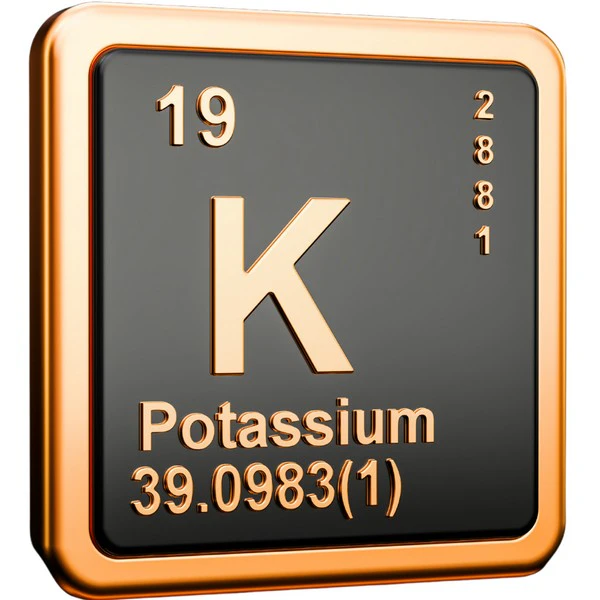
Potassium is a mineral the body needs each day. It helps cells hold the right amount of fluid, helps nerves send signals, and helps muscles squeeze and relax.
This mineral also works with sodium. When that balance is off, blood pressure, muscle function, and heart rhythm can suffer (Palmer, 2015).
What Potassium Does
Most potassium stays inside cells. Sodium stays more in the fluid outside cells. That split helps move water to the right place and keeps cells working as they should (Palmer, 2015).
The kidneys help keep this level steady. They adjust how much potassium leaves in urine from day to day (Palmer, 2015).
Nerves & Muscles
Nerves use tiny electrical signals to send messages. Potassium helps reset the nerve after each signal so the next one can fire.
Muscles need that same system. That includes leg muscles, gut muscles, and the heart. When potassium drops too low, a person may feel weak, tired, shaky, or crampy.
In severe cases, heart rhythm can change (Weaver, 2013; Palmer, 2015). Potassium helps the body handle sodium. It also helps blood vessels relax.
This is one reason why good potassium intake is tied to better blood pressure in many studies (Adrogué and Madias, 2007; Whelton et al., 1997).
Main Benefits
Healthier Blood Pressure
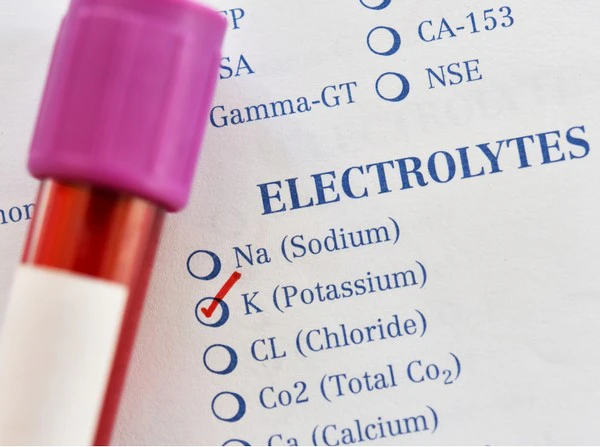
A meta-analysis is a study that pools results from many trials. In one well known meta-analysis, oral potassium lowered blood pressure on average, with a bigger effect in people who already had high blood pressure (Whelton et al., 1997).
A later systematic review also found that higher potassium intake reduced blood pressure in adults with hypertension, which is the medical term for high blood pressure (Aburto et al., 2013).
Lower Stroke Risk
Potassium intake has also been linked with stroke risk. In the same review by Aburto and coauthors, higher potassium intake was tied to a lower risk of stroke (Aburto et al., 2013).
Another meta-analysis of long-term studies found a similar link between higher intake and lower stroke risk (D’Elia et al., 2011).
Potassium helps muscles contract and then relax. That is why low levels may lead to weakness, low energy, cramps, or constipation.
The heart is also a muscle, so large drops or rises in potassium can be serious (Palmer, 2015). This does not mean more is always better.
Very high potassium can also be dangerous, mainly in people with kidney disease or in people using drugs that reduce potassium loss.
Best Food Sources
Whole foods are the best place to start. Potassium comes in both animal and plant foods.
If you eat few carbs, low sugar choices such as broth, dairy, meat, fish and some lower carb vegetables may be easier to fit into meals.
If you prefer more animal foods, there are still good options. Animal foods give potassium along with protein and other minerals.
Good choices include:
- Beef, lamb and pork
- Fish such as salmon, sardines, cod and halibut
- Shellfish
- Milk and plain yogurt
- Bone broth
- Organ meats such as liver
Fish and dairy can help raise potassium without relying on fortified foods. Meat also adds potassium, though the amount can vary by cut and by serving size.
Simple Meal Ideas
A few easy ways to get more potassium from whole foods:
- Eggs with yogurt on the side
- Beef patty with broth
- Salmon with cooked squash
- Sardines with cucumber and kefir
- Roast lamb with a side of mushrooms
These meals also help reduce grazing. Spacing meals can make eating feel simpler for people who do well with one to three meals per day.
How To Use Potassium Well
Think About Sodium Too
Potassium does not work alone. The body needs a good sodium potassium balance. A diet high in packaged food may push sodium up while leaving potassium low.
That mix has been tied to worse blood pressure outcomes (Aaron and Sanders, 2013; Adrogué and Madias, 2007). Whole foods tend to make that balance easier to manage.
Hydration
Heavy sweating, vomiting, or diarrhea can lower potassium. So can some drugs, such as some water pills. Poor intake on top of fluid loss can make symptoms show up faster (Palmer, 2015).
This is one reason why broth, mineral-rich meals, and enough fluid can help during hard training, heat, or illness. Still, severe symptoms need medical care.
Supplements Need Care
Potassium pills are not a casual add-on for everyone. They can be risky in people with kidney disease or people taking medicines that hold onto potassium. A person with muscle weakness, heart flutters, fainting, or ongoing vomiting should not try to fix that with food alone. That needs prompt medical advice.
Before changing your diet, supplements, or health routine, talk with a licensed healthcare professional. For any health concerns or questions about a medical condition, get guidance from a physician or another appropriately trained clinician.
Suggested Posts

Research
Palmer, B.F. (2015) ‘Regulation of Potassium Homeostasis’, Clinical Journal of the American Society of Nephrology, 10(6), pp. 1050-1060. Available at: https://pubmed.ncbi.nlm.nih.gov/24721891/
Weaver, C.M. (2013) ‘Potassium and health’, Advances in Nutrition, 4(3), pp. 368S-377S. Available at: https://pubmed.ncbi.nlm.nih.gov/23674806/
Adrogué, H.J. and Madias, N.E. (2007) ‘Sodium and potassium in the pathogenesis of hypertension’, New England Journal of Medicine, 356(19), pp. 1966-1978. Available at: https://pubmed.ncbi.nlm.nih.gov/17229955/
Whelton, P.K., He, J., Cutler, J.A., Brancati, F.L., Appel, L.J., Follmann, D. and Klag, M.J. (1997) ‘Effects of oral potassium on blood pressure: meta-analysis of randomized controlled clinical trials’, JAMA, 277(20), pp. 1624-1632. Available at: https://pubmed.ncbi.nlm.nih.gov/9168293/
Aburto, N.J., Hanson, S., Gutierrez, H., Hooper, L., Elliott, P. and Cappuccio, F.P. (2013) ‘Effect of increased potassium intake on cardiovascular risk factors and disease: systematic review and meta-analyses’, BMJ, 346, f1378. Available at: https://pubmed.ncbi.nlm.nih.gov/23558164/
D’Elia, L., Barba, G., Cappuccio, F.P. and Strazzullo, P. (2011) ‘Potassium intake, stroke, and cardiovascular disease: a meta-analysis of prospective studies’, Journal of Hypertension, 29(11), pp. 2084-2090. Available at: https://pubmed.ncbi.nlm.nih.gov/21430520/
Aaron, K.J. and Sanders, P.W. (2013) ‘Role of dietary salt and potassium intake in cardiovascular health and disease’, Nature Reviews Cardiology, 10(11), pp. 619-629. Available at: https://pubmed.ncbi.nlm.nih.gov/23416833/
He, F.J., Li, J. and MacGregor, G.A. (2008) ‘Effect of longer-term modest salt reduction on blood pressure: a meta-analysis of randomized trials’, Hypertension, 52(5), pp. 821-828. Available at: https://pubmed.ncbi.nlm.nih.gov/18824615/
Appel, L.J., Moore, T.J., Obarzanek, E., Vollmer, W.M., Svetkey, L.P., Sacks, F.M., Bray, G.A., Vogt, T.M., Cutler, J.A., Windhauser, M.M., Lin, P.H. and Karanja, N. (1997) ‘A clinical trial of the effects of dietary patterns on blood pressure’, New England Journal of Medicine, 336(16), pp. 1117-1124. Available at: https://pubmed.ncbi.nlm.nih.gov/9099655/
Sacks, F.M., Svetkey, L.P., Vollmer, W.M., Appel, L.J., Bray, G.A., Harsha, D., Obarzanek, E., Conlin, P.R., Miller, E.R., Simons-Morton, D.G., Karanja, N. and Lin, P.H. (2001) ‘Effects on blood pressure of reduced dietary sodium and the Dietary Approaches to Stop Hypertension (DASH) diet’, New England Journal of Medicine, 344(1), pp. 3-10. Available at: https://pubmed.ncbi.nlm.nih.gov/11136953/
Gu, D., He, J., Wu, X., Duan, X., Whelton, P.K., Klag, M.J. and Chen, J. (2001) ‘Effect of potassium supplementation on blood pressure in Chinese populations: a randomized controlled trial’, Journal of Hypertension, 19(7), pp. 1325-1331. Available at: https://pubmed.ncbi.nlm.nih.gov/11446723/
Mente, A., O’Donnell, M.J., Rangarajan, S., McQueen, M.J., Poirier, P., Wielgosz, A., Morrison, H., Li, W., Wang, X., Di, C., Mony, P., Devanath, A., Rosengren, A., Oguz, A., Zatonska, K., Yusufali, A.H., Lopez-Jaramillo, P., Avezum, A., Ismail, N., Lanas, F., et al. (2014) ‘Urinary sodium and potassium excretion, mortality, and cardiovascular events’, New England Journal of Medicine, 371(7), pp. 612-623. Available at: https://pubmed.ncbi.nlm.nih.gov/25119607/
O’Donnell, M.J., Yusuf, S., Mente, A., Gao, P., Mann, J.F., Teo, K., McQueen, M., Sleight, P., Sharma, A.M. and Dans, A. (2011) ‘Urinary sodium and potassium excretion and risk of cardiovascular events’, JAMA, 306(20), pp. 2229-2238. Available at: https://pubmed.ncbi.nlm.nih.gov/22110105/
Yang, Q., Liu, T., Kuklina, E.V., Flanders, W.D., Hong, Y., Gillespie, C., Chang, M.H., Gwinn, M., Dowling, N., Khoury, M.J. and Hu, F.B. (2011) ‘Sodium and potassium intake and mortality among US adults: prospective data from the Third National Health and Nutrition Examination Survey’, Archives of Internal Medicine, 171(13), pp. 1183-1191. Available at: https://pubmed.ncbi.nlm.nih.gov/21747011/
Umesawa, M., Iso, H., Date, C., Yamamoto, A., Toyoshima, H., Watanabe, Y., Kikuchi, S., Koizumi, A., Kondo, T., Inaba, Y. and Tamakoshi, A. (2008) ‘Dietary sodium and potassium intakes and risk of stroke in Japanese men and women: the Japan Collaborative Cohort Study for Evaluation of Cancer Risk’, American Journal of Clinical Nutrition, 87(3), pp. 627-633. Available at: https://pubmed.ncbi.nlm.nih.gov/18326599/
INTERSALT Cooperative Research Group (1988) ‘INTERSALT: an international study of electrolyte excretion and blood pressure. Results for 24 hour urinary sodium and potassium excretion’, BMJ, 297(6644), pp. 319-328. Available at: https://pubmed.ncbi.nlm.nih.gov/3416162/
Houston, M.C. (2011) ‘The importance of potassium in managing hypertension’, Journal of Clinical Hypertension, 13(11), pp. 843-845. Available at: https://pubmed.ncbi.nlm.nih.gov/22051430/